
野田 裕示/Noda Hiroji
野田裕示(1952~)は、独自の絵画表現を様々に展開させた現代を代表する画家です。
和歌山県御坊町(現・御坊市)に生まれた野田は、ジャスパー・ジョーンズ(1930~)や、同じ和歌山にルーツを持つ宇佐美圭司(1940~2012)に憧れる高校生でした。この頃に、南画廊の創設者である志水楠男(1926~1979)の知遇を得たのは幸運であり、また必然でもあったといえましょう。多摩美術大学絵画科油画専攻を卒業すると、その翌年の1977年には同画廊の最年少作家として個展が開催され、華々しいデビューを飾りました。この個展ではハードエッジの特色がある抽象画のほか、画面に小さく切り取った別のカンヴァスを貼りつけ、さらにそれを折り返して重ねたものなどを発表しています。
しかし、この若き芸術家は成功に溺れず、むしろ絵画とは何かという本質的な問いを抱いて1980年に渡米し、最先端のアートシーンに洗礼を受けると、「作品というのは、何でもできるんだ」と大いに刺激を受け、帰国後、これまでとはまったく異なる作品づくりに挑んでいきました。こうして生まれたのは、箱型の木枠の中に着色した紙や木、布などを入れこんだレリーフ状の作品です。初期の【WORK 112】(1981年)は、6センチの厚みを持つ箱形パネルの内側に、しなった竹を配置し、さらにその内側には針金を網目状にはりめぐらせるというもので、野田がいうところの「受け皿としての厚み」を持つ箱の特性が存分に生かされています。この手法を推し進めて行きついたのが、支持体全体を袋で覆った絵画です。【WORK 274】(1985年)では、木枠に何本もの小さな木片を貼りつけ、それを袋状のカンヴァスで包み込んでからアクリル絵の具で彩色しています。木片がカンヴァスの表面に生み出すしわや襞、膨らみによって、絵の具は作家の手で制御されず、偶発的な痕跡を残していくのです。
1990年代に入っても実験的な試みは続き、カンヴァスを縫い合わせた作品や、カンヴァスの上に綿布を重ねて折り返したものなどが制作されましたが、特に後者はジャスパー・ジョーンズの影響を想起させる様式であるとともに、デビュー時の出品作においてすでに類似した手法が使われていたという点でも重要なシリーズです。1990年代後半以降は、野田の関心がカンヴァスやそれに重ねた綿布の表情から、より輪郭がはっきりとした新しい形象へと移っていきます。当初は丸や三角、三日月や植物のような図像など、布を切り取って作った有機的なかたちをカンヴァスに貼りつけていましたが、「WHITE-居た場所の残像」(2004年)という個展では、カンヴァスの貼りこみを一切行わず、白い地に様々なかたちを直接描きこむという大きな変化を見せています。2000年代後半には貼りこみが復活していますが、90年代と同じように支持体に同じ大きさの綿布を貼りつけつつも、短冊のように切りこみを入れてから折り返したり、舌や人型のような図形をくりぬいてできたかたちをモチーフとしたりと、野田を特徴づけていた厚みのある画面が、より複雑な重層性を帯びています。作風は目まぐるしく変貌を遂げながら、その根底には、従来の芸術観にとらわれず、絵画の本質や可能性を真摯に問い直す姿勢が一貫しています。
Hiroji Noda (1952–) is a preeminent contemporary painter who has continuously evolved his unique visual language through diverse experimentation.
Born in Gobo (now Gobo City), Wakayama Prefecture, Noda was inspired during his high school years by Jasper Johns (1930–) and Keiji Usami (1940–2012), the latter of whom also shared roots in Wakayama. It was perhaps both fortunate and fated that he soon gained the patronage of Kusuo Shimizu (1926–1979), the visionary founder of Minami Gallery. Following his graduation from the Oil Painting Department at Tama Art University, Noda made a brilliant debut in 1977 as the youngest artist ever to hold a solo exhibition at the gallery. This early body of work showcased hard-edge abstract paintings alongside innovative compositions where segments of canvas were excised, mounted onto the surface, and then folded and layered.
Rather than resting on the laurels of his early success, the young artist continued to grapple with the fundamental question: “What is painting?” In 1980, he traveled to the United States, where immersion in the vanguard art scene led to the profound realization that “art can be anything.” This epiphany sparked a radical shift in his practice upon his return. Noda began creating relief-like assemblages, inserting colored paper, wood, and fabric into box-shaped wooden frames. His early piece WORK 112 featured bent bamboo within a six-centimeter-deep panel, with wire mesh stretched inside, fully utilizing what Noda called the box’s “receptacle-like depth.” This technique eventually evolved into paintings where the entire support was encased in a “bag.” In WORK 274 (1985), numerous wooden fragments were fixed to a frame, wrapped in a bag-like canvas, and coated in acrylic. Here, the paint was left to settle into the wrinkles and bulges created by the wooden shards, resulting in accidental traces beyond the artist’s direct control.
His experimental rigor continued into the 1990s with works featuring stitched canvases and layered, folded cotton cloth. The latter series is particularly significant—not only for its stylistic dialogue with Jasper Johns but also for echoing the folding techniques from his debut. From the late 1990s, Noda’s focus shifted from raw texture to more defined forms. Initially, he applied organic fabric cutouts—circles, triangles, and botanical motifs—to the canvas. However, his 2004 solo exhibition, WHITE—Afterimage of a Place Once Occupied, marked a turning point: he stripped away the fabric appliqués to paint motifs directly onto a white ground. While collage elements returned in the late 2000s, his layered surfaces gained new complexity; he began cutting paper-like slits into the cloth and folding them back, or incorporating silhouettes of tongues and human figures. Though his style has undergone rapid transformations, his core philosophy remains steadfast: a sincere re-examination of the essence of painting, liberated from conventional constraints.
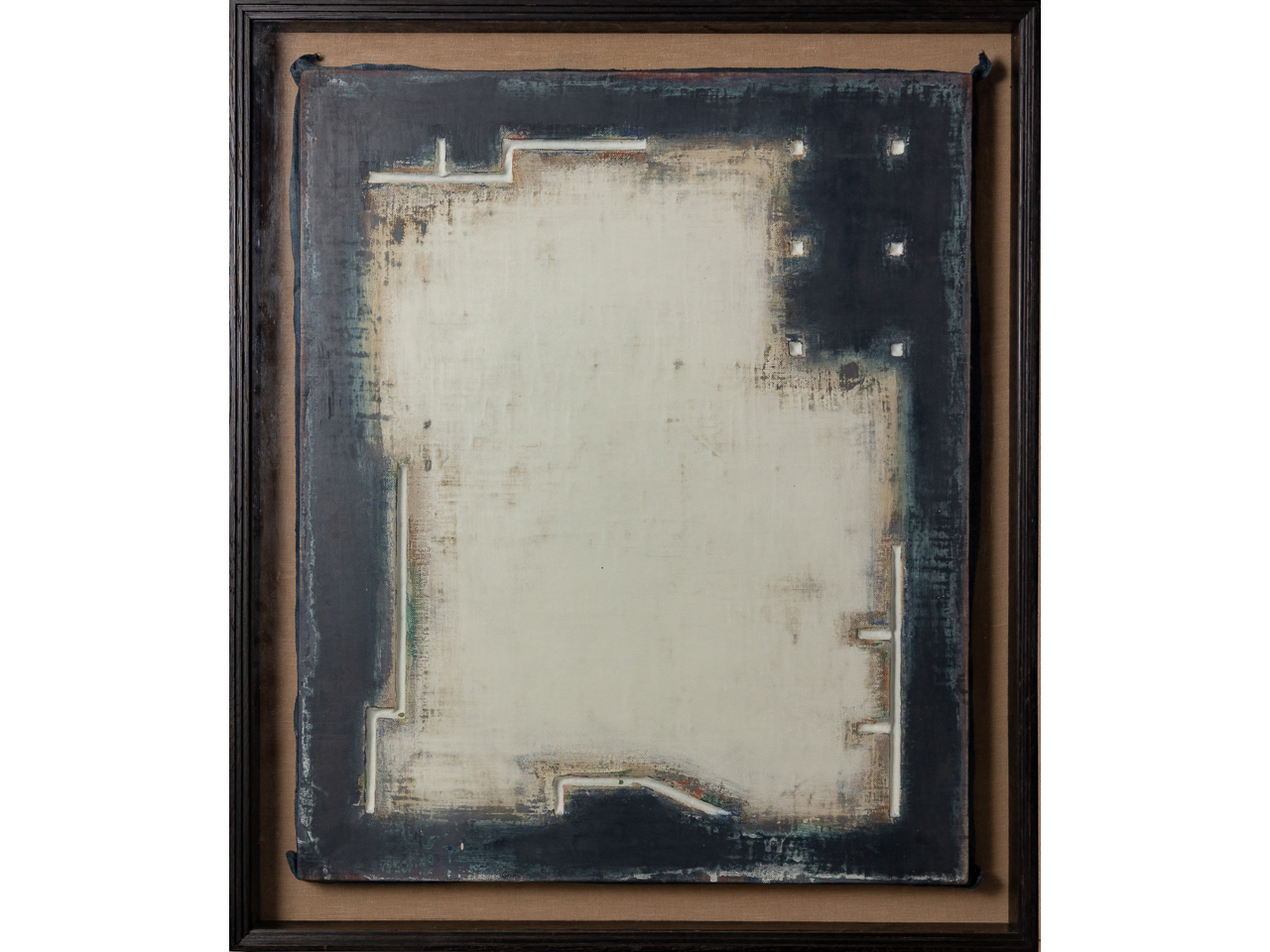
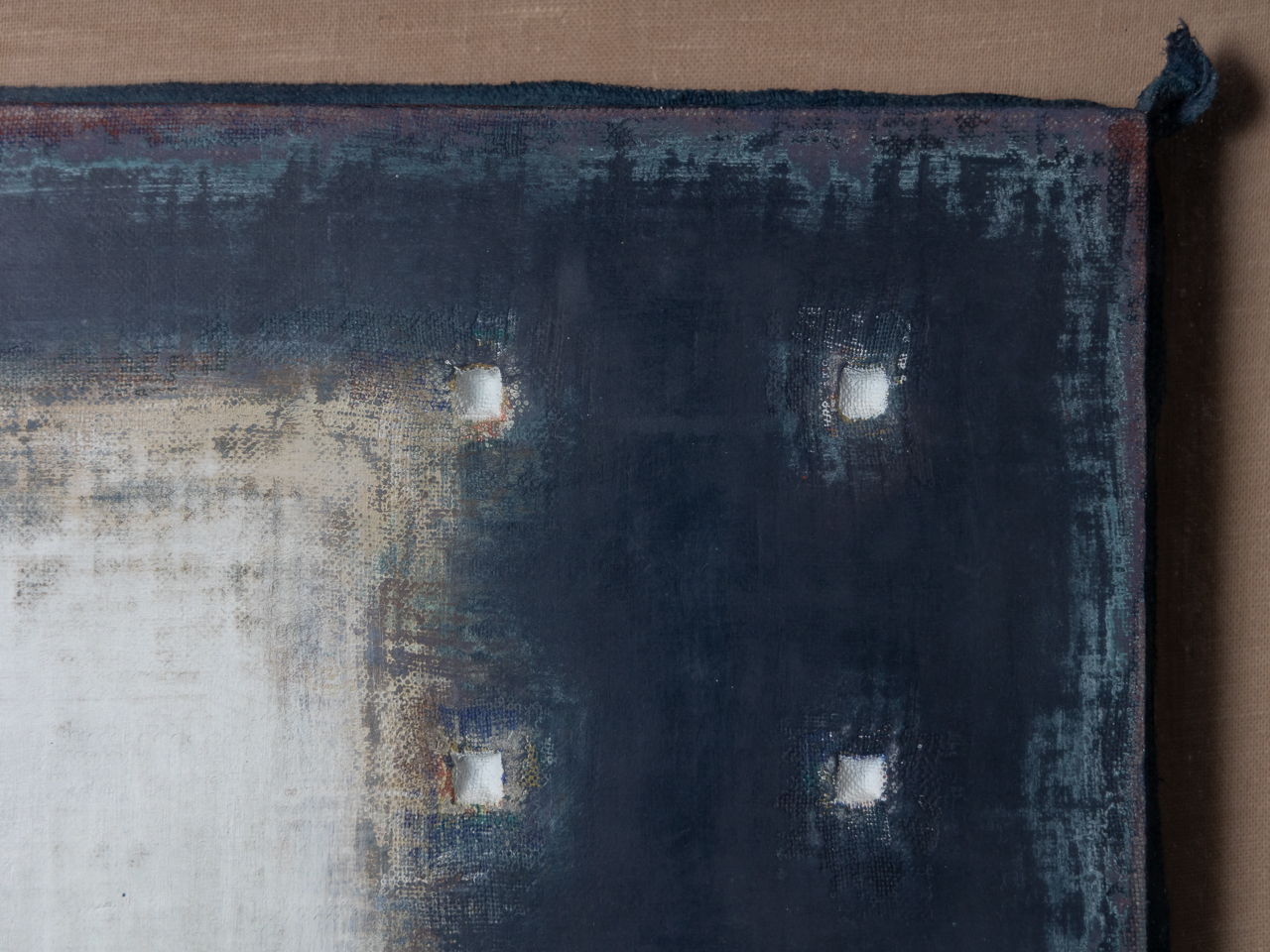
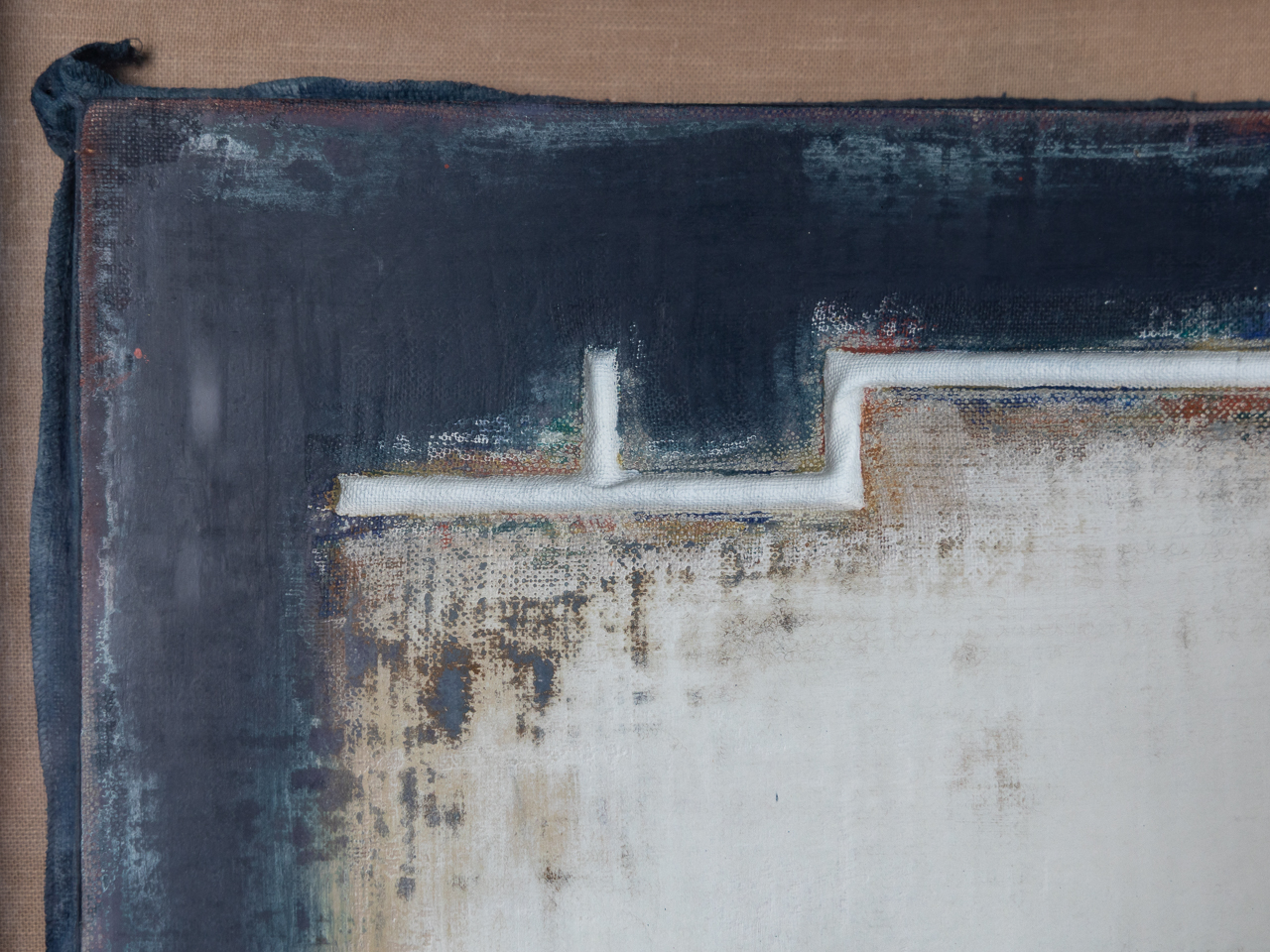
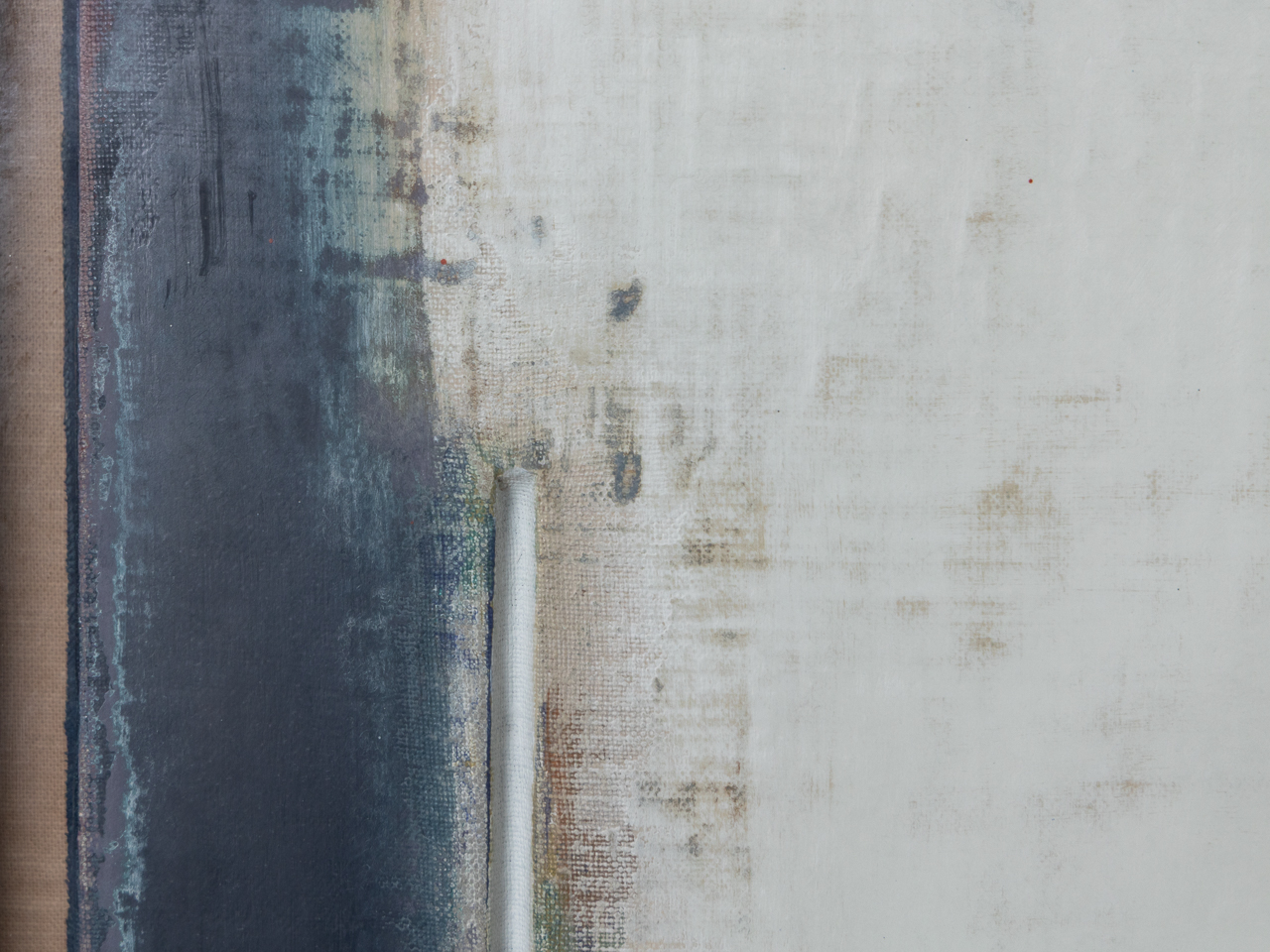
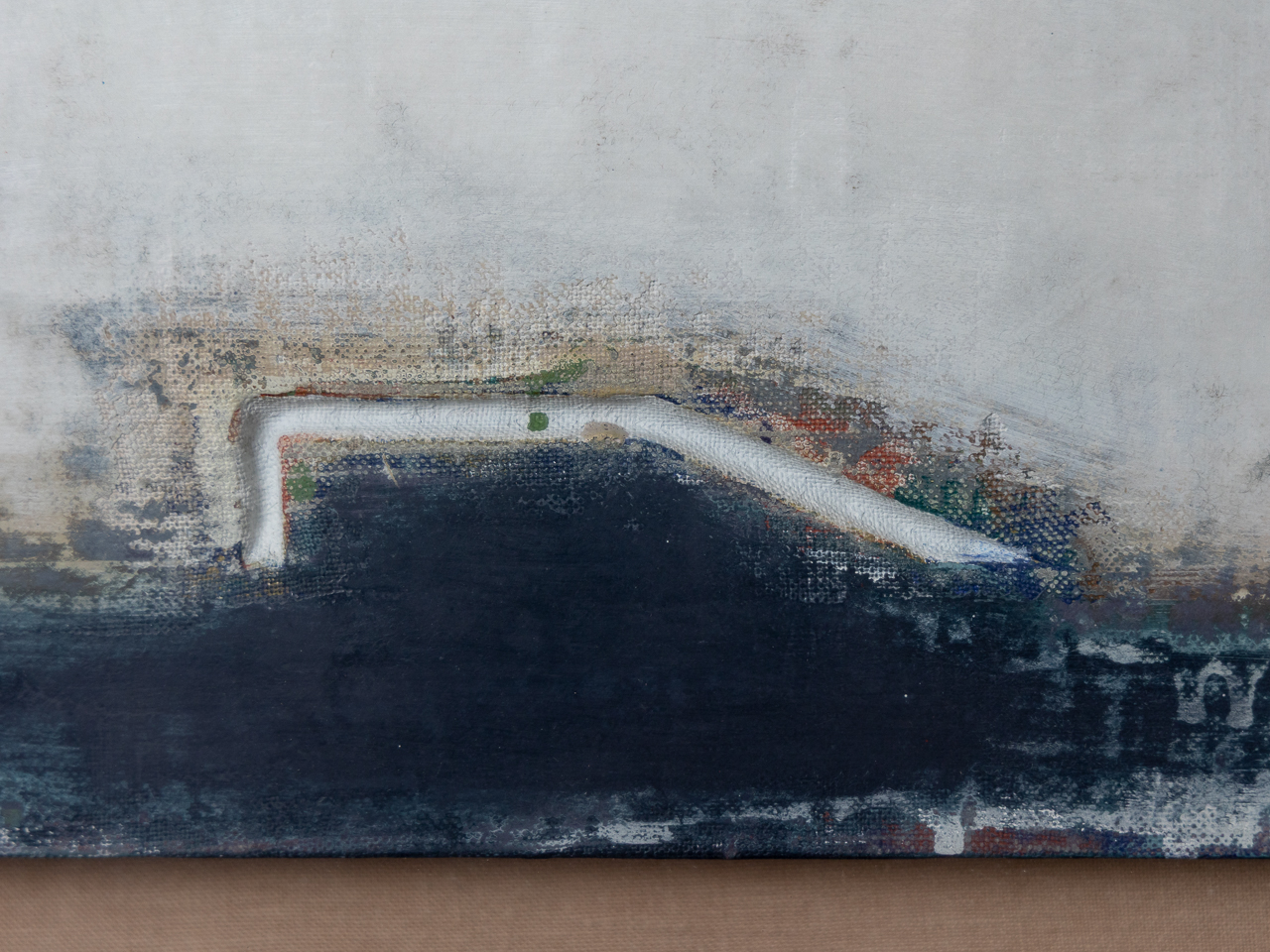
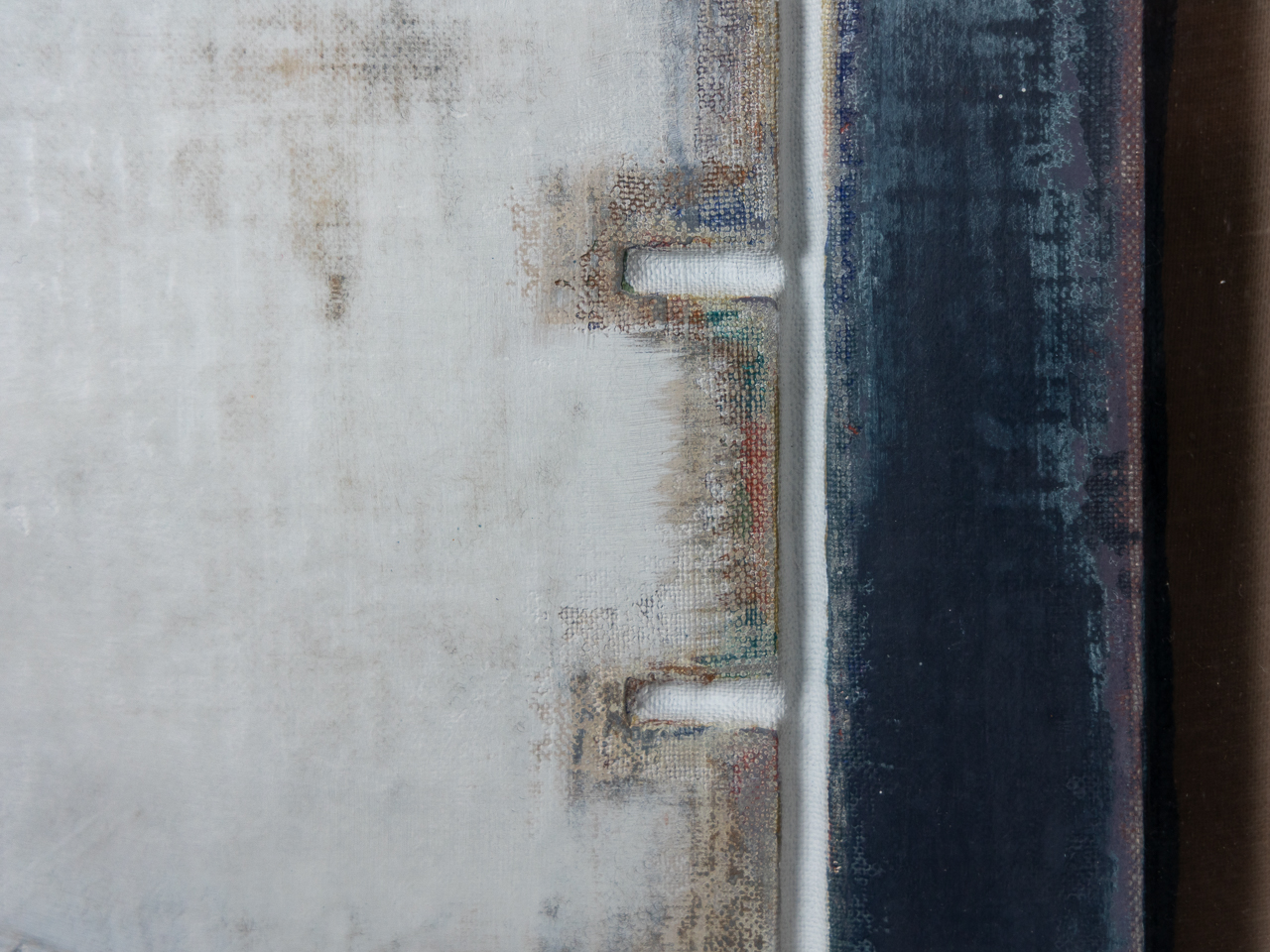
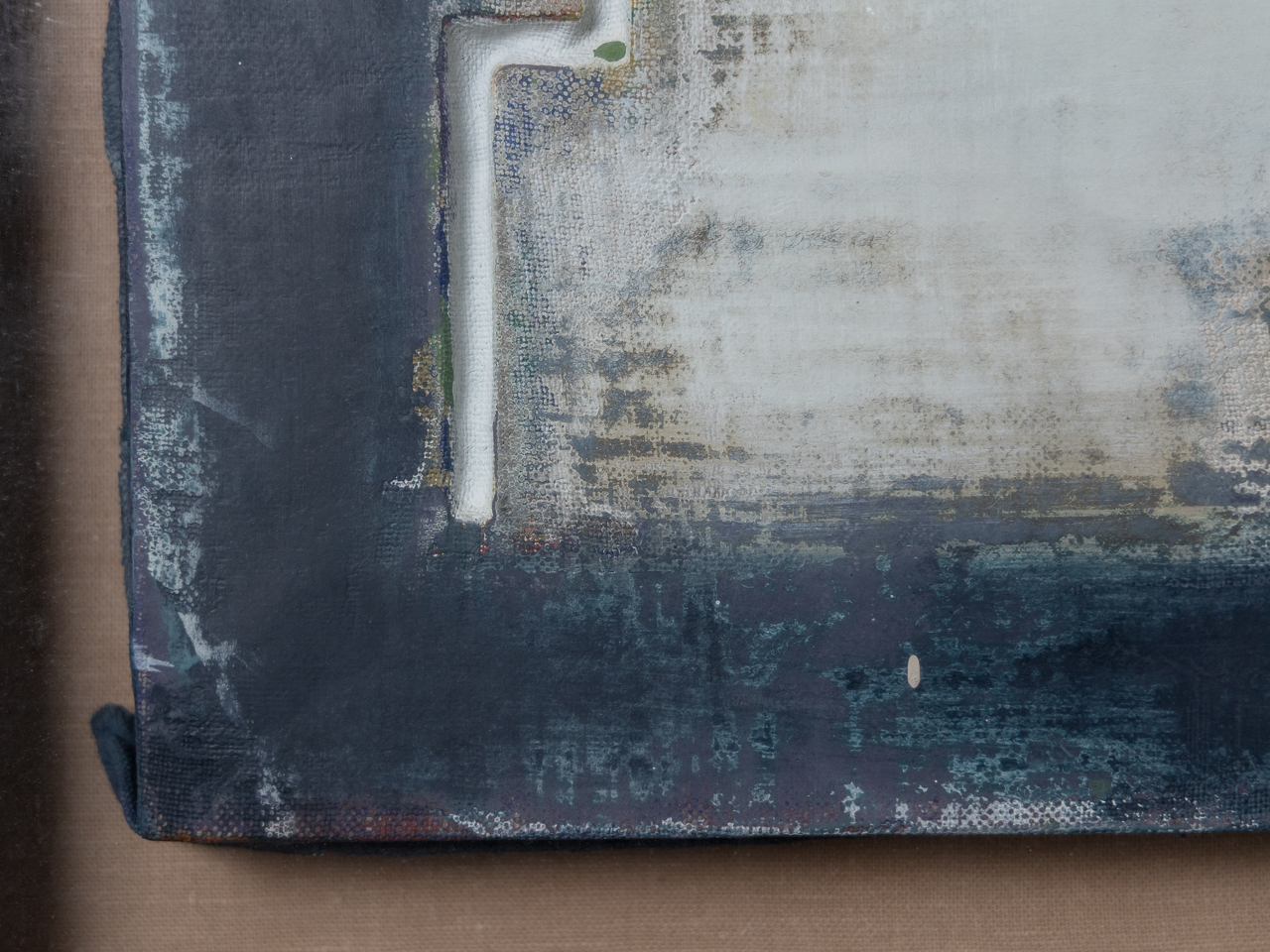
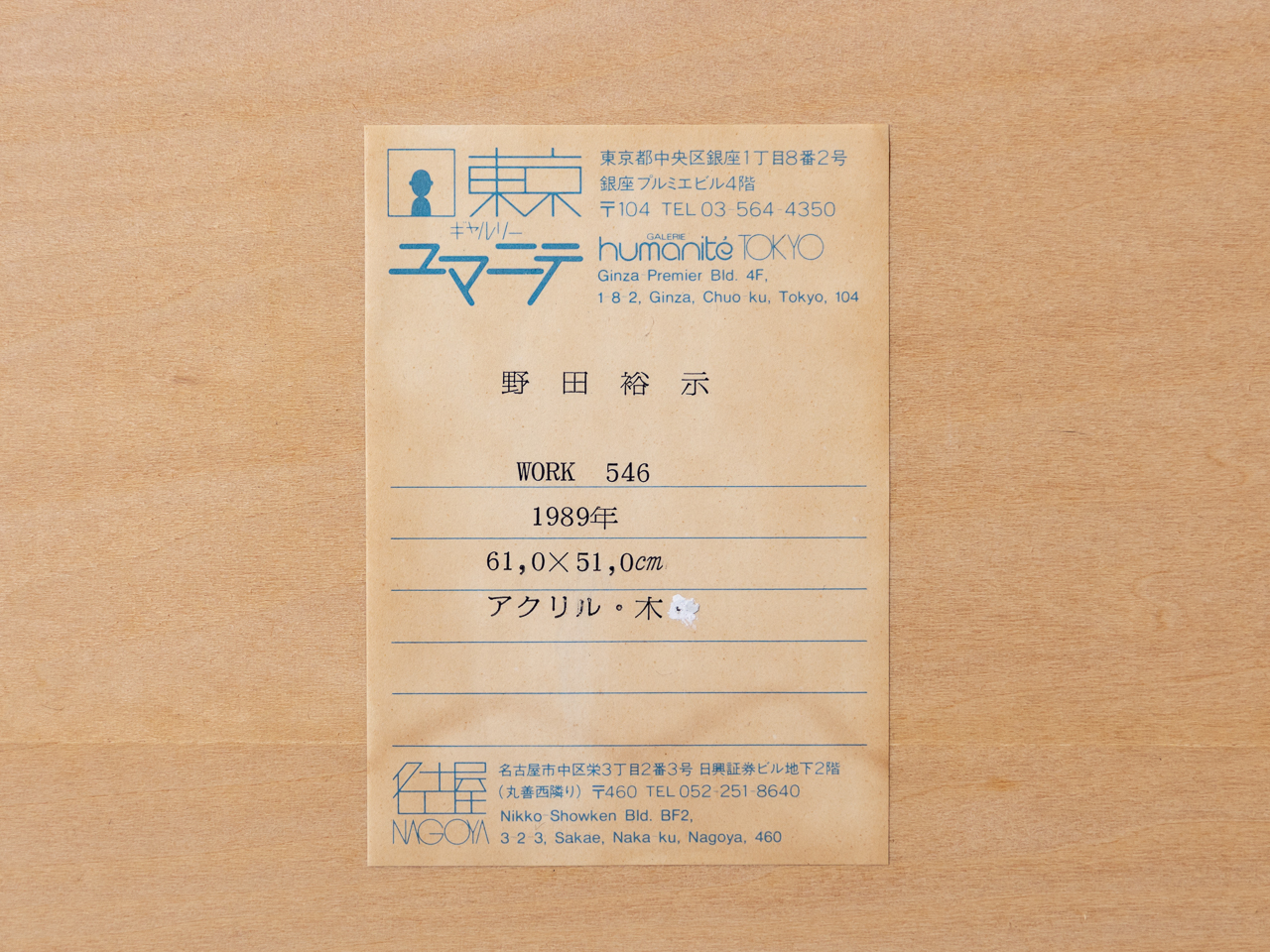
作品名:Work 546
サイズ:61×51cm (1989年 アクリル・木)
価格:170,000円
価格は税抜き表示です