

片山 雅史/Katayama Masahito
片山雅史(1955~)は、鑑賞者の知覚に訴えかける抽象絵画で知られている現代美術家です。東京に生まれ、京都で育った片山は1984年に京都市立芸術大学大学院美術研究科絵画専攻を修了したのち、国内外で創作活動を展開していきました。
最初期の1984年から1986年の期間に制作していた「植物態」というシリーズでは、画面のなかに窓のような矩形を描き、その外側には筆や指で絵の具を塗りつけ、内側には植物を模した線をからみあわせているのが特徴であり、混沌と秩序の拮抗が独特の緊張感を生んでいます。また、より確かな質感を求めてリトグラフから絵画へ移行したのもこの時期です。
「植物態」の後、10年近く展開したのは片山の代表作である「風」シリーズです。黒の油性インクを走らせたスピード感のあるストロークはまさしく風の印象そのものを捉えており、この表現は高い崖の上に立って下から吹き上げてくる風にさらされたときの、その一瞬の高揚感と恐れの感覚が源泉となっていました。「風」作品を成立させる要素としては、こうした奔放な筆運びや顔料がきらめく絵肌、そして複数のパネルの組み合わせなどが挙げられますが、これらは初期に描かれた【風のなる日のために‘86】の時点ですでに出そろっています。「風のなる日のために」と題された一連の作品は、若手による新傾向の美術として紹介されるとともに、日本画の伝統的な顔料が使われていたことから、旧来のジャンルの枠組みを飛び越えている点でも注目を集めました。1988年にニューヨークで手がけた大作【風のなる日のために‘88 Delancy-Ⅰ】で洗練性の境地に至ると、続く「風の系譜」シリーズにおいては、絵肌をさらに盛り上げたり、新たな色彩としてイエローオーカーを取り入れたりするなど、次なる表現を求めて探究を重ねました。
1995年から制作されるようになった「HANA」の連作では、メタリックな顔料の下地に白陶土(カオリン)でやわらかな花の影が描かれています。「風」シリーズのときとは明らかに異なる趣向が窺えるとともに、片山の関心が、目に見えない風が喚起する感覚から目に見える花のかたちへ、すなわち内面の表出から外界への形象へ移っている点で重要な転機であるといえます。この変遷を経て片山が到達したのは、内と外の境界である「皮膜」であり、そのあいだを出入りする光でした。こうして始まった2000年代の「皮膜」シリーズは、ひまわりの花芯などのモチーフをかたどった淡い斑点やまだら模様が、半透明のアクリル絵具の膜層に浮かび上がる幻想的な作品であり、描かれた像が具象と抽象を行き来しながら、見る者の新たな知覚を呼び覚まそうとします。
2010年からは、無数の墨線を集積させた「螺旋/風景」「風景/網膜」といったシリーズで更なる作風の変貌を遂げていますが、彼が一貫して描いているのは、1995年に語っていた「肉体と精神、生命と非生命、そしてあらゆるものの狭間」であるといえます。その探究は「見るとはどういうことか」という根源的な問いから出発しており、それゆえに、鑑賞者は視覚だけに頼らず全身の感覚を、あるいはまだ発見されていない感覚さえも使って作品と向き合うことになるのです。
Masashi Katayama (b. 1955) is a contemporary artist renowned for abstract paintings that challenge and engage the viewer’s perception. Born in Tokyo and raised in Kyoto, Katayama completed his postgraduate studies at the Kyoto City University of Arts in 1984. Since then, he has maintained a prolific creative practice both within Japan and on the international stage.
His formative series, ‘Plant Forms’ (1984–1986), introduced a signature motif: a rectangular, window-like aperture set within the picture plane. While the area outside this frame was built up with tactile layers of paint applied by brush or finger, the interior contained delicate, intertwined lines reminiscent of flora. This juxtaposition of chaos and order created a singular tension, marking his transition from lithography to painting in search of a more visceral, ‘tangible’ texture.
Following this, Katayama developed the ‘Wind’ series—his most celebrated body of work—which spanned nearly a decade. Using swift, dynamic strokes of black oil-based ink, he sought to capture the very essence of the wind. This expression was rooted in a fleeting sensation of simultaneous exhilaration and dread experienced whilst standing atop a high cliff, exposed to powerful updraughts. The defining characteristics of these works—unrestrained brushwork, shimmering pigments, and the use of polyptych (multiple) panels—were already evident in his early masterpiece, For the Day the Wind Blows ’86. This series garnered significant acclaim, not only as a vanguard movement among young artists but also for transcending traditional genre boundaries through the innovative use of conventional Japanese pigments (iwa-enogu). After reaching a pinnacle with the large-scale For the Day the Wind Blows ’88 Delancey-I, created in New York, his subsequent ‘Genealogy of Wind’ series further explored this trajectory, introducing yellow ochre and even denser impasto surfaces.
A significant turning point occurred in 1995 with the ‘HANA’ series. Here, soft, floral shadows are rendered in white kaolin over a metallic pigment base. This shift marked a transition from the invisible sensations of the wind to the visible forms of flowers—from an internalised expression to an engagement with the external world. Through this process, Katayama arrived at the concept of the ‘Membrane’: the boundary between inside and outside, and the light that permeates it. This led to the ‘Membrane’ series of the 2000s—ethereal works where faint, mottled patterns, resembling the centres of sunflowers, float within translucent layers of acrylic. These forms oscillate between figuration and abstraction, intended to awaken latent perceptions within the viewer.
Since 2010, his style has continued to evolve through series such as ‘Spiral/Landscape’ and ‘Landscape/Retina’, characterised by the accumulation of countless ink lines. Despite these stylistic shifts, his core enquiry remains what he articulated in 1995: “the space between body and spirit, life and non-life, and everything in between.” This exploration stems from the fundamental question of what it truly means ‘to see’. Consequently, the viewer is invited to engage with his work not merely through sight, but through the entire body—and perhaps through senses yet to be discovered.
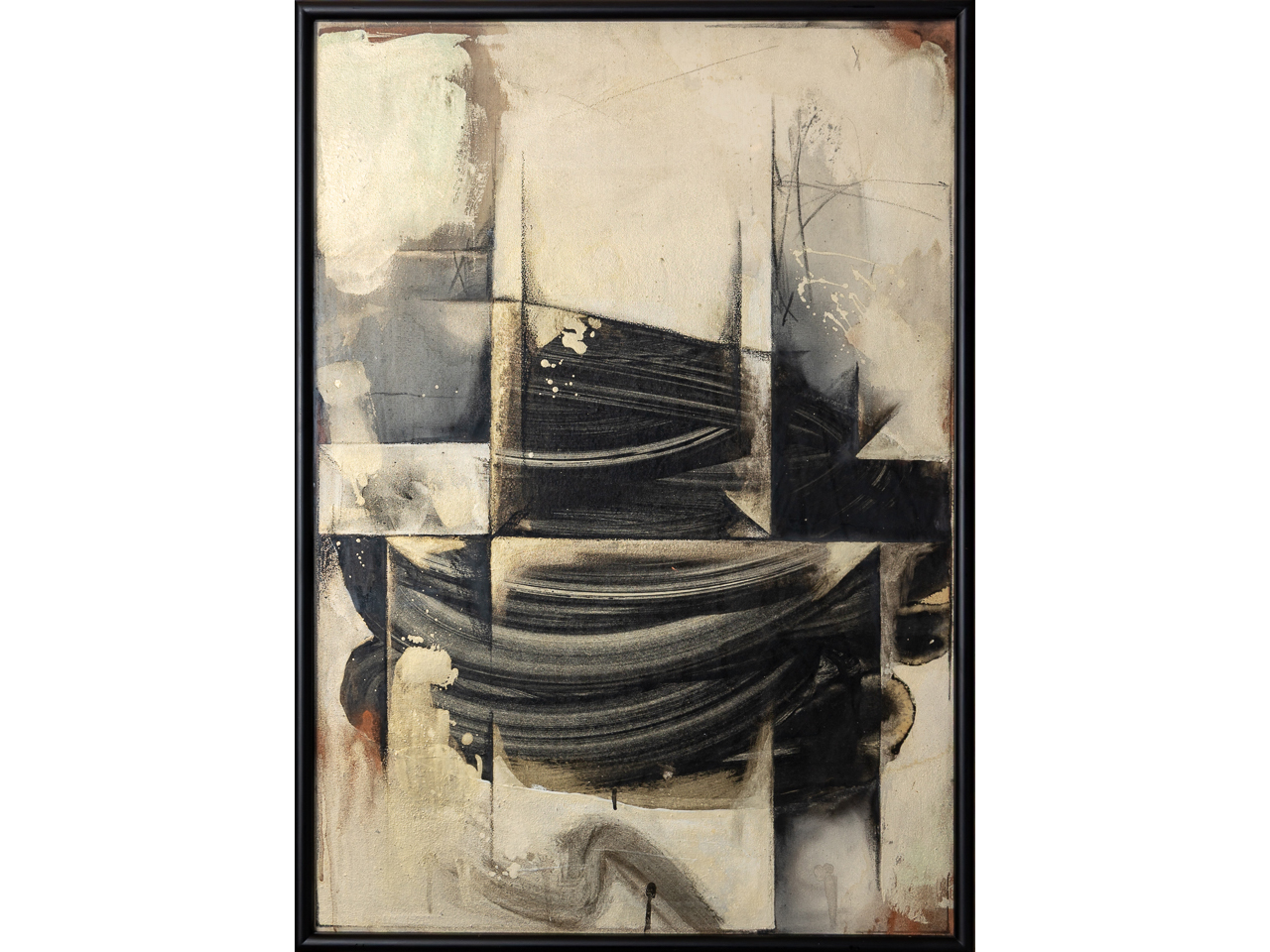
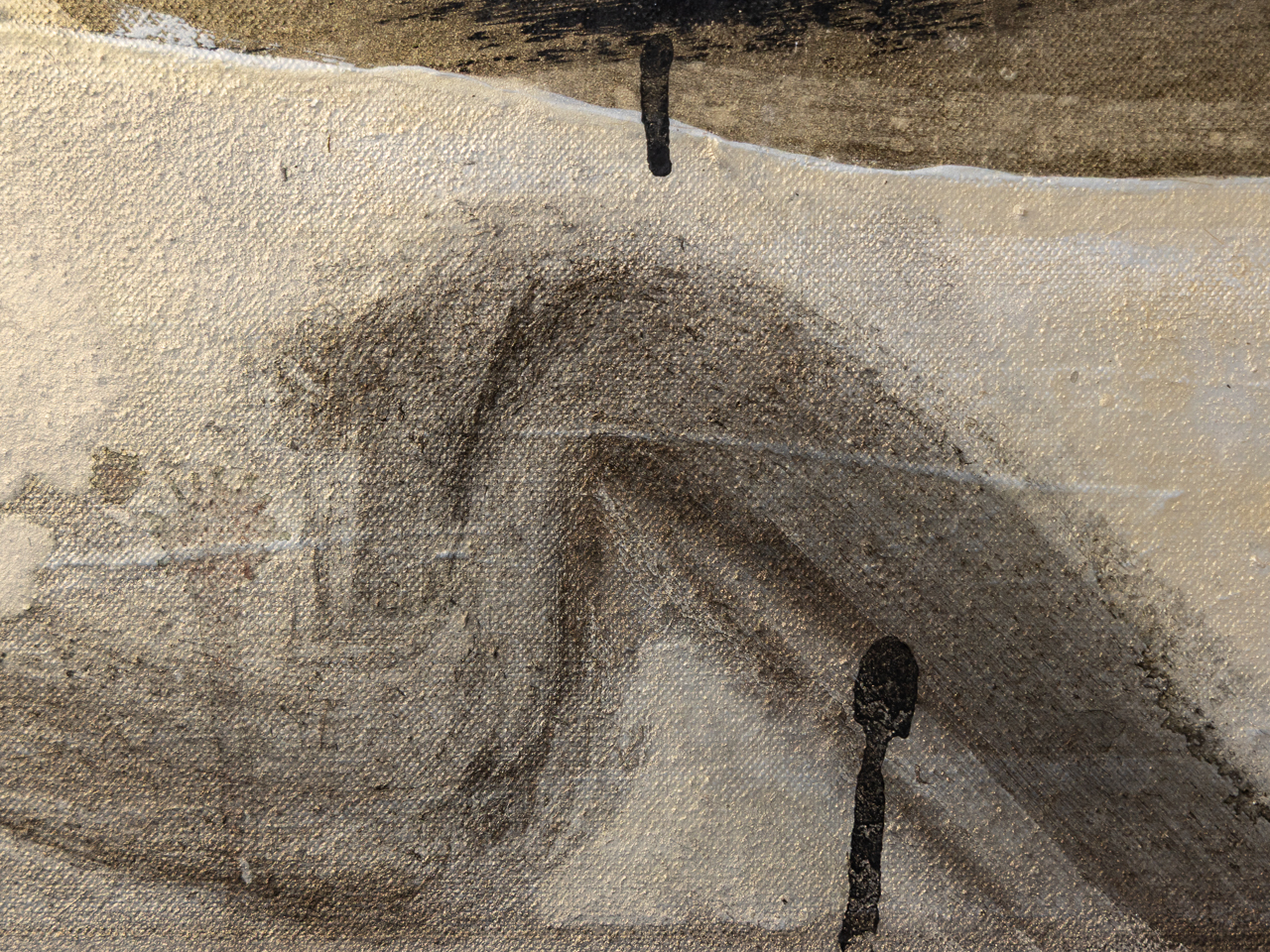
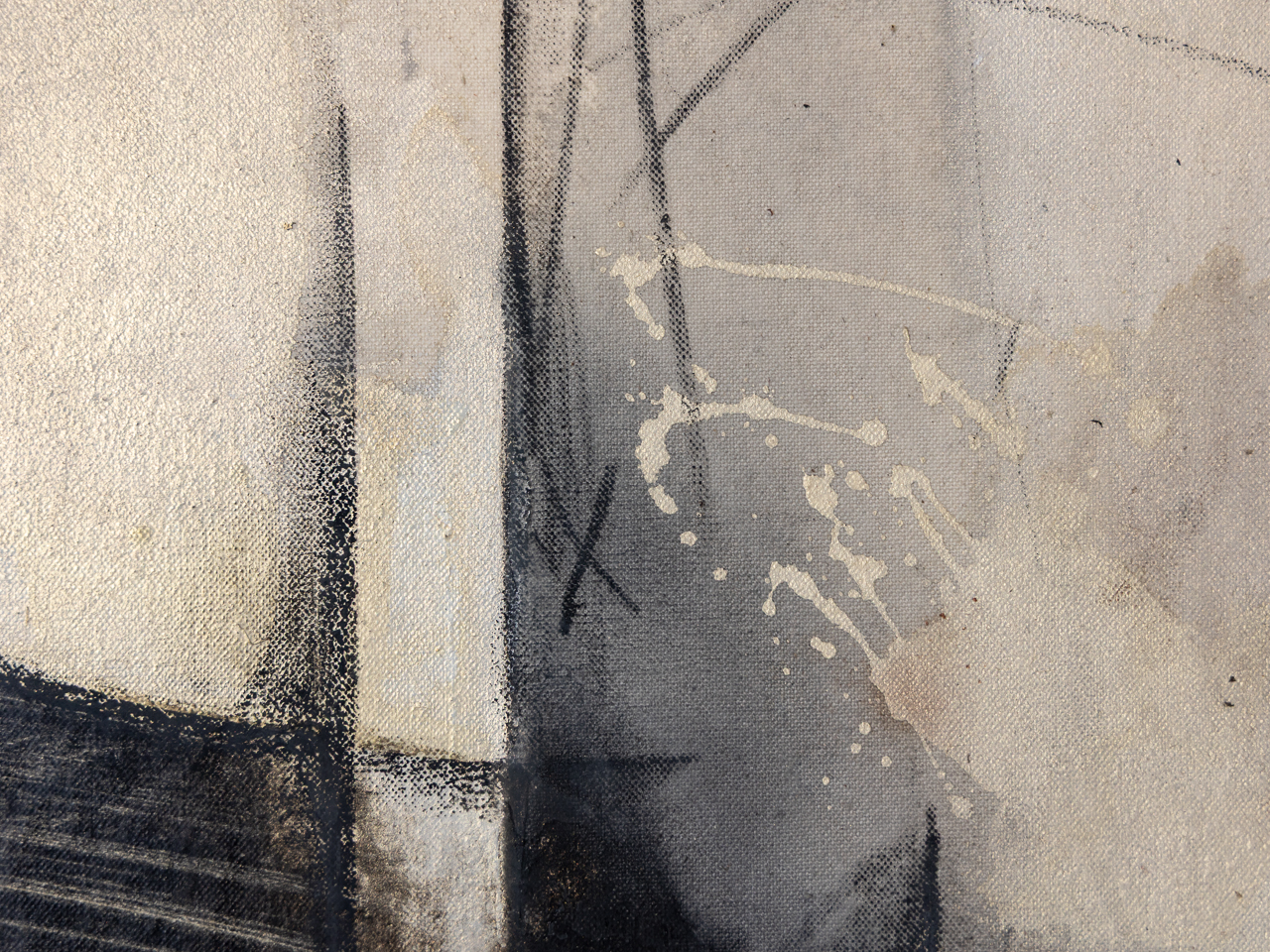
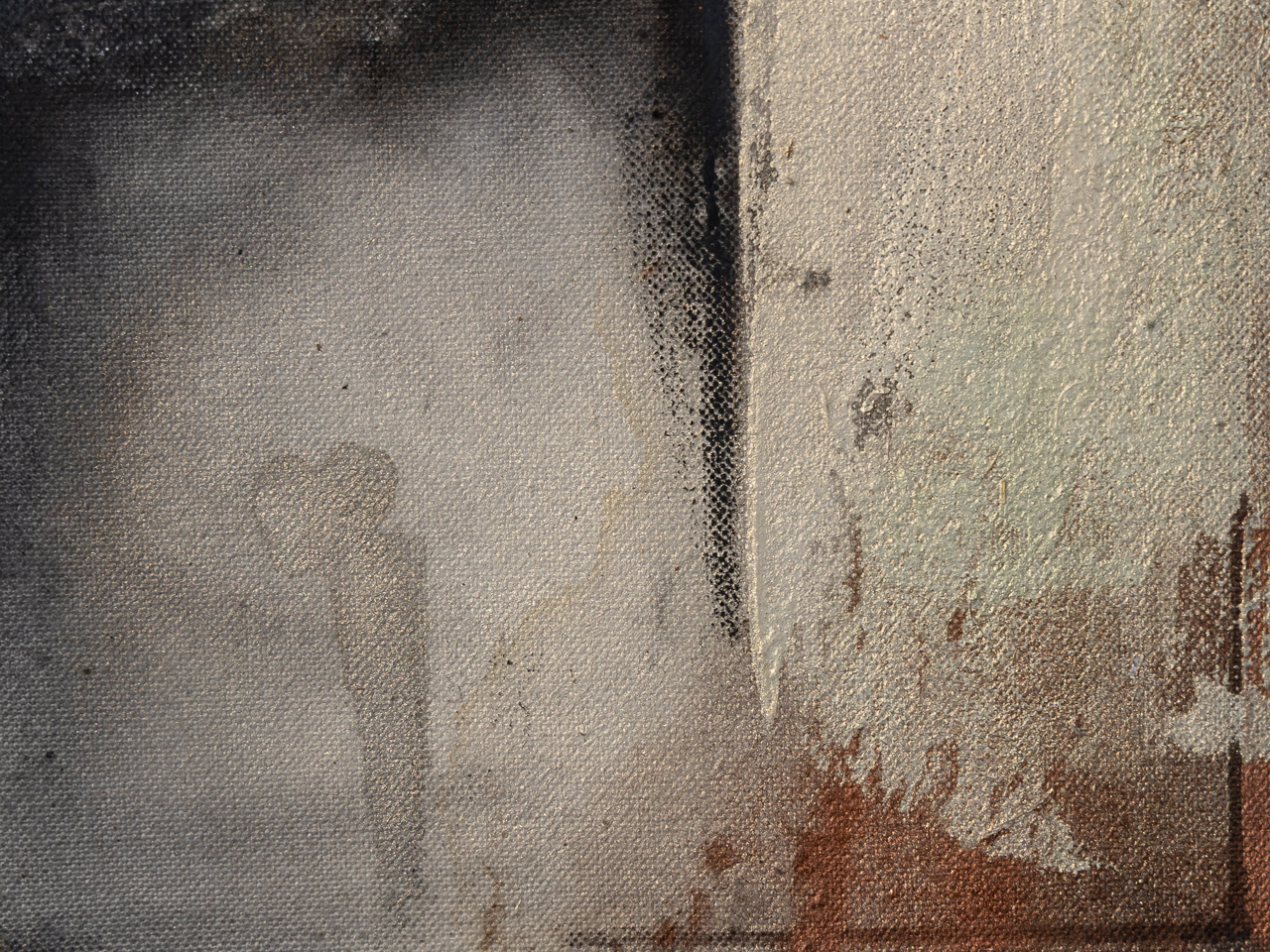
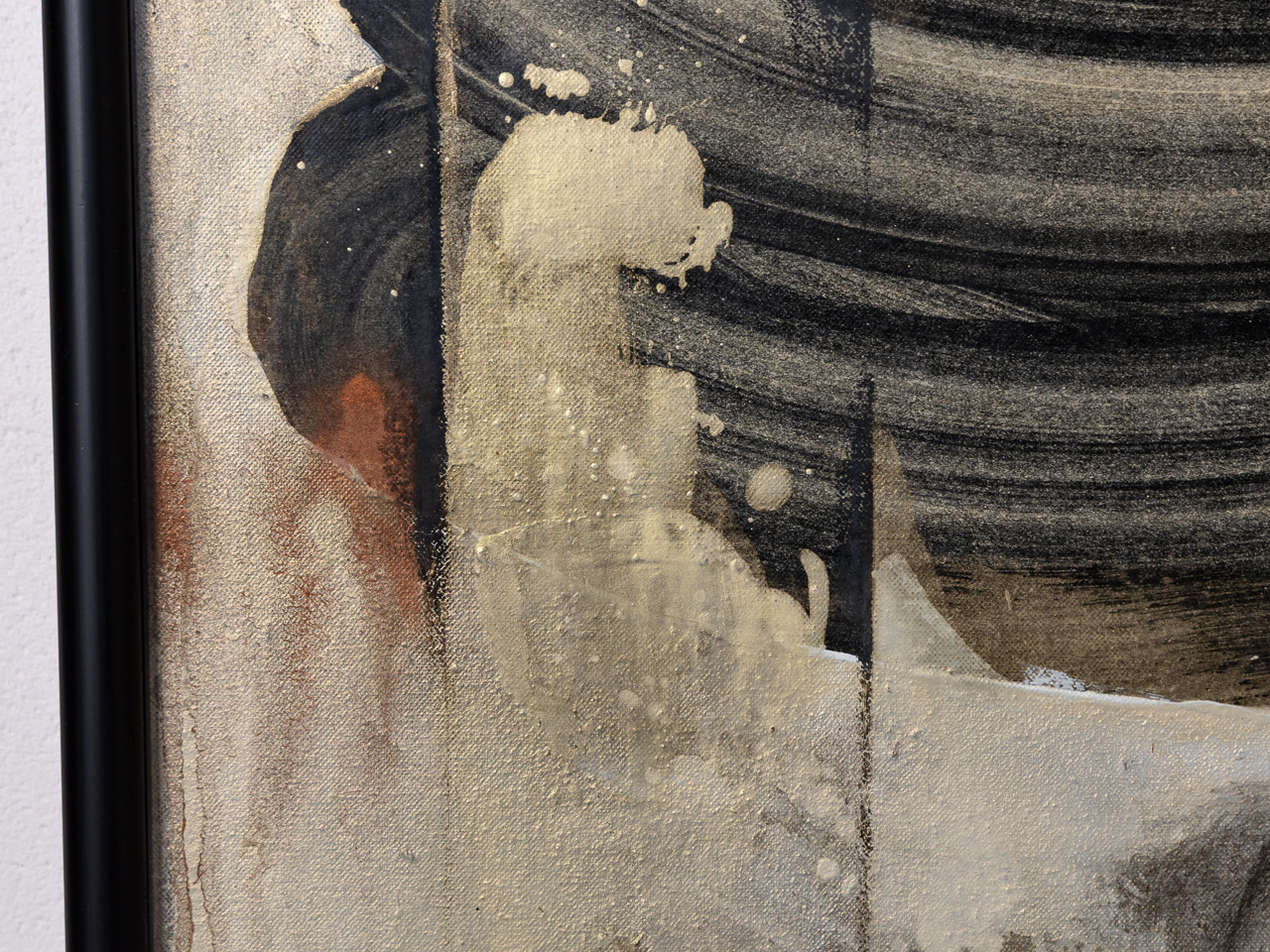
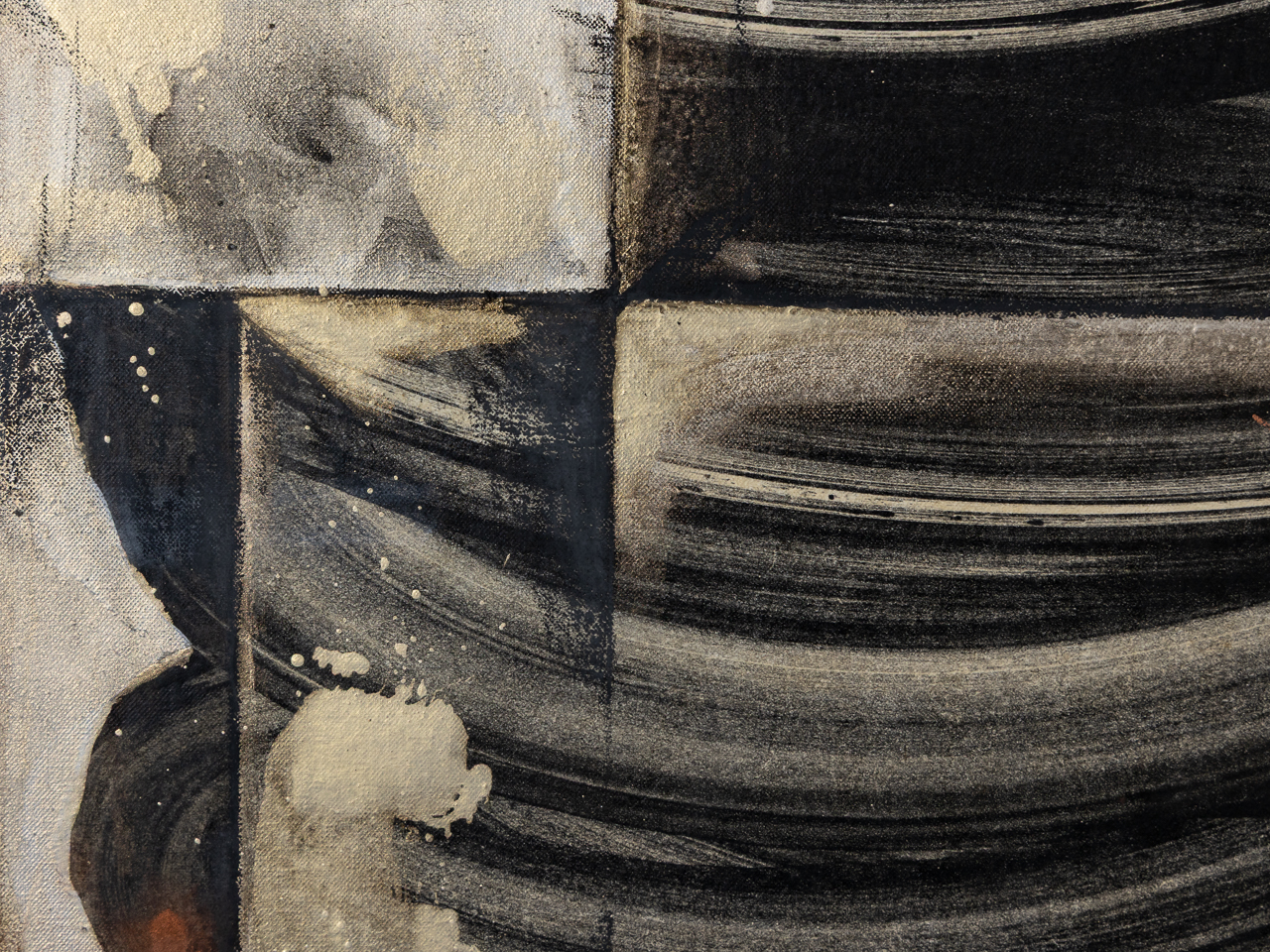
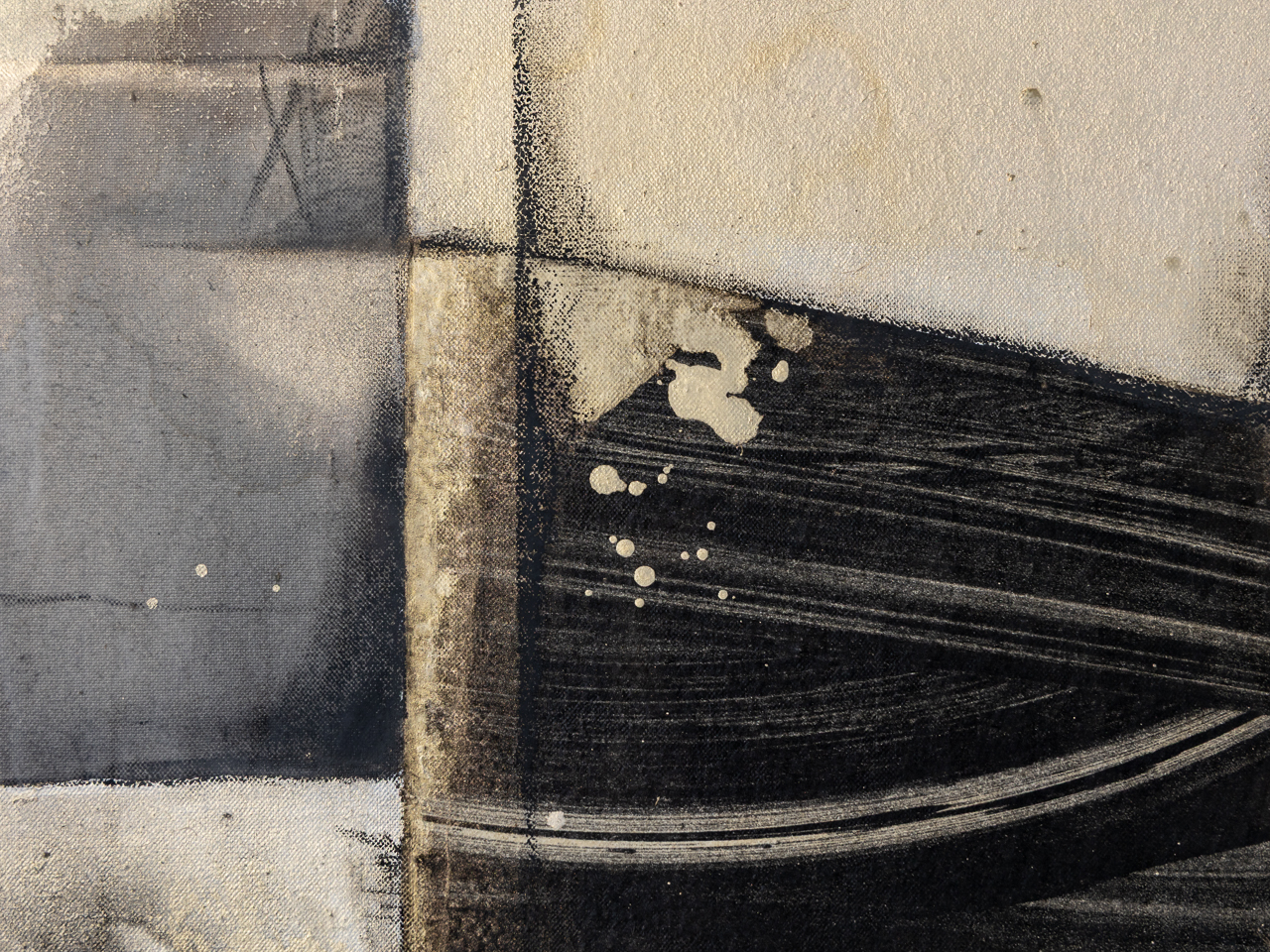
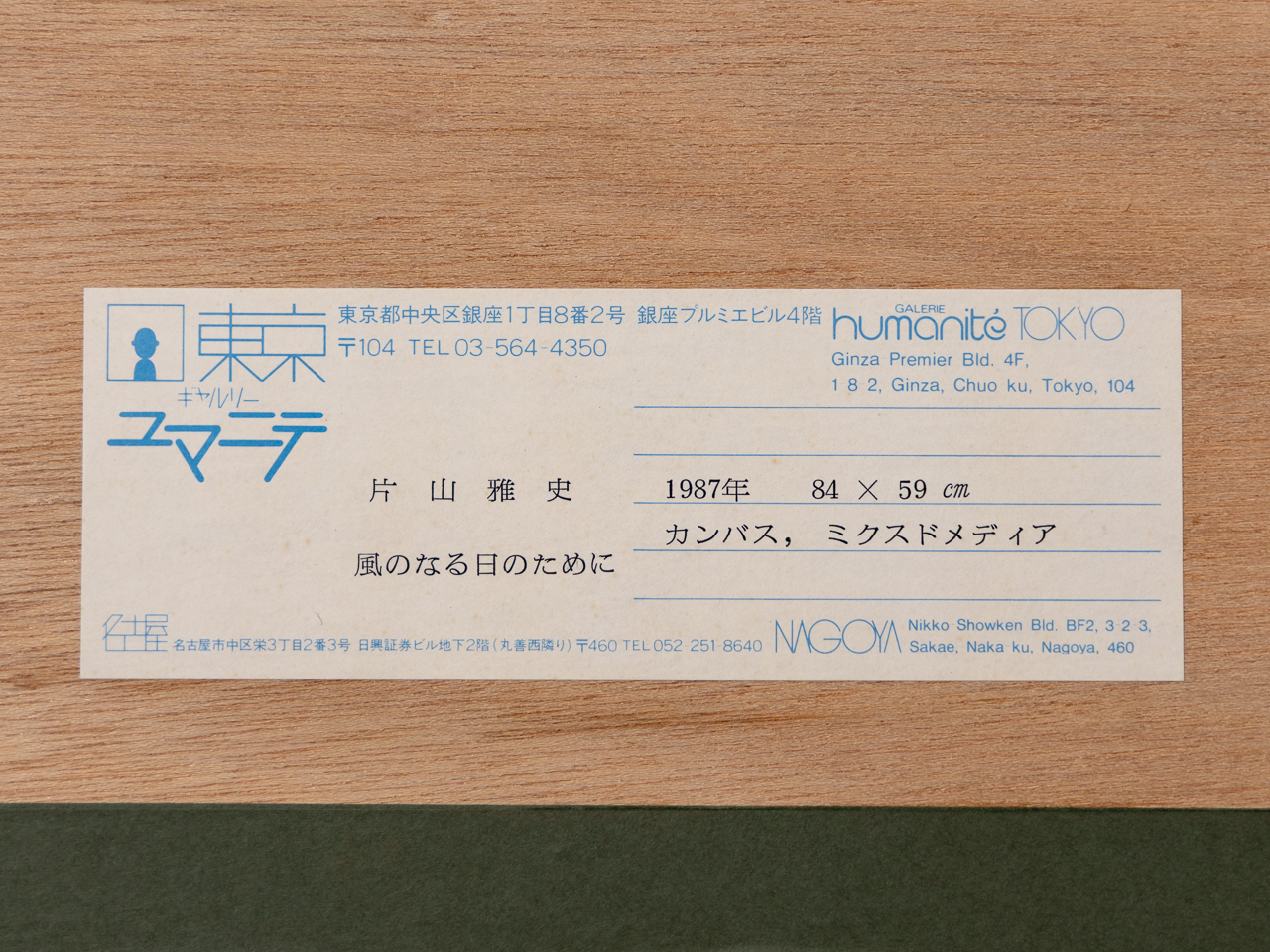
作品名:風のなる日のために
サイズ:84×59cm (1987年 キャンバスにミックストメディア)
価格:80,000円
価格は税抜き表示です