

ミラ・ナカシマ/Mira Nakashima
ミラ・ナカシマ(1942~)は、20世紀を代表するアメリカの家具作家である父、ジョージ・ナカシマ(1905~1990)の工房を受け継ぎ、社長兼クリエイティブディレクターとして、その理念と家具デザインを守り続けているデザイナーです。
ワシントン州シアトルに生まれたミラは、第二次世界大戦が勃発すると、生後まもなくして両親とともに日系アメリカ人や日本人移民を対象としたアイダホ州のミニドカ強制収容所に抑留されました。つらい状況に置かれながらも、そこで日系二世の大工と巡り会えたことは、ジョージが家具作家となり、娘ミラが工房を受け継いでいく道へと運命的につながっていきます。元々建築デザイナーとして働いていたジョージは、その大工の指導を受けながら所内での生活に必要な椅子やテーブルを作り始めたことで、砥石を使ってノミを研ぐなどの基本的な木工技術や知識を習得しました。収容されてから1年後の1943年、かつて仕事で縁のあった建築家のアントニン・レーモンド(1888~1976)が身元引受人となったことで、ナカシマ一家は収容所から解放され、彼が経営するペンシルベニア州ニューホープの農場に移住することとなります。そして、その翌年にジョージはニューホープ近郊の森に小さい住まいを構え、自然と共存する生活を送りながら、デザインから制作まで一貫した家具作りを始めました。これが、ジョージ・ナカシマ工房の始まりです。
幼い頃から父の作業場に足を運んでいたミラは、父から工具の使い方を教わり、5歳頃には「この壁を作るにはしっかりとした意志をもちなさい」というような教えを説かれていたといいます。ハーバード大学や早稲田大学大学院で建築学を修めたのち、1970年から20年間父のもとで研鑽を積み、ジョージが亡くなった1990年に工房を引き継ぎました。
現在、ナカシマの家具は、ジョージ・ナカシマ工房と、生前にジョージと交流のあった香川県高松市の桜製作所のみが正式な製造を許されています。ナカシマの家具作りにおいては、自然のままの木をどう用いるかを決める工程「木取り」が最も重要視されており、その鍵となるのが「木の声を聞く姿勢」です。木と対話し、「木がなりたい形」をデザインするというナカシマの哲学を軸に、従来であれば使用されない節やこぶを持つ木が職人の手によって、個性を生かした美しい家具へと形づくられていくのです。ちなみに、数あるデザインのなかでもミラのお気に入りは、彼女の幼少期に父が設計した「ミラチェア」だといいます。
日本やヨーロッパと比較すると、アルチザンよりもアーティストを育む土壌が豊かなアメリカにおいて、働き始めたばかりの職人たちが「自分流のナカシマ」を作ろうとすることは少なくありませんが、ミラは「ナカシマを忠実に継承していくこと」こそが職人たちに課せられた使命であると語ります。父の遺したものが自分たちの作品のなかに引き継がれ、その哲学が遠い未来にまで運ばれていくことを望む彼女は、今日も職人たちとともに「ジョージならどうした?」と自問しながら、素材となる木と誠実に向き合っています。ミラの主導のもとで生き続けるナカシマの家具は、「コスパ」や「タイパ」が叫ばれる現代の大量消費社会に、静かな一石を投じています。
Mira Nakashima (born 1942) is an architect and designer who inherited the workshop of her father, George Nakashima (1905–1990), one of the pre-eminent American furniture makers of the 20th century. As president and creative director, she continues to uphold his singular philosophy and iconic designs.
Born in Seattle, Washington, Mira was interned with her parents at the Minidoka War Relocation Centre in Idaho shortly after her birth, following the outbreak of the Second World War. Despite the harsh conditions of the camp, a fateful encounter with a second-generation Japanese carpenter transformed George’s trajectory, setting the stage for Mira to eventually lead the workshop. Under the carpenter’s tutelage, George began crafting the essential tables and chairs required for camp life, mastering fundamental woodworking techniques such as the art of sharpening chisels on a whetstone. In 1943, a year into their internment, the Nakashima family was released after Antonin Raymond (1888–1976), an architect and former colleague of George’s, acted as their sponsor. They relocated to Raymond’s farm in New Hope, Pennsylvania, where George established a modest dwelling in the woods the following year. Living in harmony with nature, he began overseeing every stage of furniture production, from initial design to the finished piece—marking the birth of the George Nakashima Woodworkers.
Mira, who frequented the workshop from childhood, learned the use of tools directly from her father. It is said that when she was only five, he instilled in her a sense of discipline, telling her, ‘To build this wall, you must possess a strong will.’ After studying architecture at Harvard University and the Waseda University Graduate School, she trained under her father for twenty years from 1970, formally taking over the workshop upon his passing in 1990.
Today, authentic Nakashima furniture is produced exclusively by the George Nakashima Woodworkers and Sakura Seisakusho in Takamatsu, Kagawa Prefecture—a workshop with which George maintained a close lifelong bond. In the Nakashima tradition, “wood selection”—the art of determining how to best utilise the timber’s natural silhouette—is paramount. Central to this is the “attitude of listening to the wood”. Guided by the philosophy of designing “the form the wood wishes to become”, the craftsmen transform knots and burls—features typically discarded by others—into exquisite furniture that celebrates their unique character. Of the many designs, Mira’s personal favourite remains the “Mira Chair”, which her father designed for her during her childhood.
In the United States, where the cultural landscape often favours the individual artist over the traditional artisan, it is not uncommon for new woodworkers to attempt their own “Nakashima style”. Mira, however, maintains that “faithfully inheriting the Nakashima legacy” is the true mission of her craftsmen. Ensuring her father’s spirit lives on, she works alongside them to engage sincerely with the raw material, asking daily: ‘What would George have done?’ Under Mira’s stewardship, Nakashima furniture continues to endure, offering a quiet, profound challenge to a modern mass-consumption society obsessed with “efficiency” and “cost-performance”.
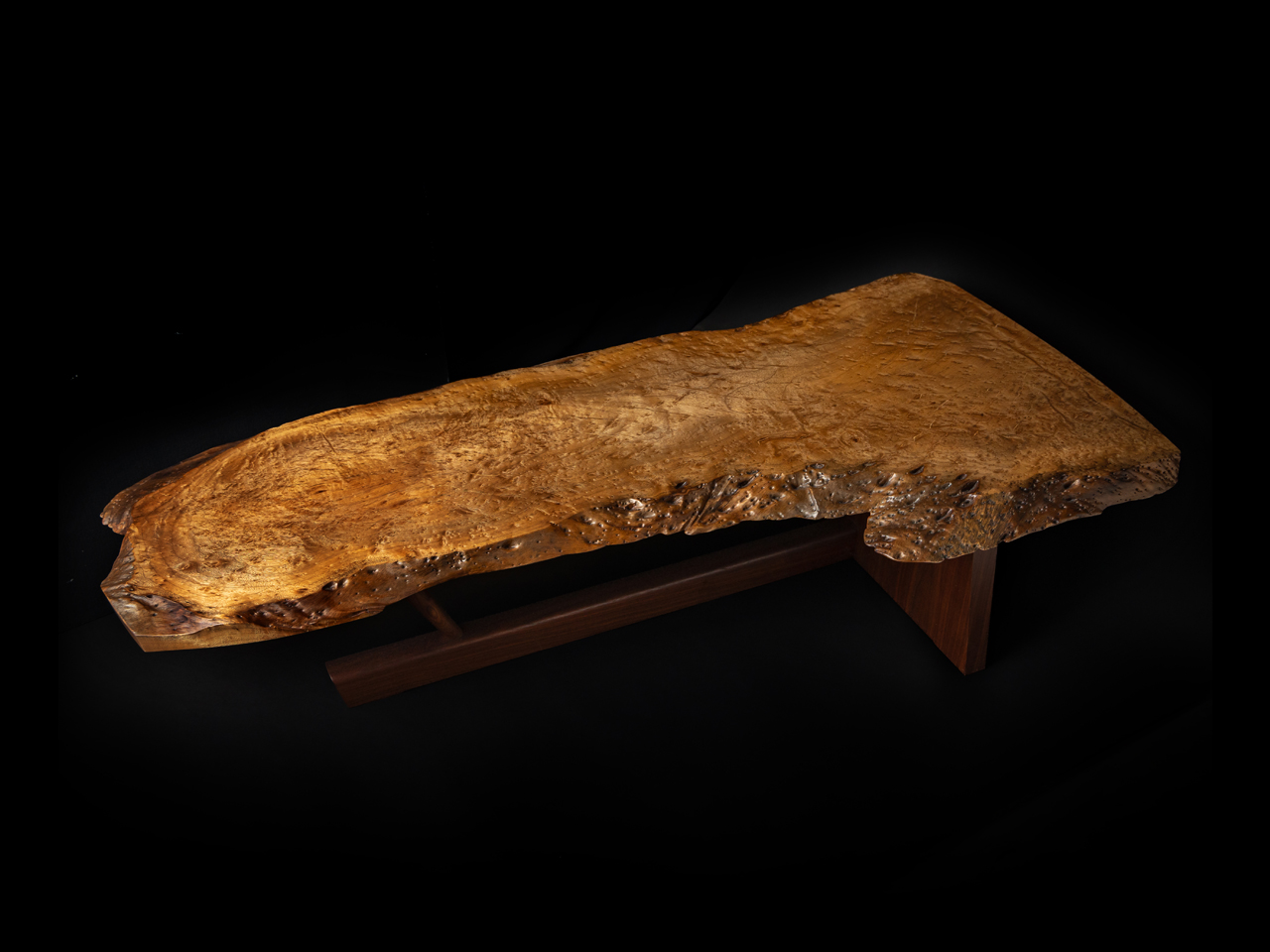
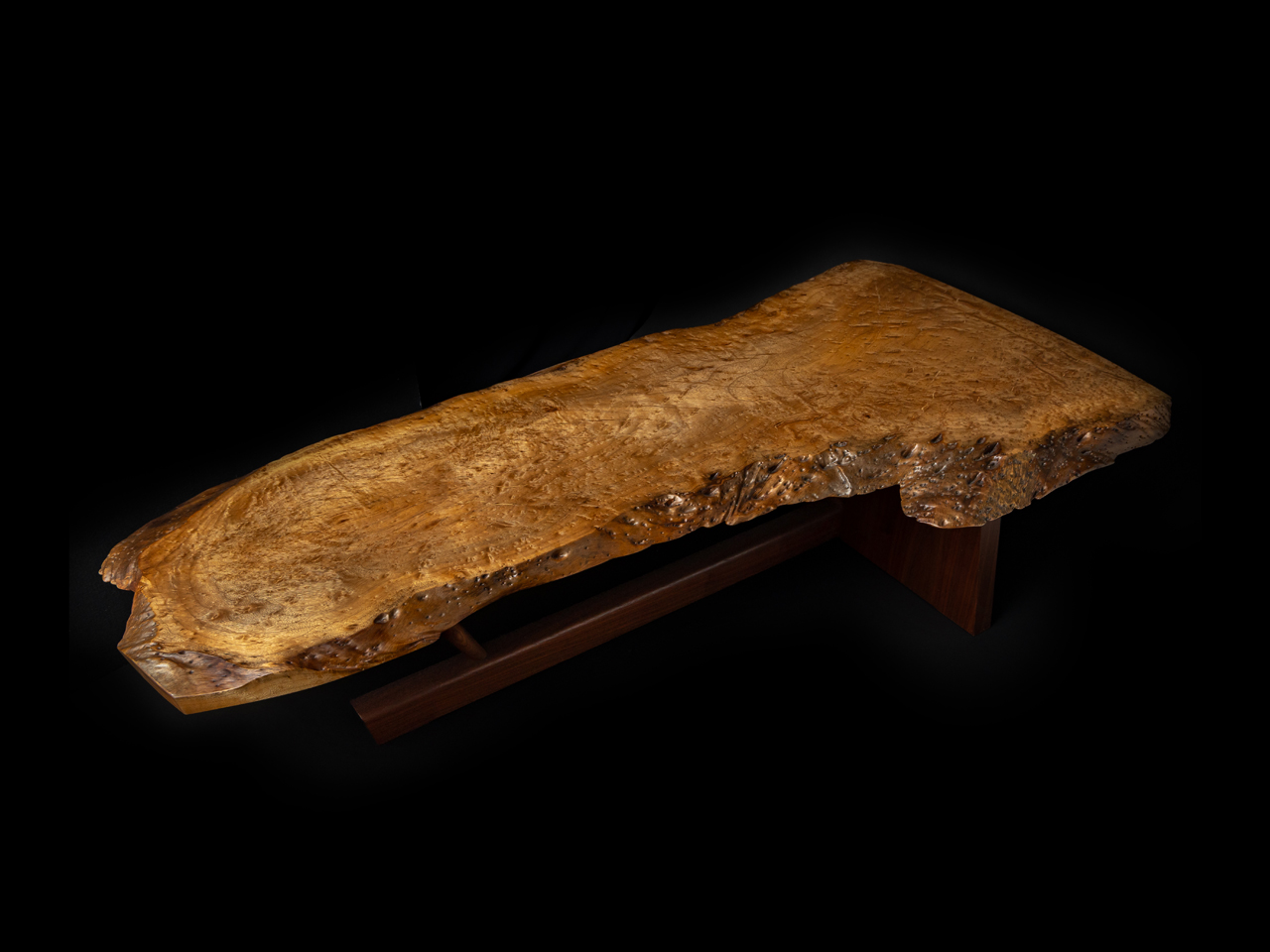
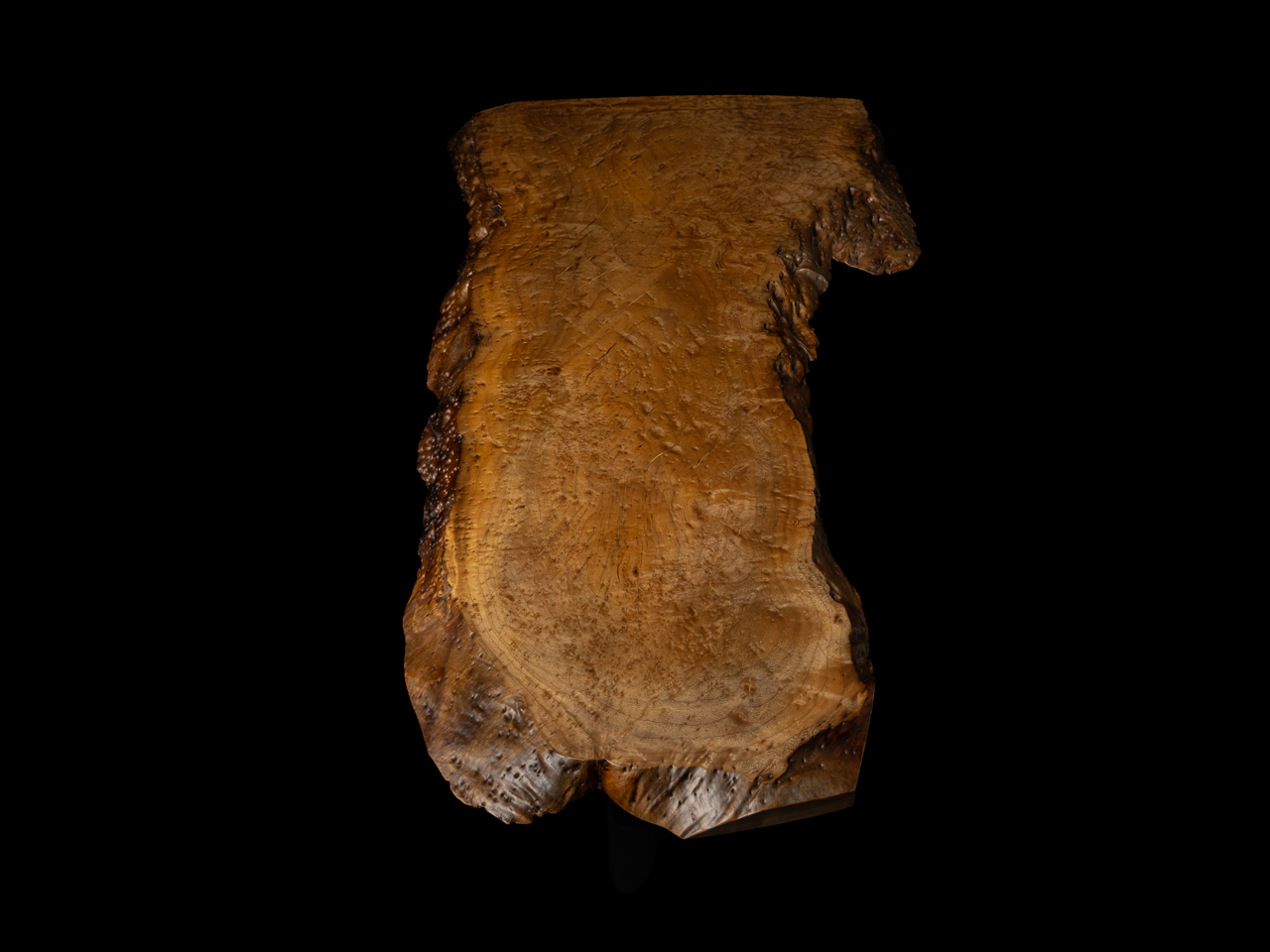
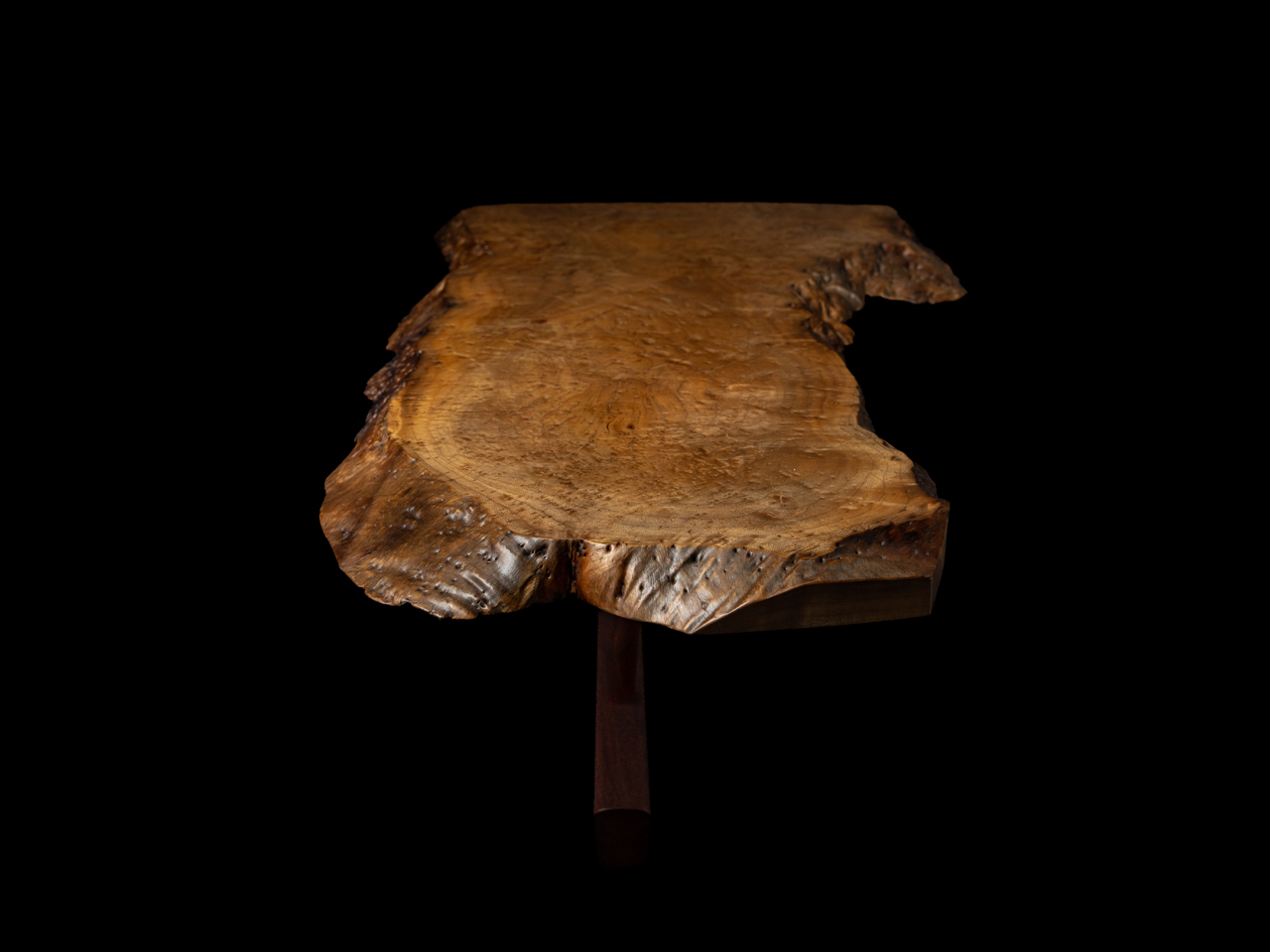
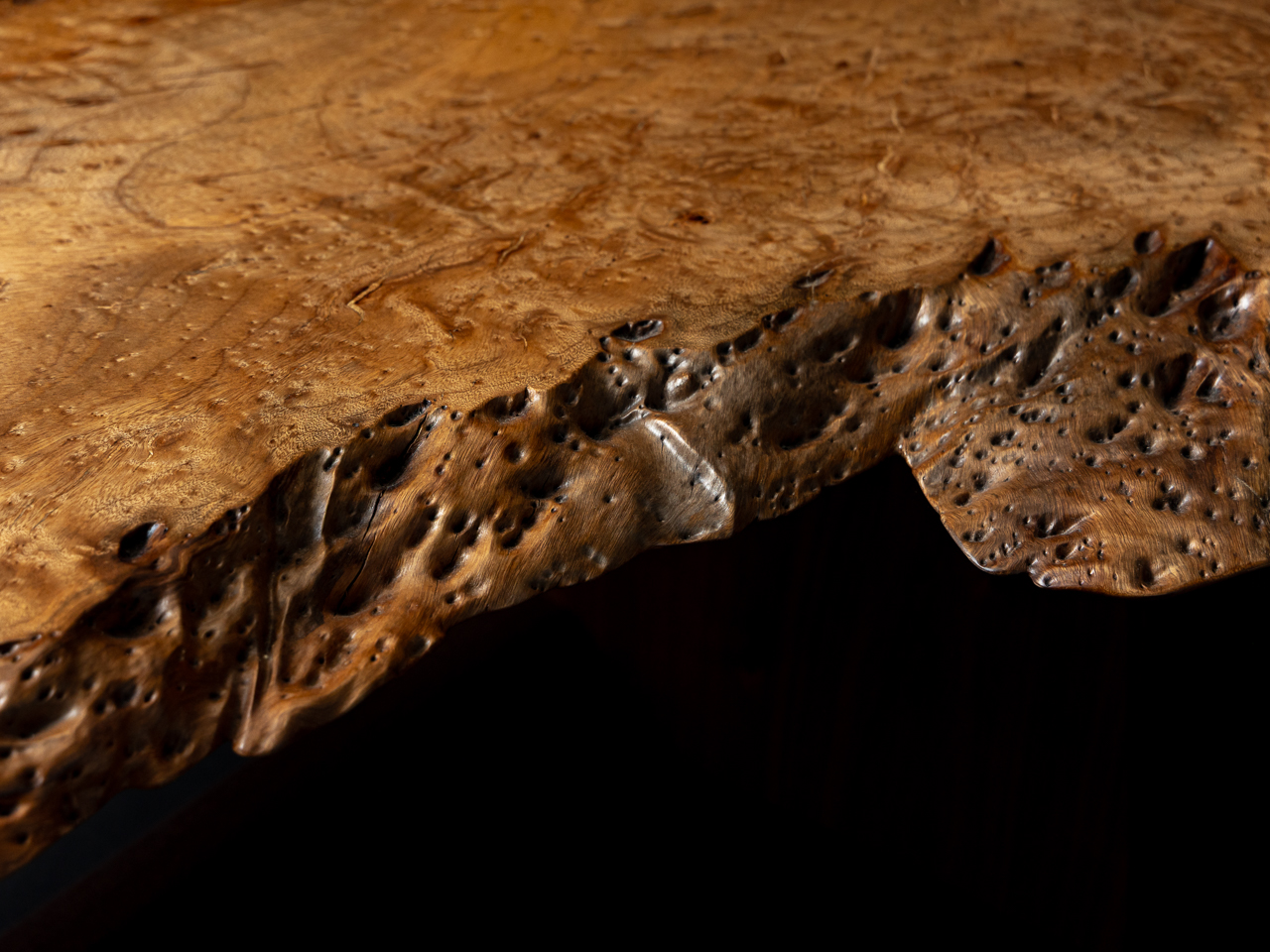
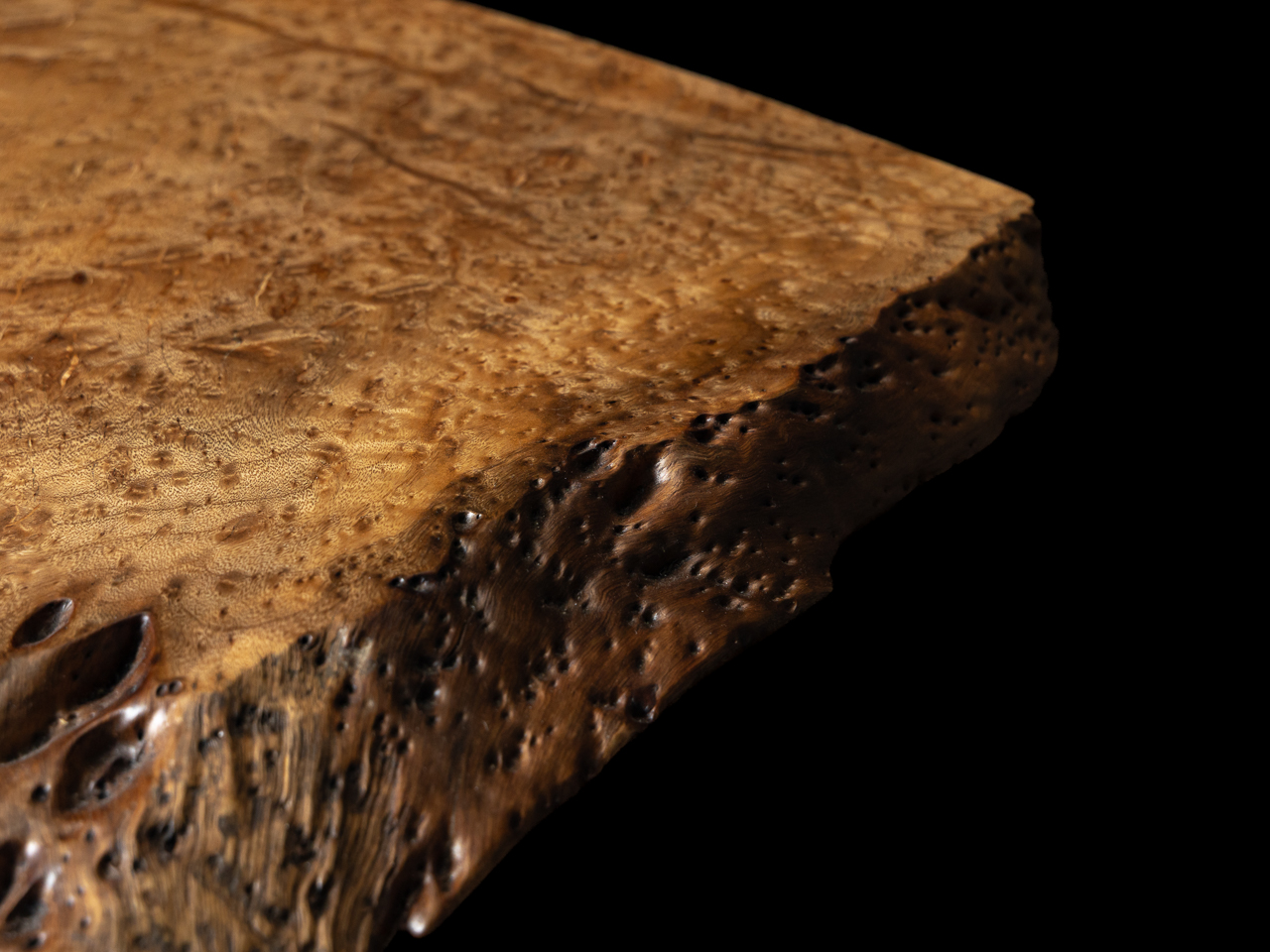
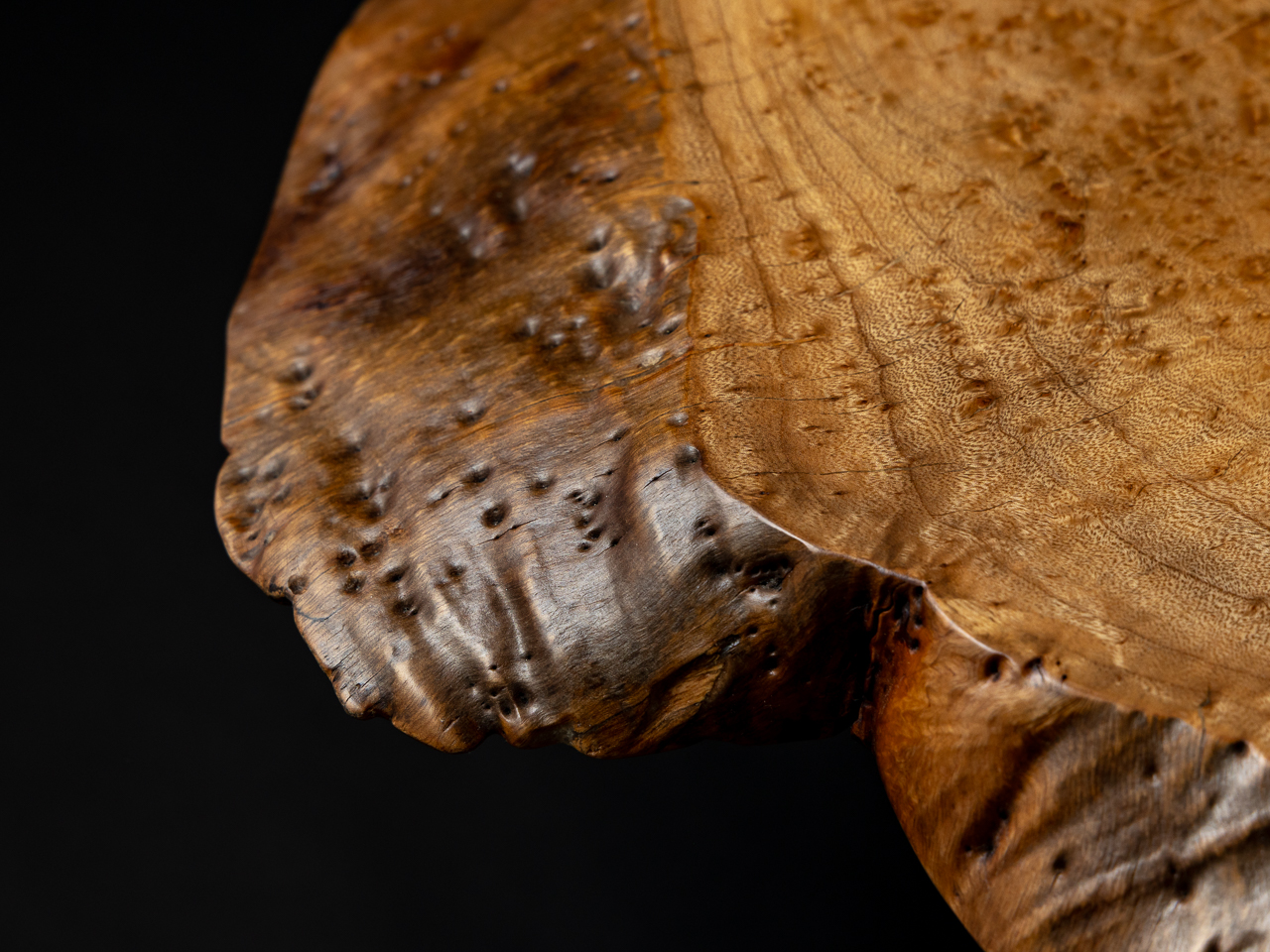
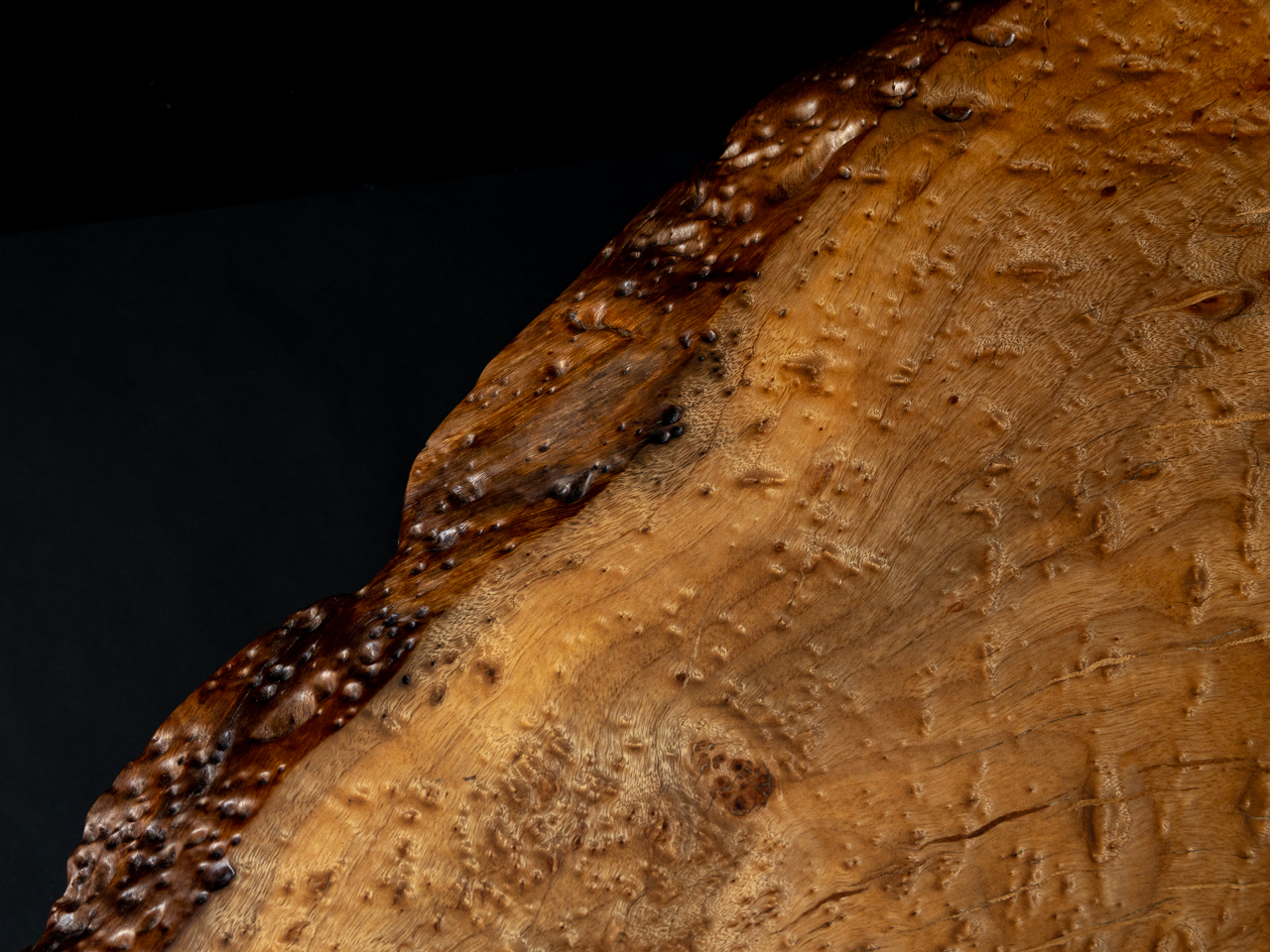
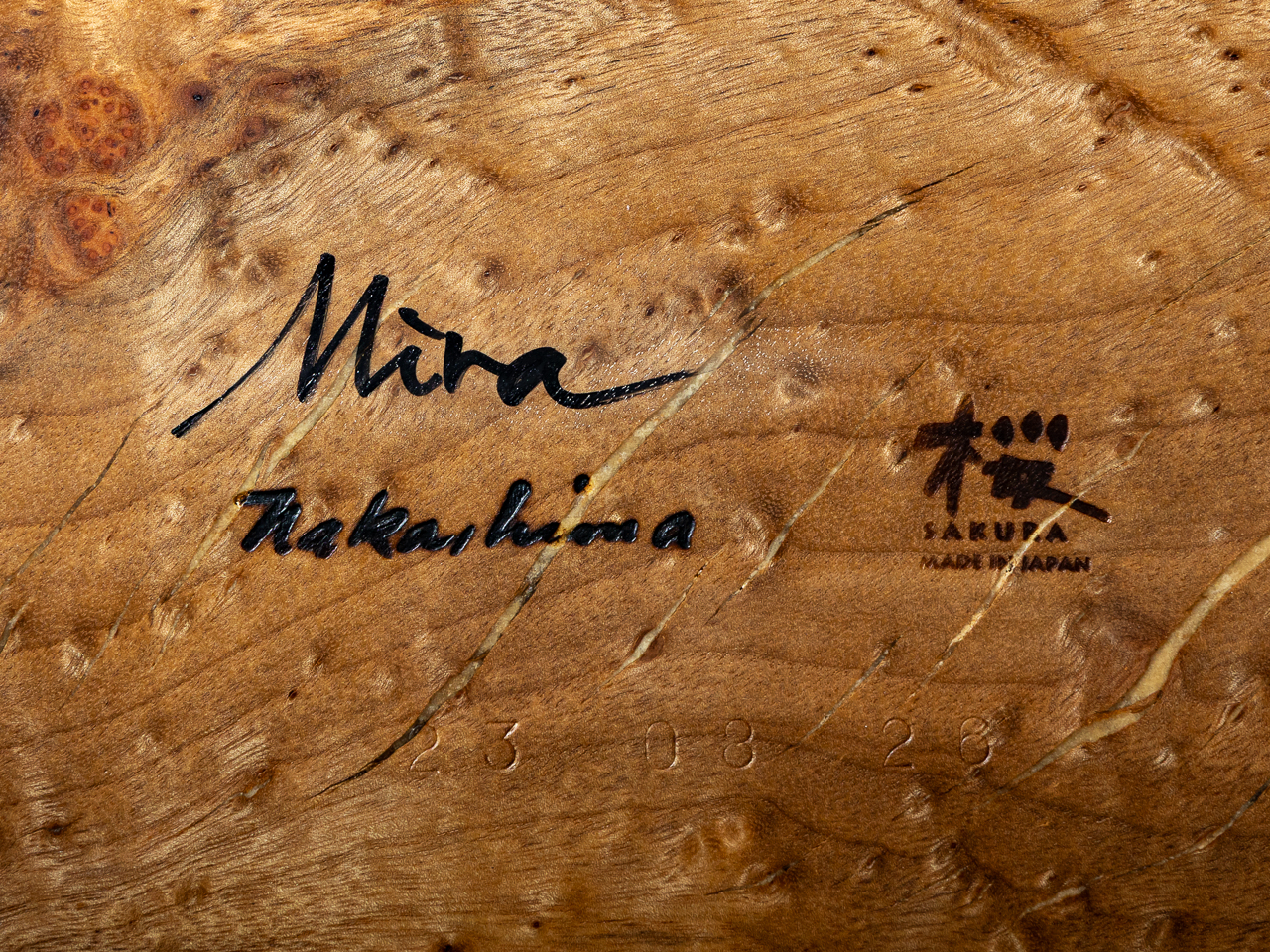
作品名:MingurenⅡ Coffee Table
サイズ:H40×150×75cm
価格:非売品
価格は税抜き表示です