

ノーマン・フォスター/Norman Foster
ノーマン・フォスター(1935~)は、20世紀後半の建築界を牽引したマンチェスター出身の建築家です。
マンチェスターは産業革命の軌跡を感じさせる景観と建築家を育む土壌を持つ町であり、その土地で生まれ育ったフォスターもまた、当然のごとく建築の世界に憧れを抱いていました。しかし、労働者階級の貧しい家庭だったことも手伝い、1951年に16歳という若さでマンチェスター市役所会計部に就職しました。ゆえに、彼が本格的に建築家を志すのは、1956年にマンチェスター大学に入学してからのことになります。同大学で建築と都市計画について学ぶと、卒業後の1962年に奨学金を得て渡米し、イェール大学建築学科修士課程に進みました。このイェール大学では、アメリカの建築家ポール・ルドルフ(1918~1997)から指導を受けたほか、のちにチームを組んで作品を発表していく盟友リチャード・ロジャース(1933~2021)との出会いを果たしています。
修士号を取得後、しばらくアメリカに残って都市再開発計画の顧問として活動したのち、1963年に帰国すると、ロンドンにてロジャースとそれぞれのパートナーとともに「チーム4」を結成します。このチームでいくつかの小品を発表したフォスターは、1967年、妻ウェンディとフォスター・アソシエイツ(現フォスター・アンド・パートナーズ)を設立します。また、フォスターが師として仰ぎ、多大な影響を受けたというアメリカの建築家リチャード・バックミンスター・フラー(1895~1983)とは、1971年からフラーが亡くなるまでの12年間、協働のプロジェクトを展開しています。
「建築は芸術と科学の融合」であると主張するフォスターの建築には、洗練された美しさとハイテク技術、そして環境への配慮が同居していますが、この根底には、1960年代に「宇宙船地球号」という概念を提唱し、人類と自然の共存をいち早く訴えていた先達フラーの思想が息づいています。たとえば、香港上海銀行(1985年)やスタンステッド空港(1991年)に代表されるように、フォスターの作品は「スキン(表層)とボーン(骨組み)」を基本としており、これらの建造物は「最小の資源で最大の面積を覆う」ことを目指したフラー考案のジオデシック・ドームと同じく、スケールが大きいながらも、使用する素材や環境への負荷を最小限に抑える工夫が施されているのです。また、ドイツ連邦議会新議事堂(1999年)や大英博物館のグレートコート(2000年)の改修プロジェクトなど、歴史的建造物を現代的に再生させた手腕も高く評価されています。東京では、日本の寺院の屋根に着想を得たというセンチュリー・タワー(1991年)が制作されています。
このように、規模の大きな作品を数多く手がけたフォスターですが、2023年にパリで開催された大回顧展における展示は、デザインやアイディアを練る大量のスケッチから始まっています。「建築もデザインも、全て紙の上から始まるものです」とは本人が語るところですが、人々を圧倒してやまない巨大な建造物の原点を、手描きの温かみが残るスケッチから探ってみれば、新たな気づきがあるかもしれません。
Norman Foster (1935–) is a Manchester-born architect who has been a pre-eminent figure in global architecture since the late 20th century.
Manchester’s landscape, shaped by the Industrial Revolution, proved fertile ground for aspiring architects. Although Foster was raised there, his path was not immediate; his working-class roots led him to join the Manchester City Council’s accounts department at 16. It was only in 1951, and later upon enrolling at Manchester University in 1956, that he began to pursue architecture in earnest. After studying architecture and town planning, he secured a scholarship to Yale University in 1962 for his Master’s degree. There, he studied under Paul Rudolph and met his lifelong collaborator and friend, Richard Rogers.
Following his Master’s, Foster worked briefly as an urban redevelopment consultant in the US before returning to London in 1963 to form ‘Team 4’ with Rogers and their partners. After several small-scale projects, he founded Foster Associates (now Foster + Partners) with his wife, Wendy, in 1967. Crucially, Foster also collaborated for twelve years with his mentor, Richard Buckminster Fuller, from 1971 until Fuller’s death in 1983.
Foster’s architectural style, which he describes as a ‘fusion of art and science’, balances aesthetic refinement with high-tech engineering and environmental sensitivity. This approach is rooted in Fuller’s ‘Spaceship Earth’ philosophy, which advocated for the harmony of nature and humanity. His ‘skin and bone’ principle—seen in the HSBC Building (1985) and Stansted Airport (1991)—echoes Fuller’s geodesic domes by achieving maximum spatial efficiency with minimal materials.
His expertise in revitalising heritage sites with a contemporary touch is equally celebrated, notably the Reichstag (1999) and the British Museum’s Great Court (2000). In Tokyo, his Century Tower (1991) stands as a testament to his ability to draw inspiration from traditional Japanese temple roofs.
Despite his penchant for grand-scale structures, Foster’s 2023 Paris retrospective highlighted that his process remains intimate; it began with a vast collection of hand-drawn sketches. As he puts it: ‘Architecture and design all begin on paper.’ Revisiting these monumental works through the warmth of his original drawings offers a profound new perspective on his genius.
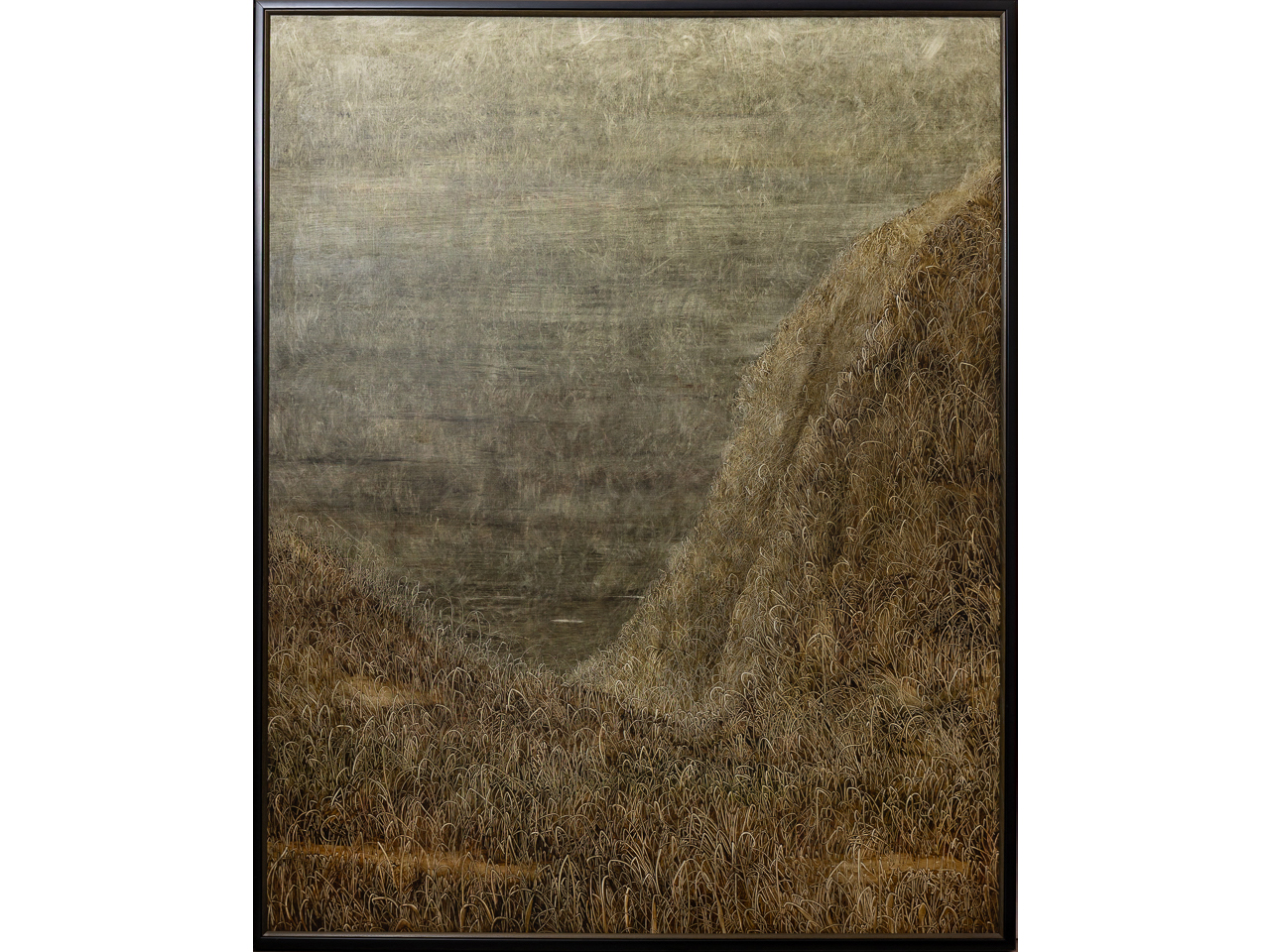
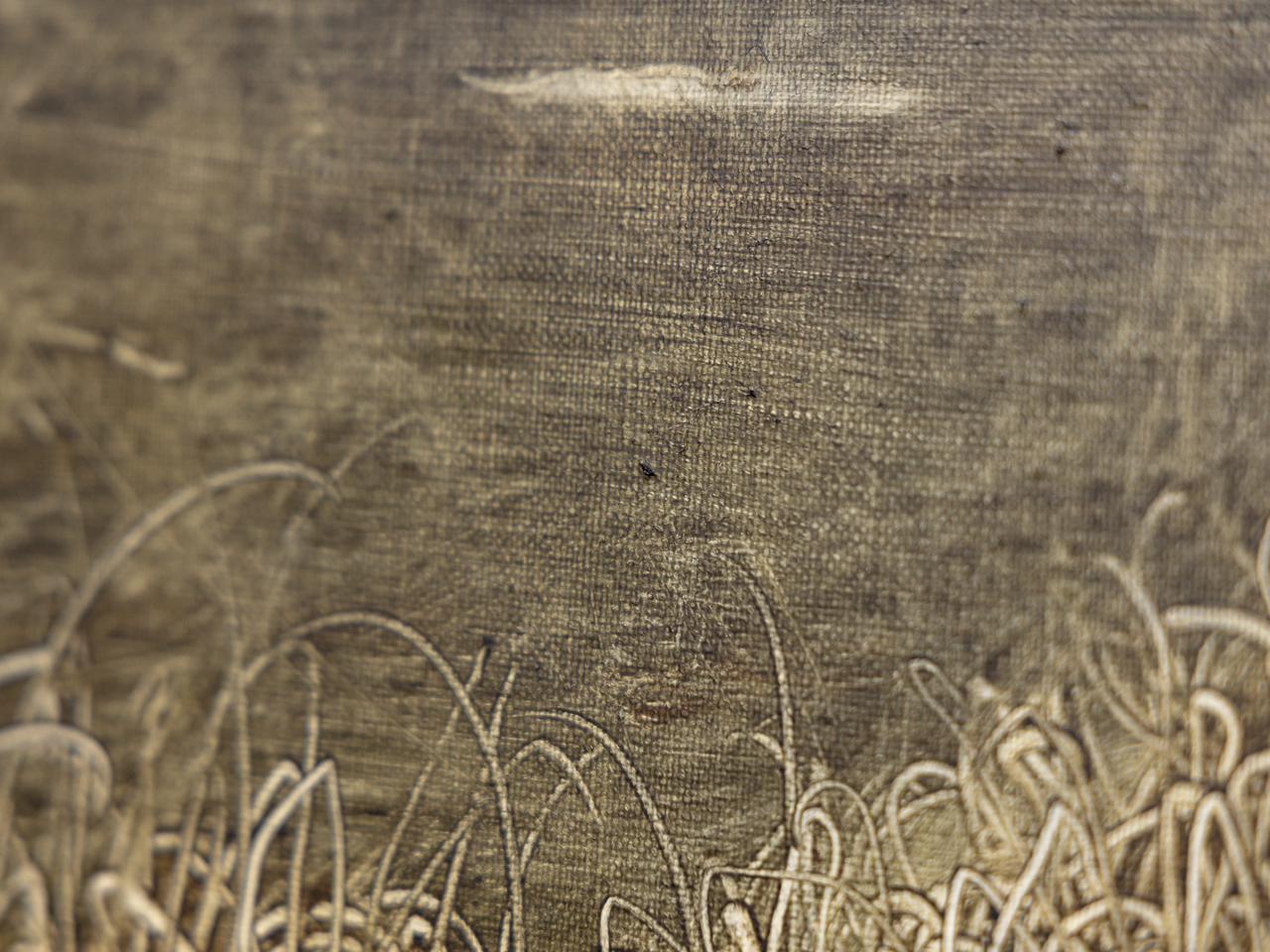
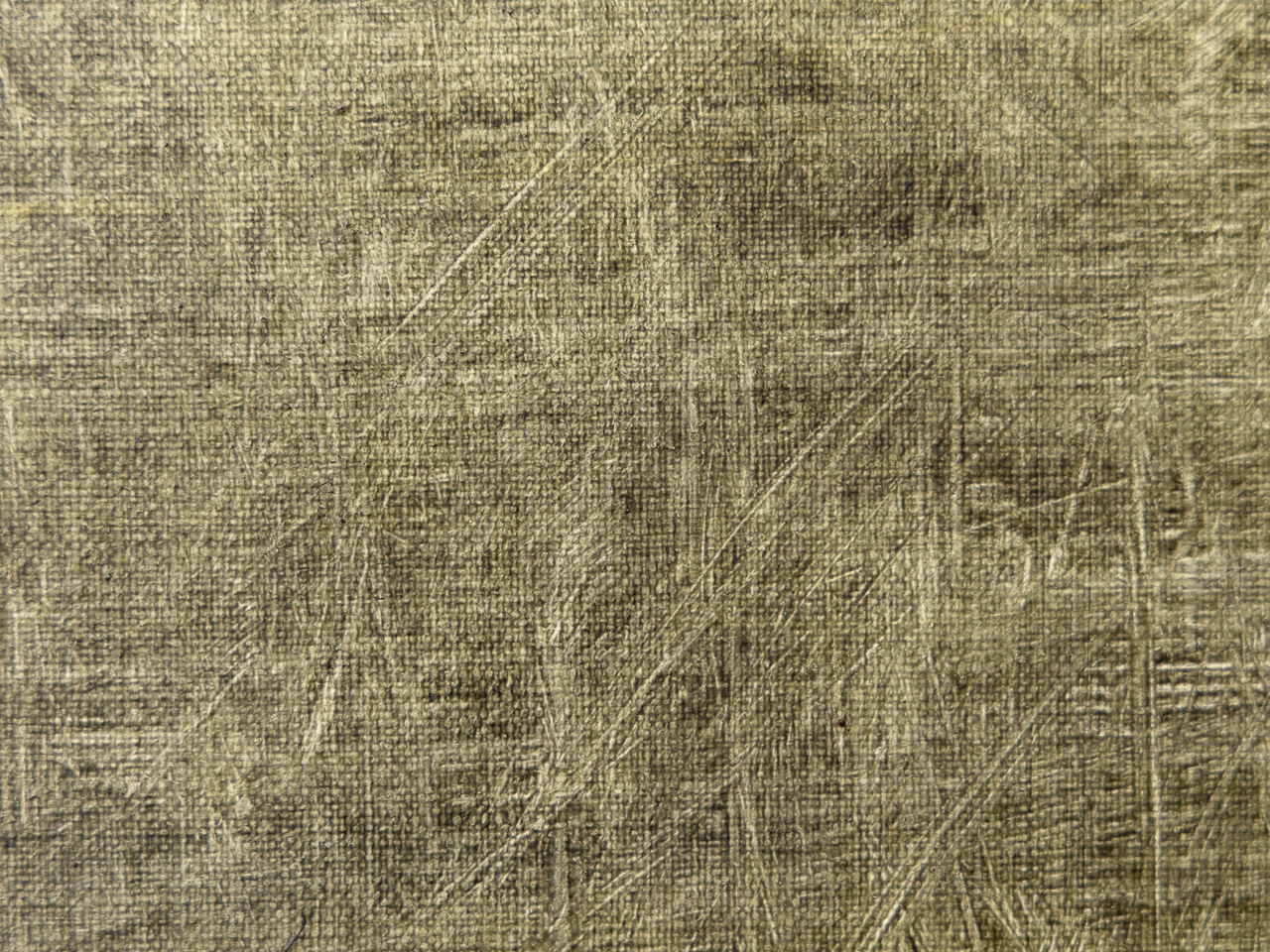
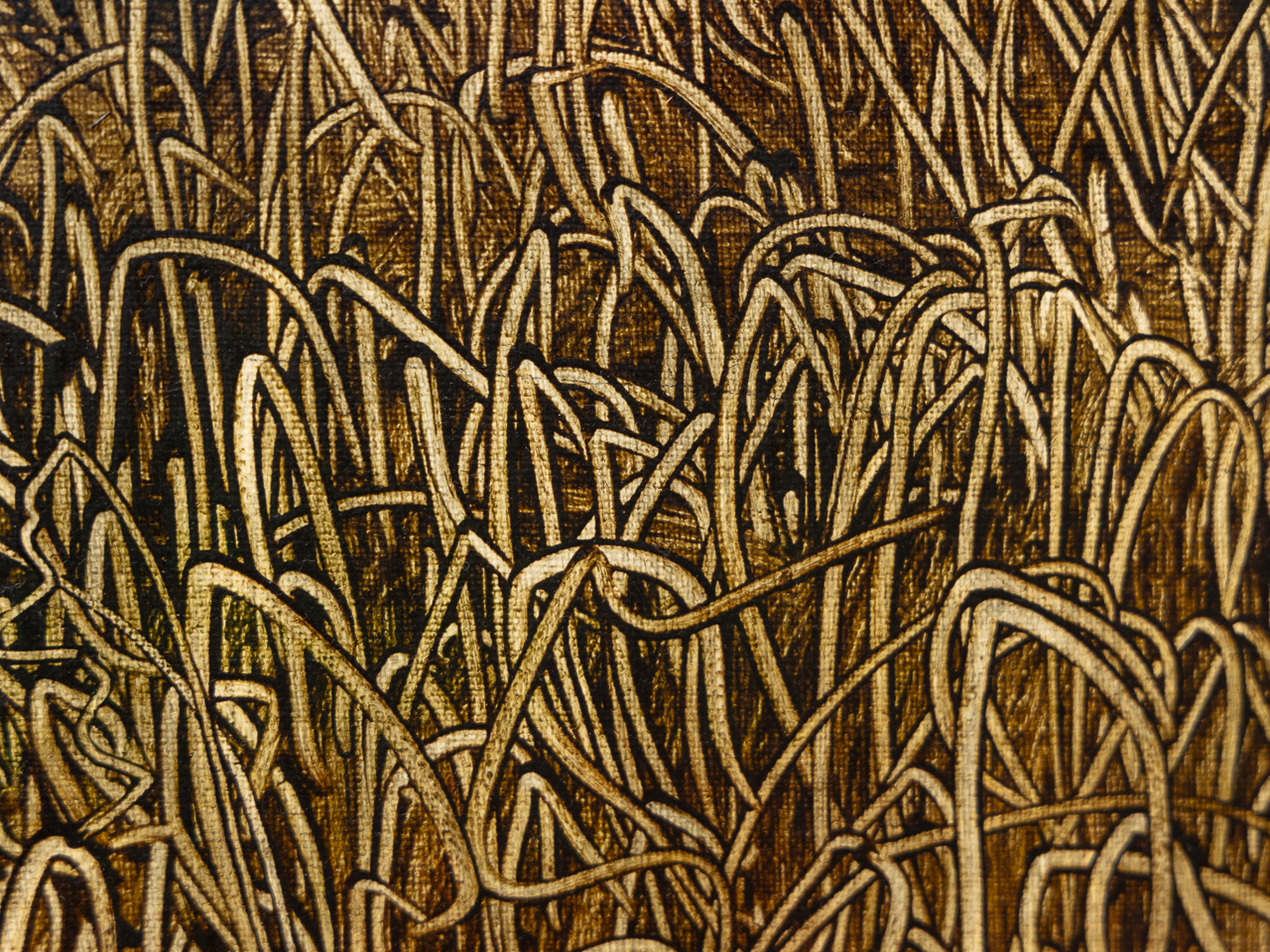
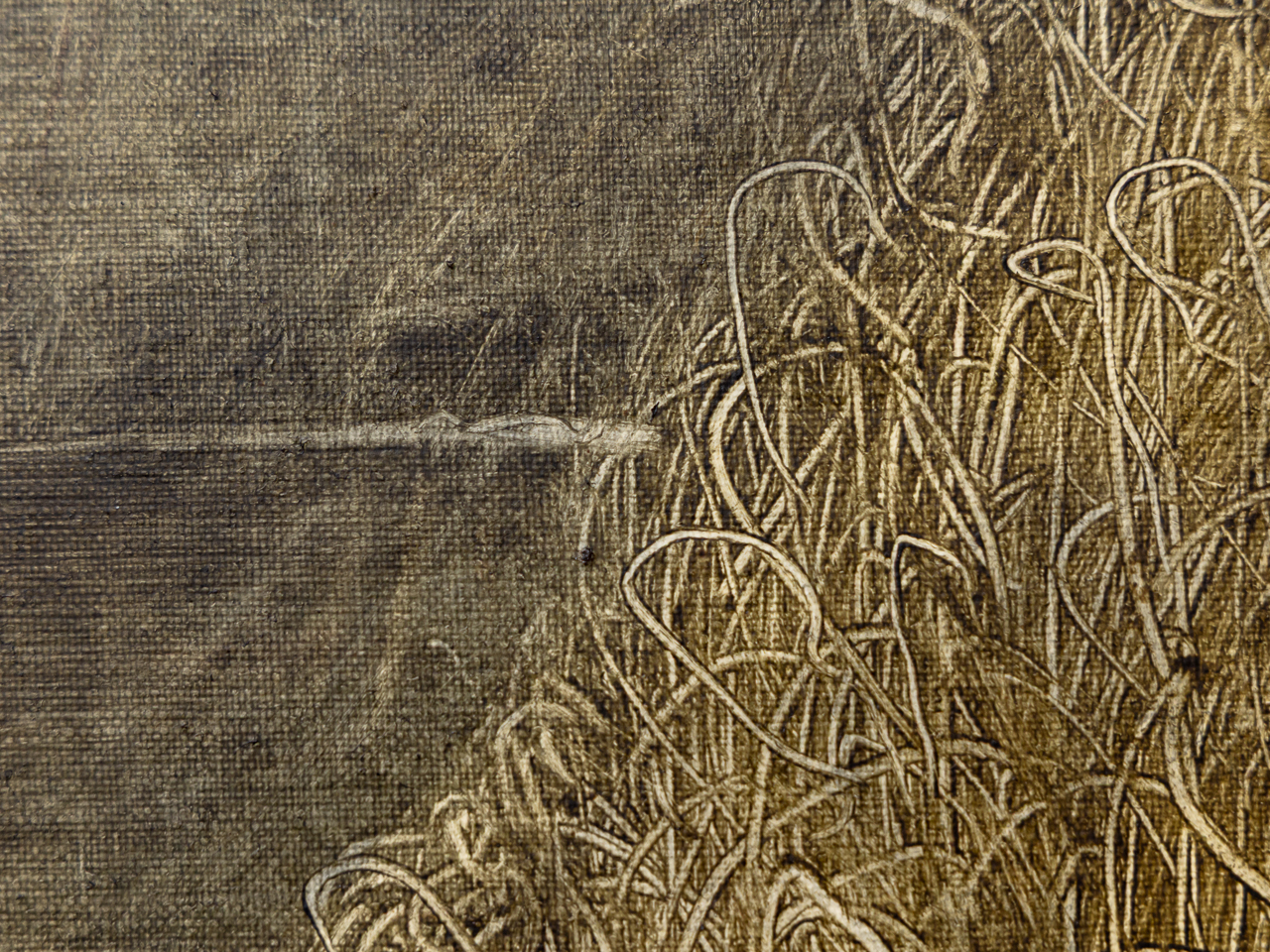
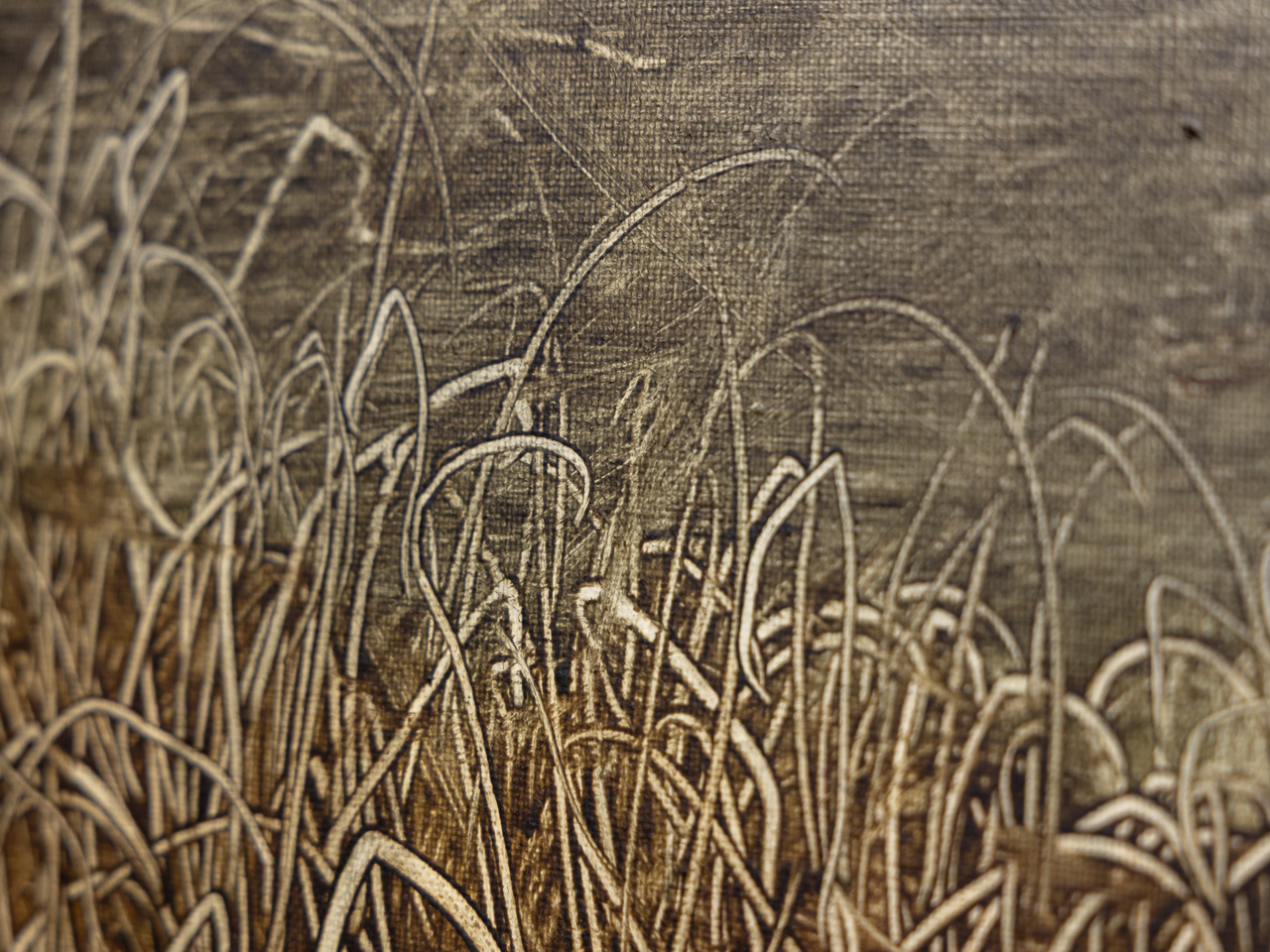
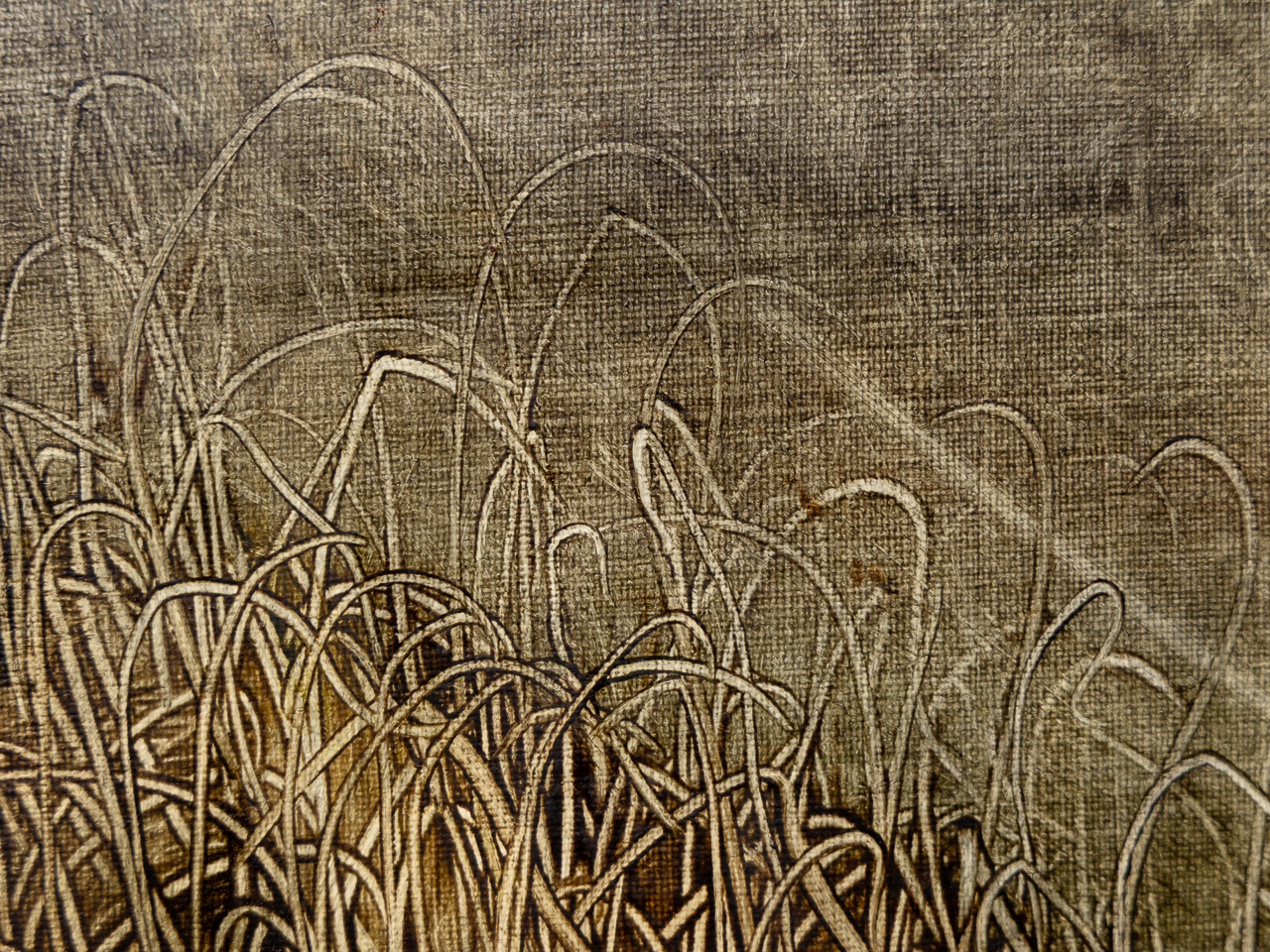

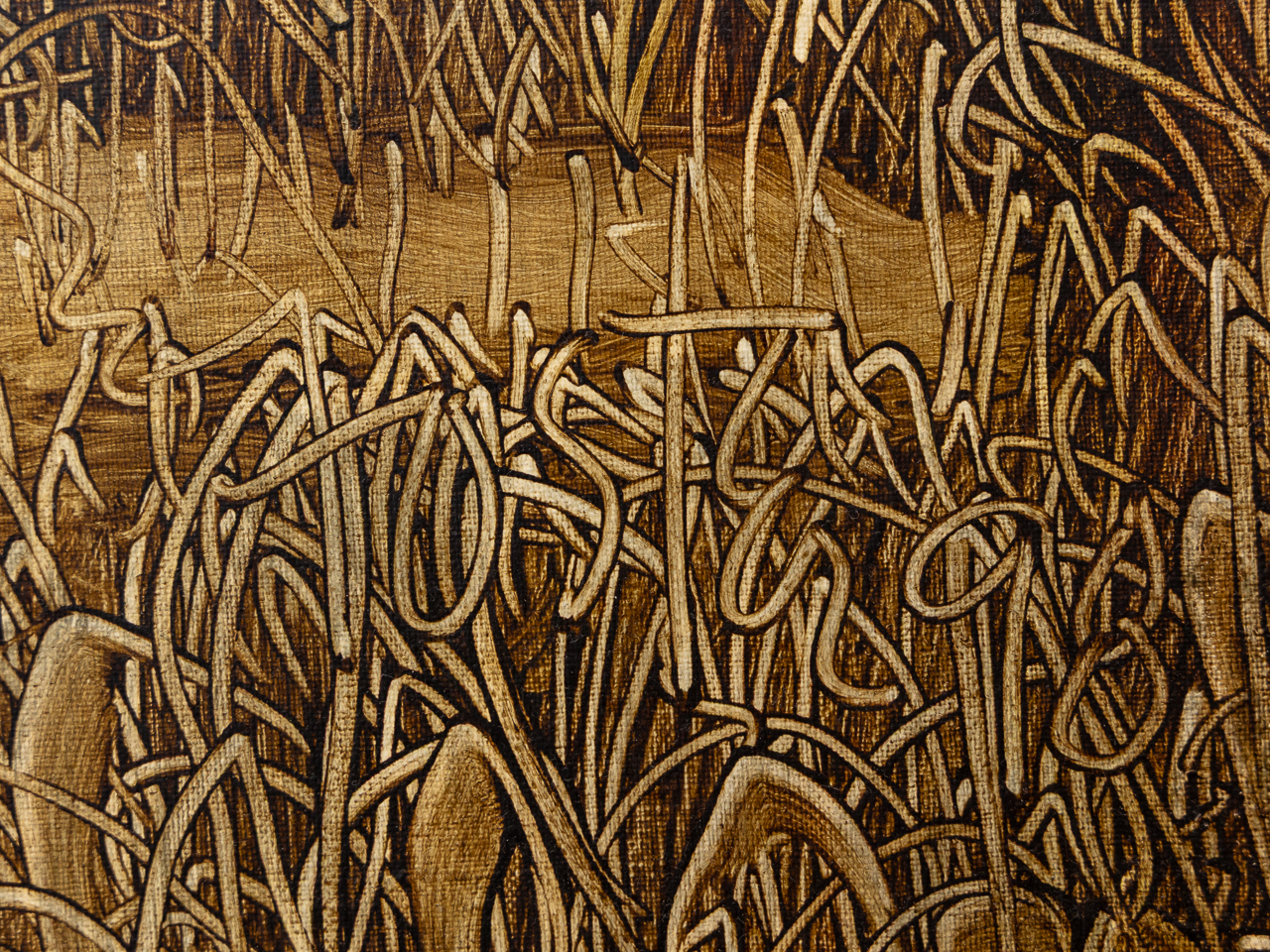
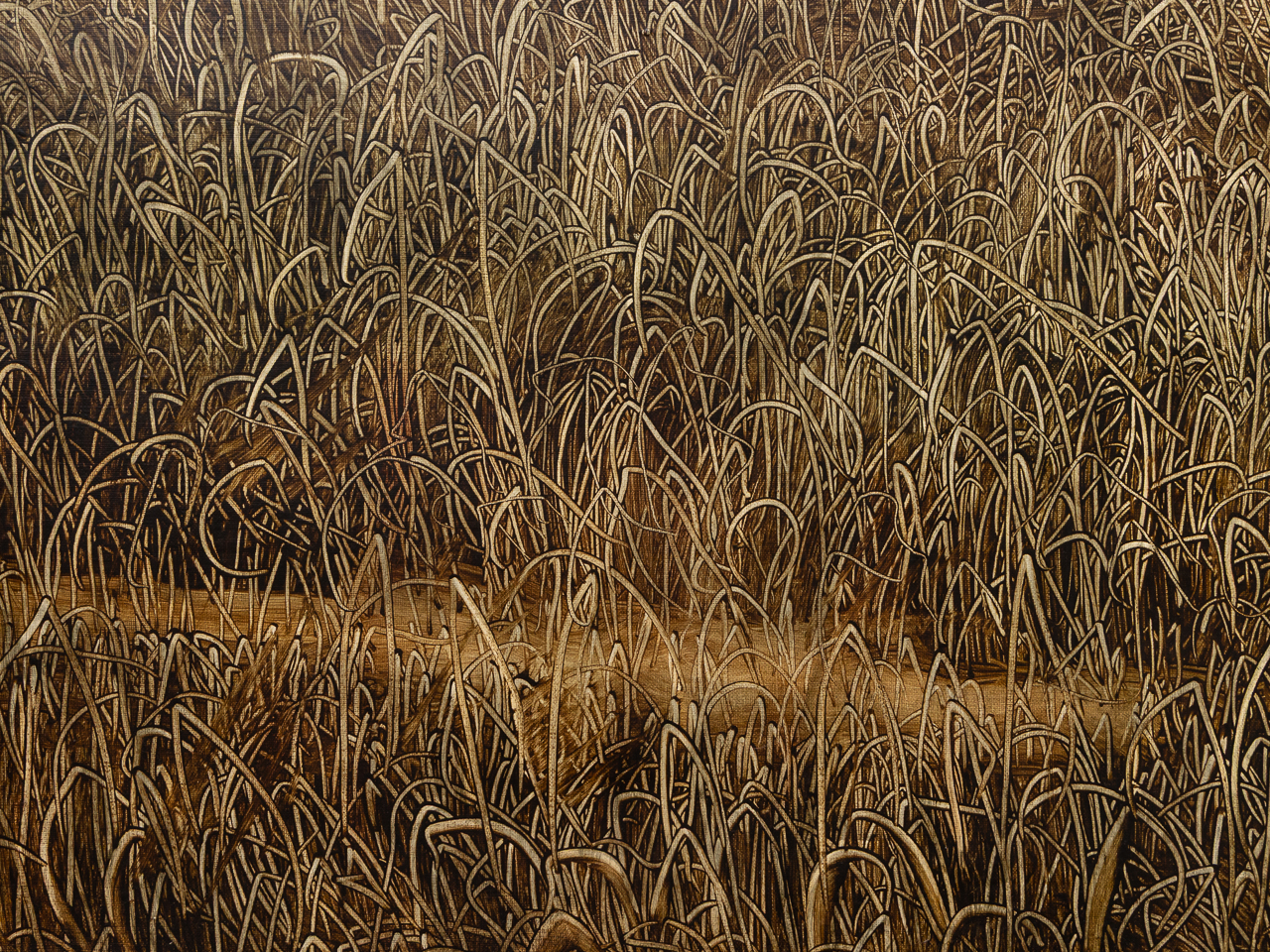
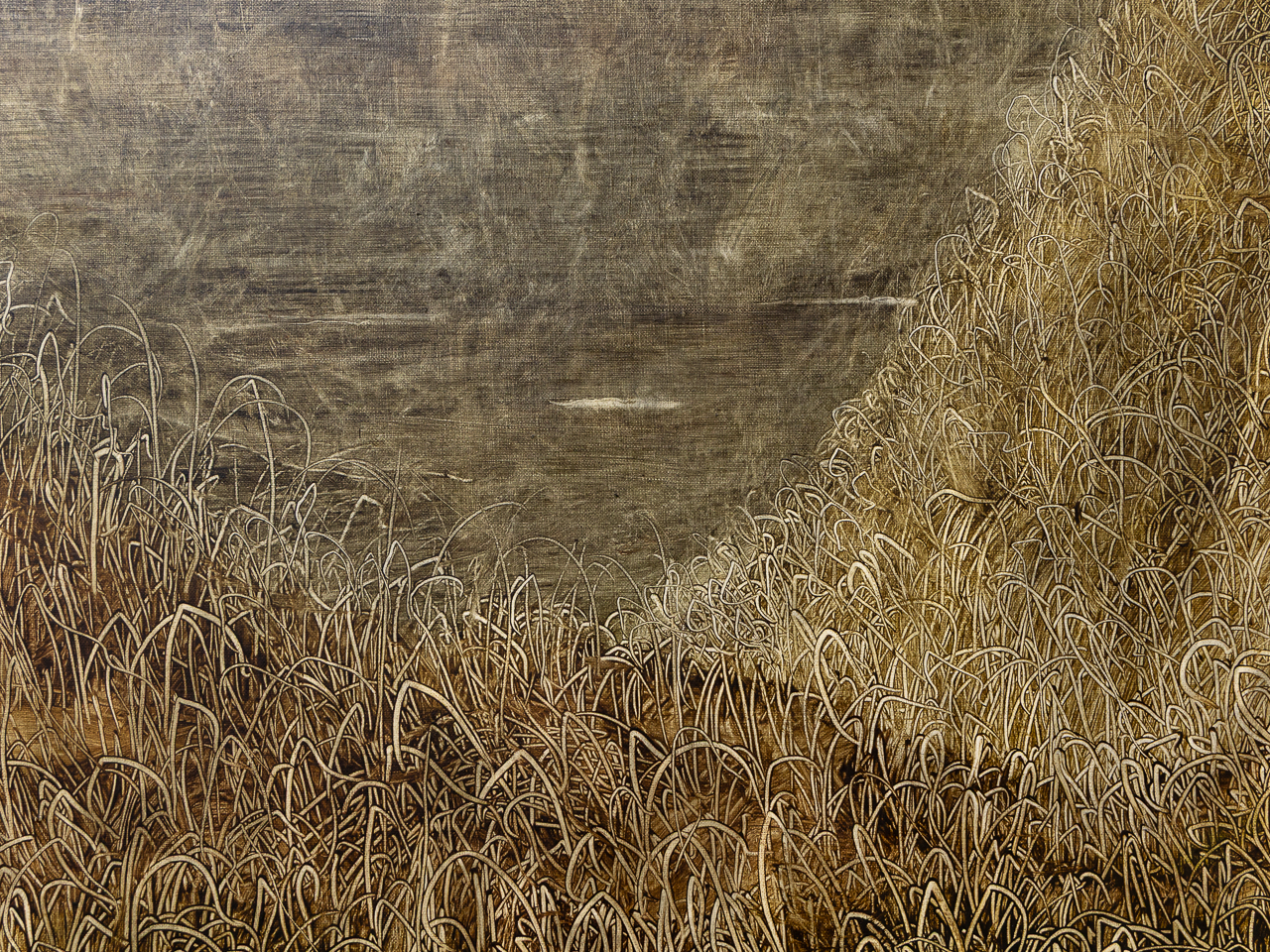
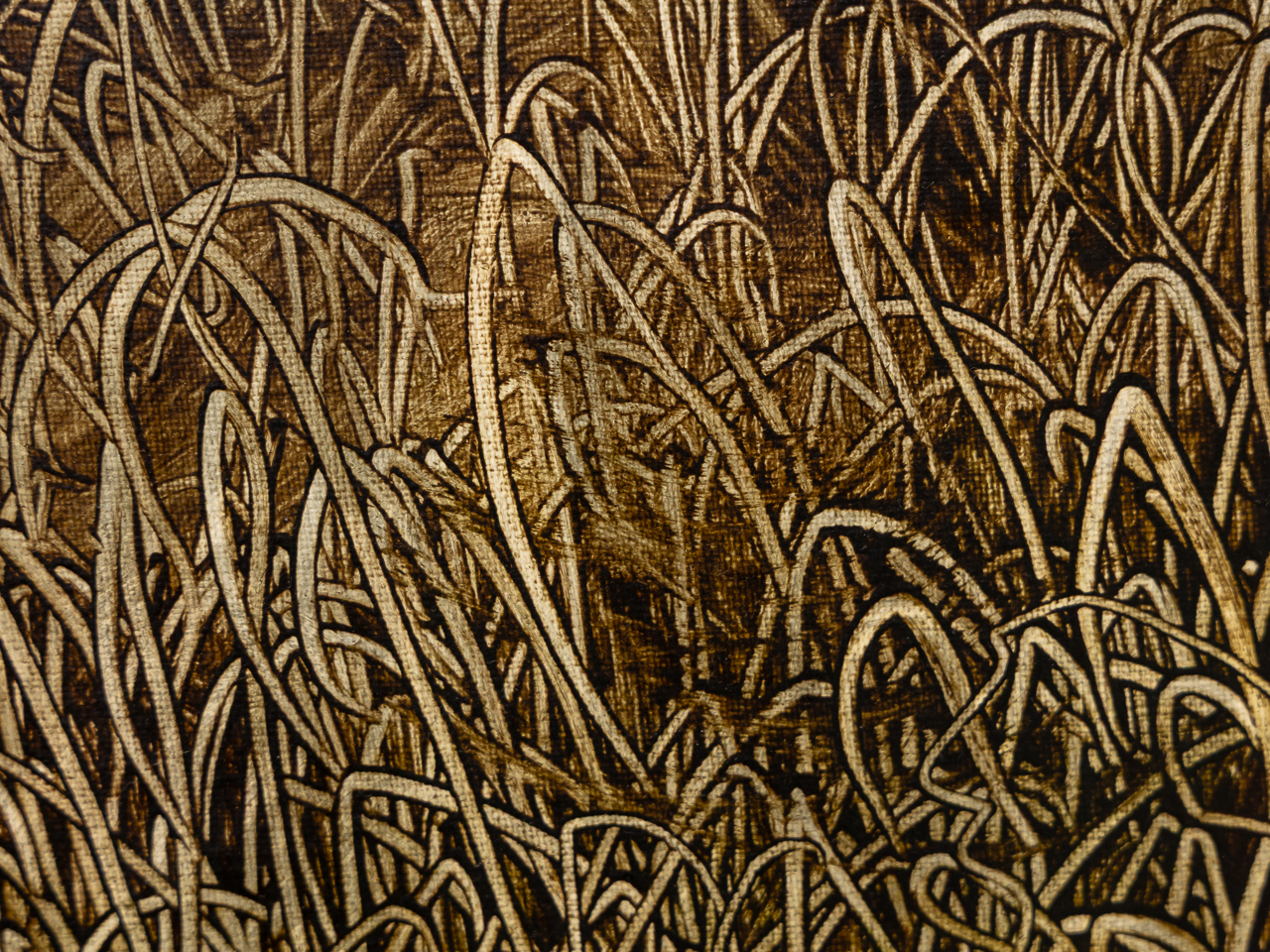
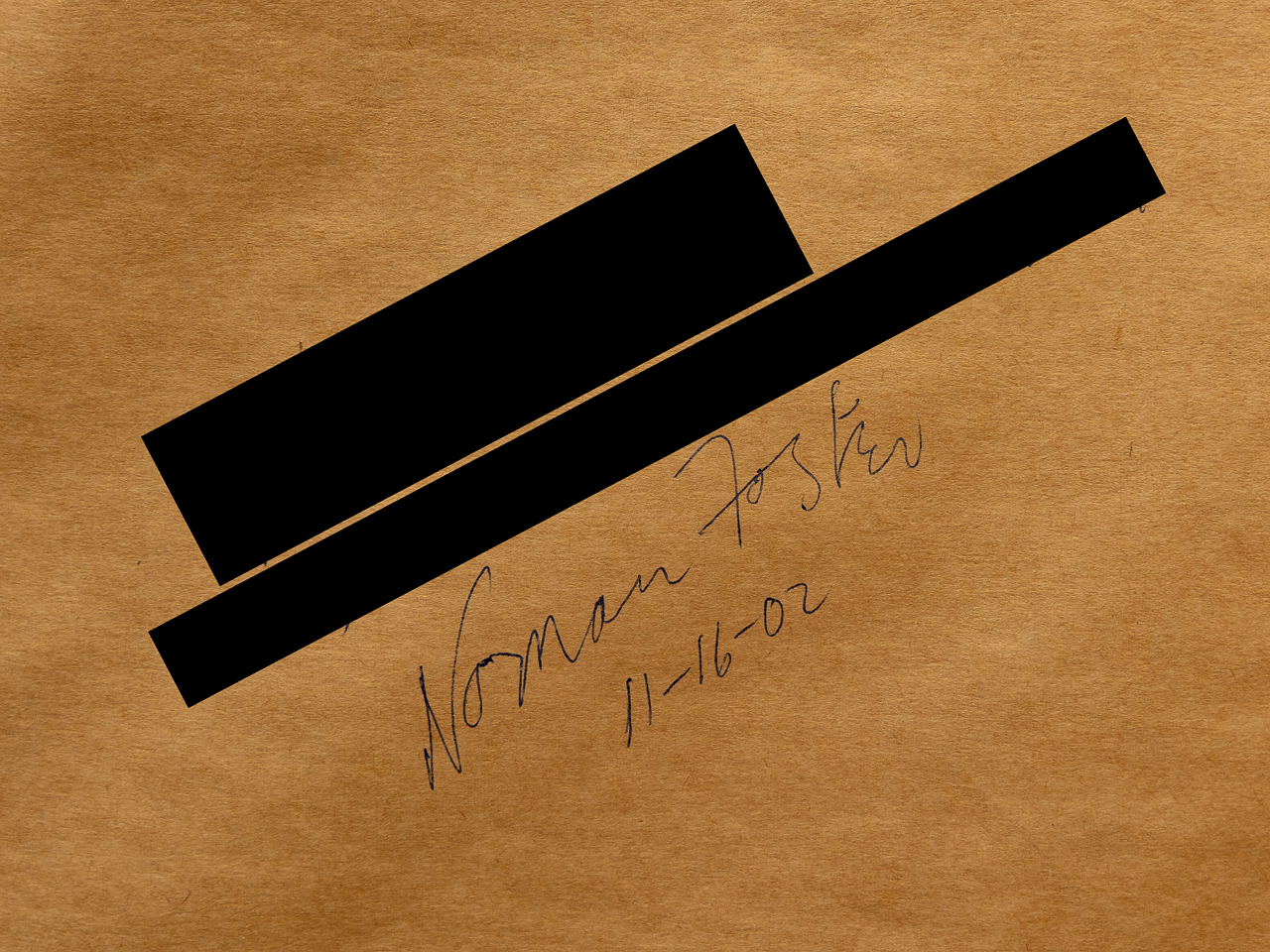
作品名:作品
サイズ:150×120cm (ミックストメディア 裏面に献辞)
価格:ASK
価格は税抜き表示です