
難波田 龍起/Nambata Tatsuoki
難波田龍起(1905~1997)は、日本の近代・現代美術を代表する洋画家の一人です。
北海道旭川市で生を受けた難波田は、生まれて間もなく家族とともに東京に出て、幾度かの転居ののち本郷駒込林町に移り住みます。奇しくもそこは、詩人であり彫刻家でもある高村光太郎(1883~1956)が構えていたアトリエの裏隣でした。1923年の関東大震災直後の夜警当番をきっかけに高村の知遇を得た難波田は、彼の芸術観や思想から多大なる影響を受けるようになります。当初は詩作を志していた難波田が絵画の道を歩み始めるのは、早稲田大学を中退し、太平洋画会研究所や本郷絵画研究所などで学ぶようになった1927年頃からです。高村の紹介で国画会の重鎮・川島理一郎(1886~1971)に師事し、セザンヌ(1839~1906)やルドン(1840~1916)への傾倒を経て、1935年頃より古代ギリシア彫刻に着想を得た幻想的な作風に転じます。この一連の作品には、彼が生涯抱き続けた古典への憧憬が感じられるとともに、独特な触感を持つマチエールからは、触覚や内面の発露を重視した高村の影響も見てとれます。
1950年代に入ると抽象への志向がより強まっていき、直線と曲線、近代と古代、無機的なものと有機的なものの対立や葛藤を通して、人間の内面や心の機微に切りこんでいきました。また、1956年の「世界・今日の美術展」を皮切りに日本で一大旋風を巻き起こしたアンフォルメルにも大いに触発され、1960年代はドリッピング(垂らし)によるダイナミックな線描で、生命の躍動を感じさせるオートマチックな画面を描き出しました。1970年代にはドリッピングから筆による線描に回帰しますが、線と色彩が融合して微妙な揺らぎを見せる独特の画面空間は、1950年代の幾何学的な作品群とは明らかに異なり、より深い精神性や詩情を漂わせています。以降、古代ギリシアへの憧憬や、1970年代に亡くした二人の息子への思い、ひいては生命全体に対する深い思索など、難波田の内面世界はカンヴァスの上で統合され、美しく抒情的な世界観が確立されていきました。最晩年に制作した、事実上の遺作【翔】(1996年)では、もはやはっきりとした形象が見出せないほど、線は色彩のなかに溶けこんでしまっており、その色彩の連なりや揺らめきが、難波田が追求してやまなかった生命の流動を感じさせます。
70年にも及ぶ難波田の画業は、初期から晩年にかけて絶えず新たな造形を求めて変化を繰り返してきました。それは、難波田が高村から学び、自身の根幹とした思想、「優れた芸術作品は必ず生命の戦慄を宿す」という芸術観を体現するものであったと言えます。
Tatsuoki Nambata (1905-1997) is one of the leading Western-style painters representing modern and contemporary Japanese art.
Born in Asahikawa, Hokkaido, Nambada moved to Tokyo with his family soon after his birth, and after several moves settled in Hongo-Komagome-Hayashi-chō. Coincidentally, this was right next to the studio of the poet and sculptor Kōtarō Takamura (1883-1956). Following his assignment to night watch duty after the Great Kantō Earthquake of 1923, Nambata gained the acquaintance of Takamura, who would greatly influence his artistic views and philosophy. Initially aspiring to be a poet, Nambata began his journey into painting around 1927, after dropping out of Waseda University and studying at the Pacific Art Institute and Hongō Painting Institute. Under Takamura’s introduction, he studied under the prominent Japanese-style painting artist Riichirō Kawashima (1886-1971), and after being inspired by the works of Cézanne (1839-1906) and Redon (1840-1916), he transitioned to a fantastical style inspired by ancient Greek sculptures around 1935. In this series of works, one can feel his lifelong yearning for classical art, as well as the influence of Takamura’s emphasis on tactile sensation and internal expression, evident in the unique texture of his “matières”.
In the 1950s, his tendency toward abstraction became even stronger, as he delved into the intricacies of human inner feelings and minds through the juxtaposition and conflict of straight lines and curves, modernity and antiquity, inorganic and organic elements. Additionally, he was greatly inspired by the Art Informel movement, which sparked a major sensation in Japan starting with the “World of Today’s Art Exhibition” in 1956. In the 1960s, he used dynamic line drawings by dripping to create an automatic screen that evokes the vibrancy of life. In the 1970s, he returned to brush-drawn lines from dripping, but the unique spatial composition where lines and colors merged, exhibiting subtle fluctuations, was clearly distinct from his geometric works of the 1950s, exuding a deeper spirituality and poeticism. Subsequently, his inner world, including his yearning for ancient Greece, thoughts on his two sons who passed away in the 1970s, and ultimately contemplations on life as a whole, was integrated on the canvas, establishing a beautiful and lyrical worldview. In his final masterpiece, “Syou” (1996), Namrata’s lines dissolved into the colors to the extent that discernible forms were hardly visible anymore, and the continuum and flicker of colors evoke the fluidity of life that Nambata relentlessly pursued. Nambata’s artistic career spanning 70 years constantly sought new forms from his early years to his late years. It can be said that this embodies Nambata’s philosophy learned from Takamura and his fundamental belief that “Excellent work of art always carries the shiver of life”.
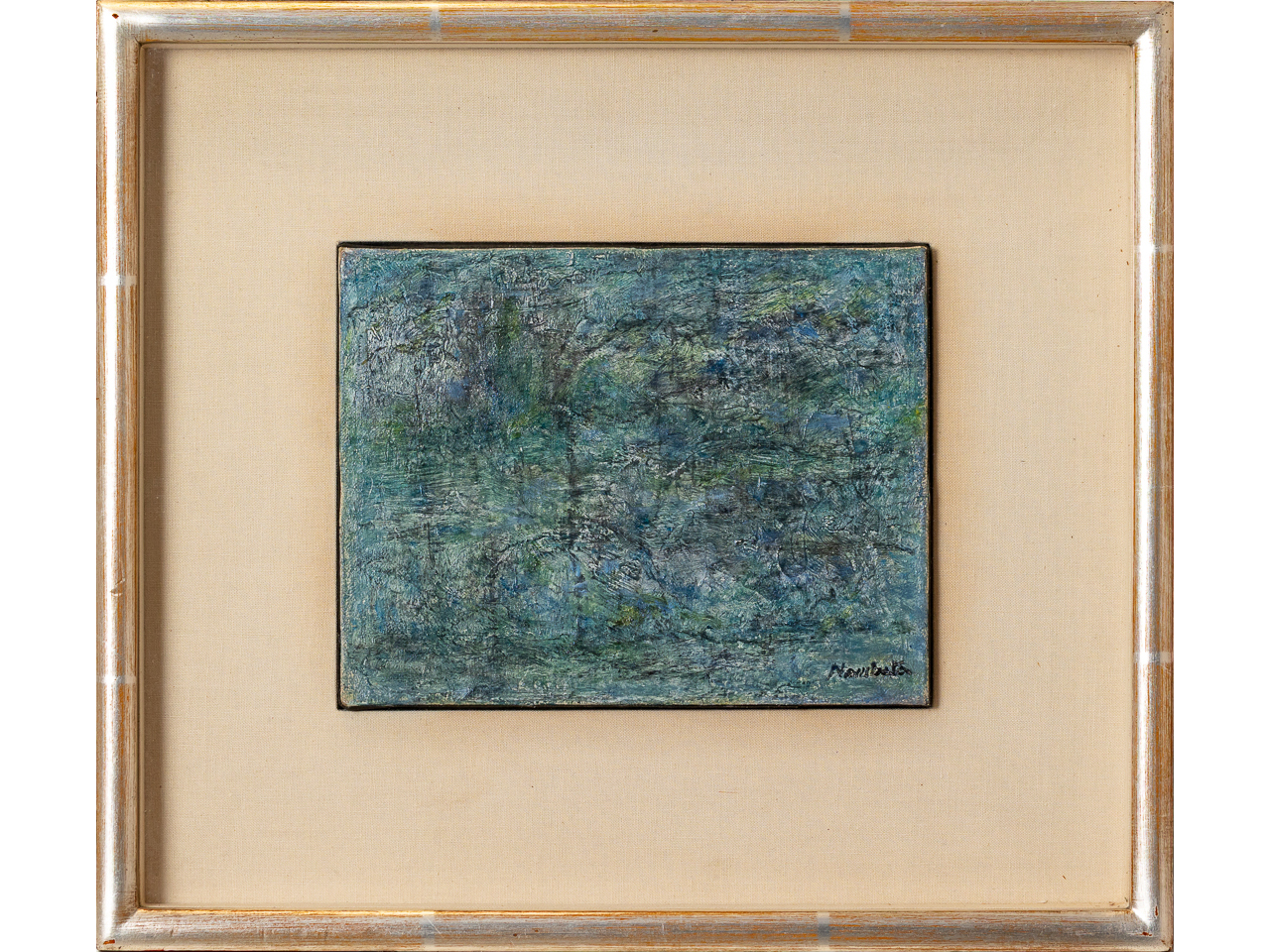
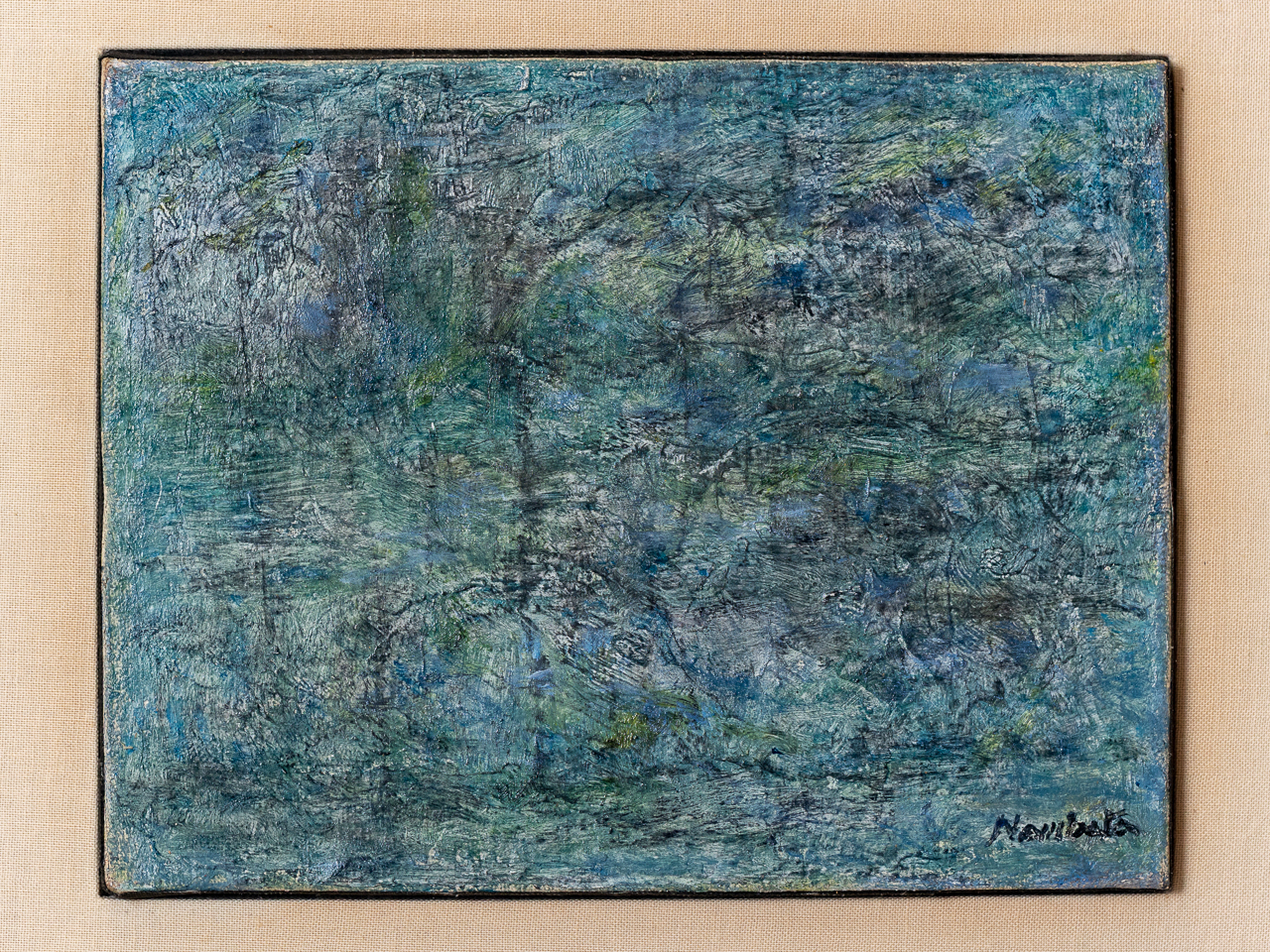
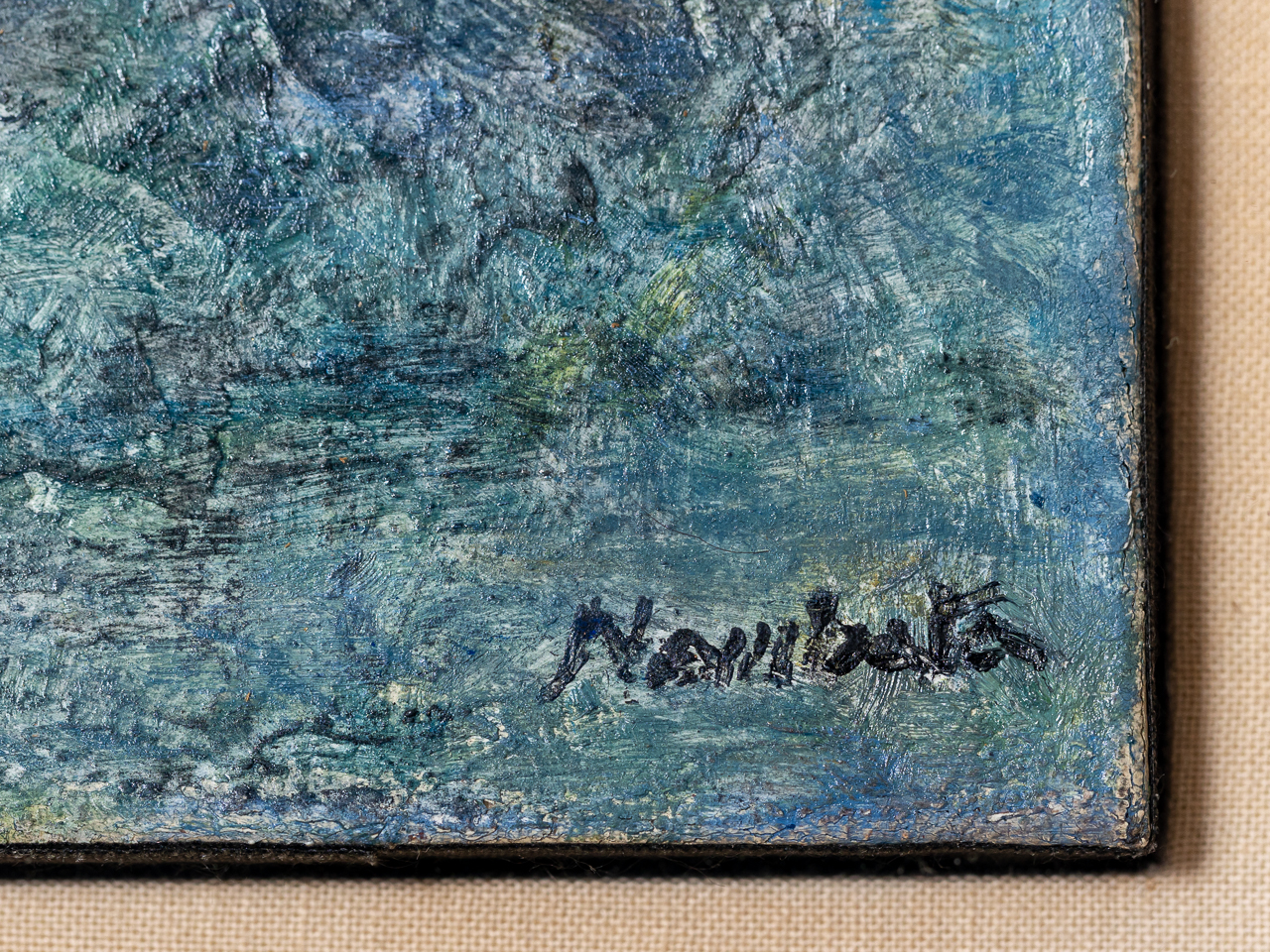
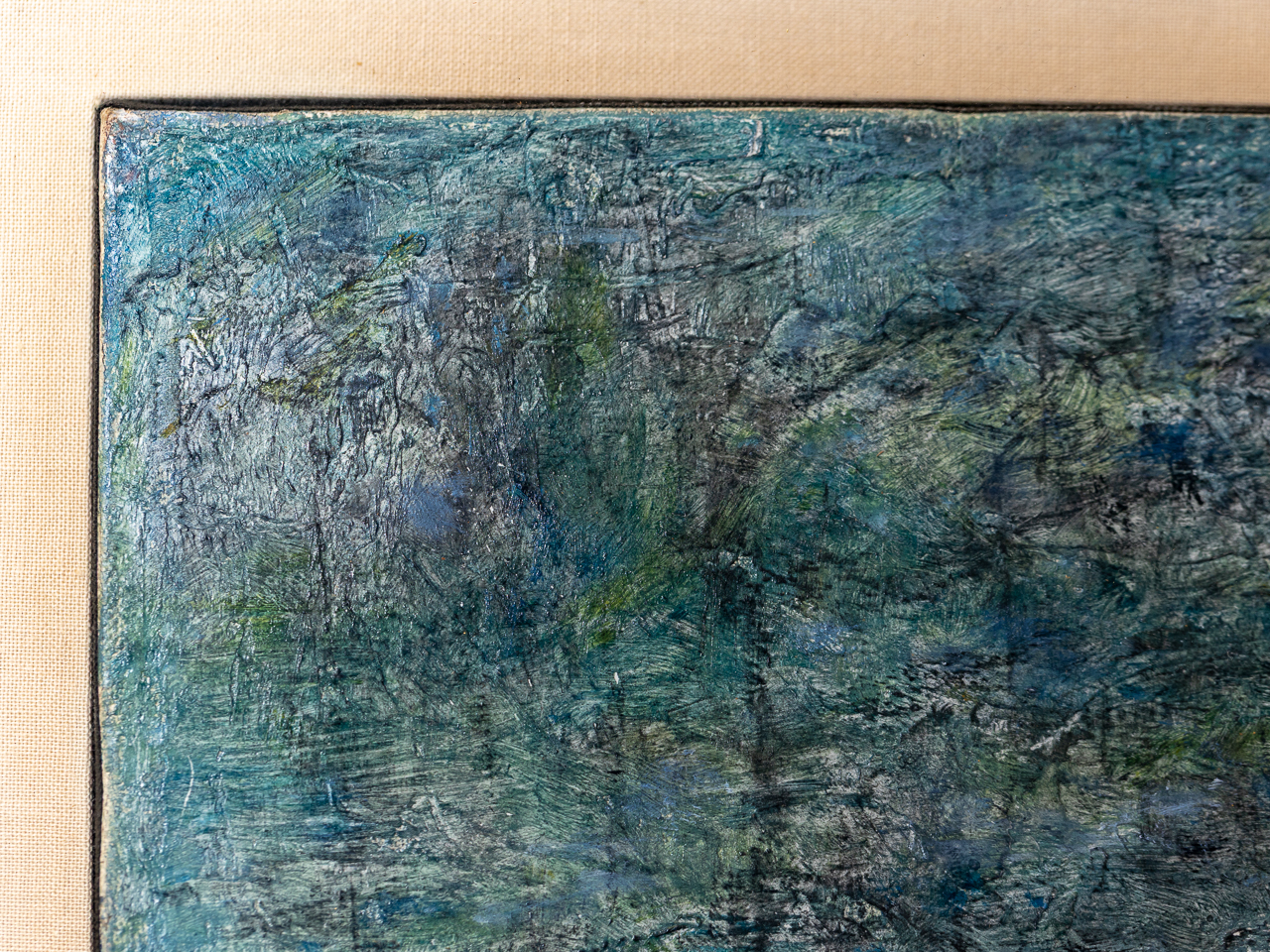
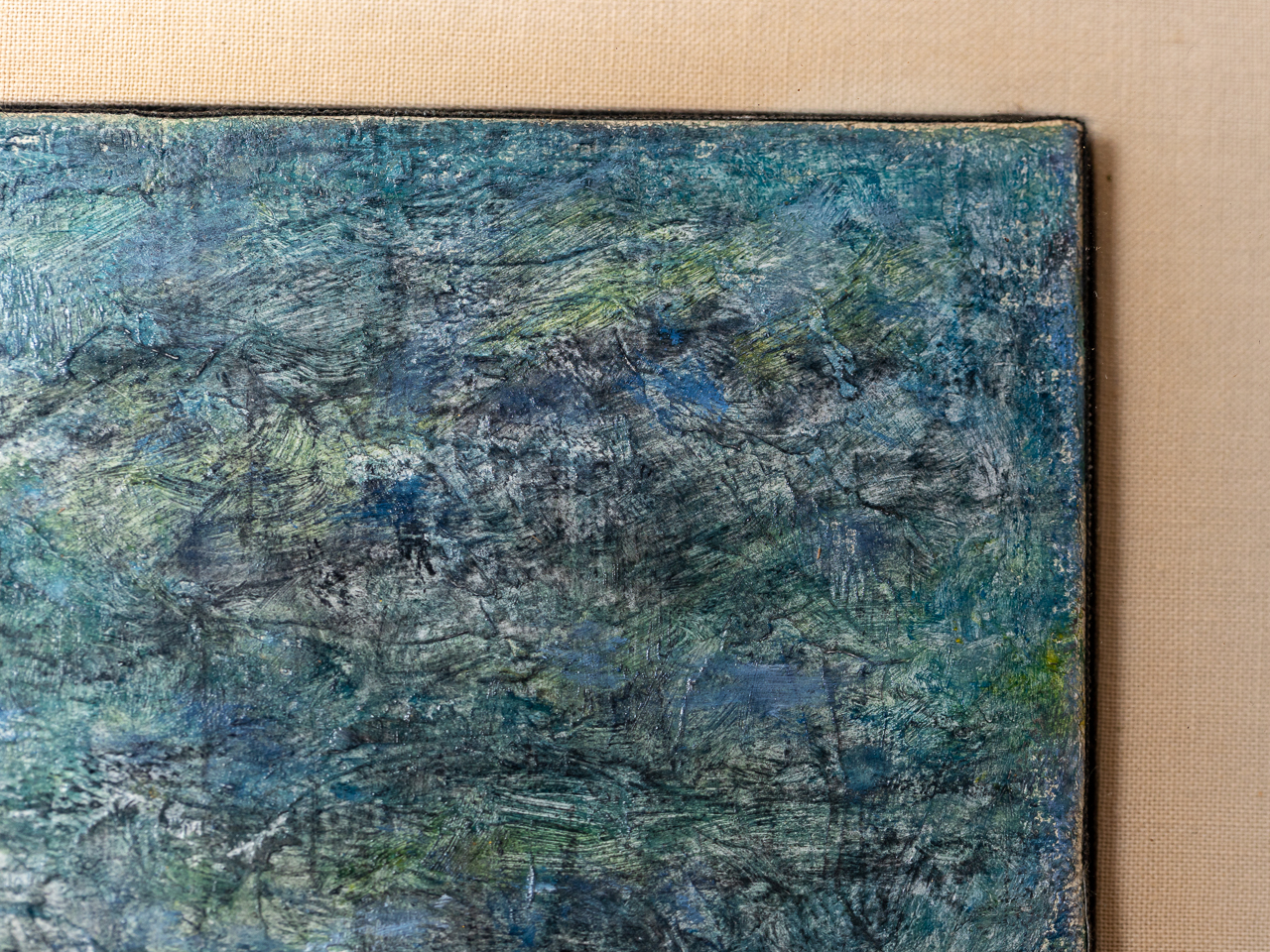
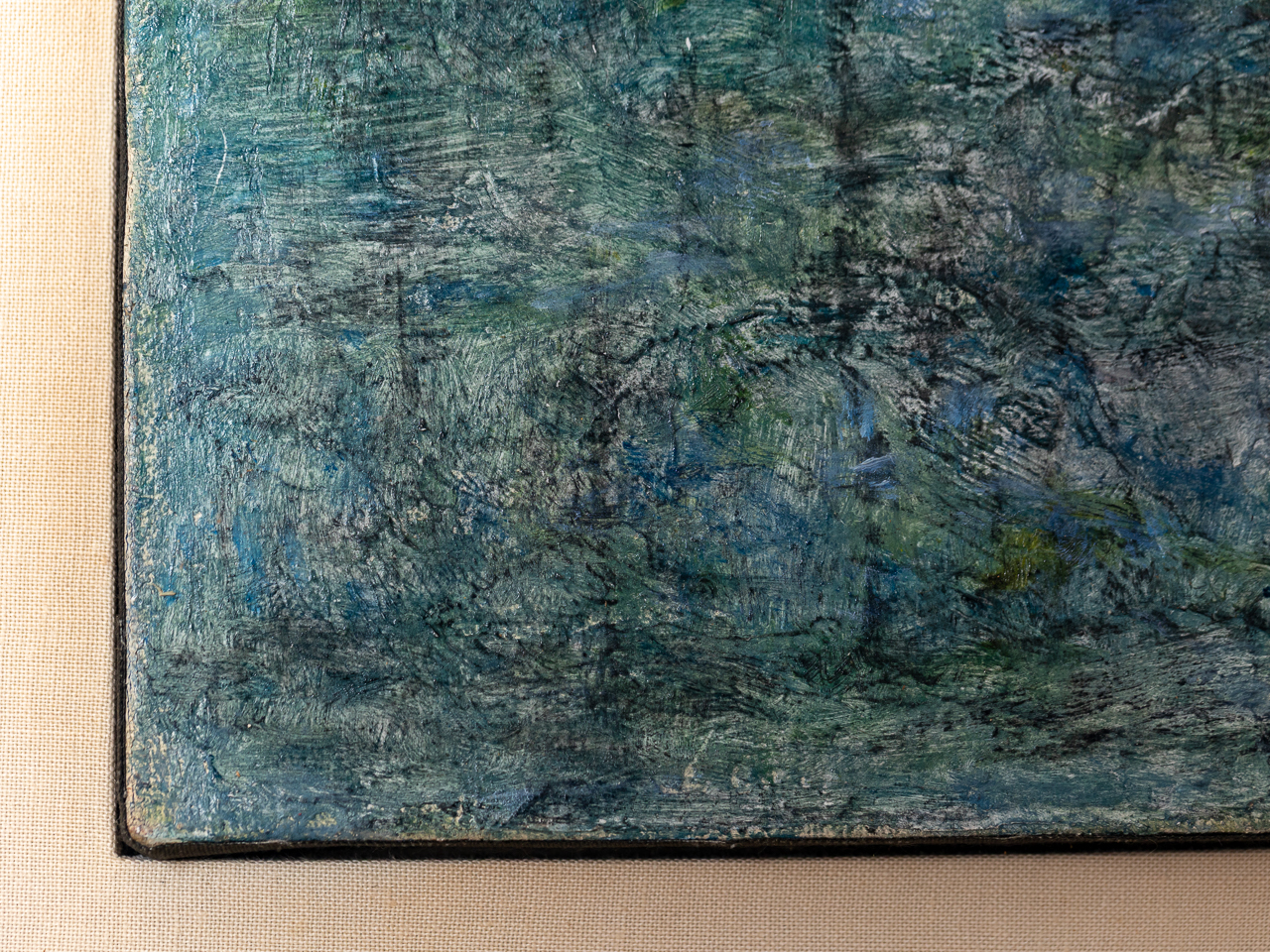
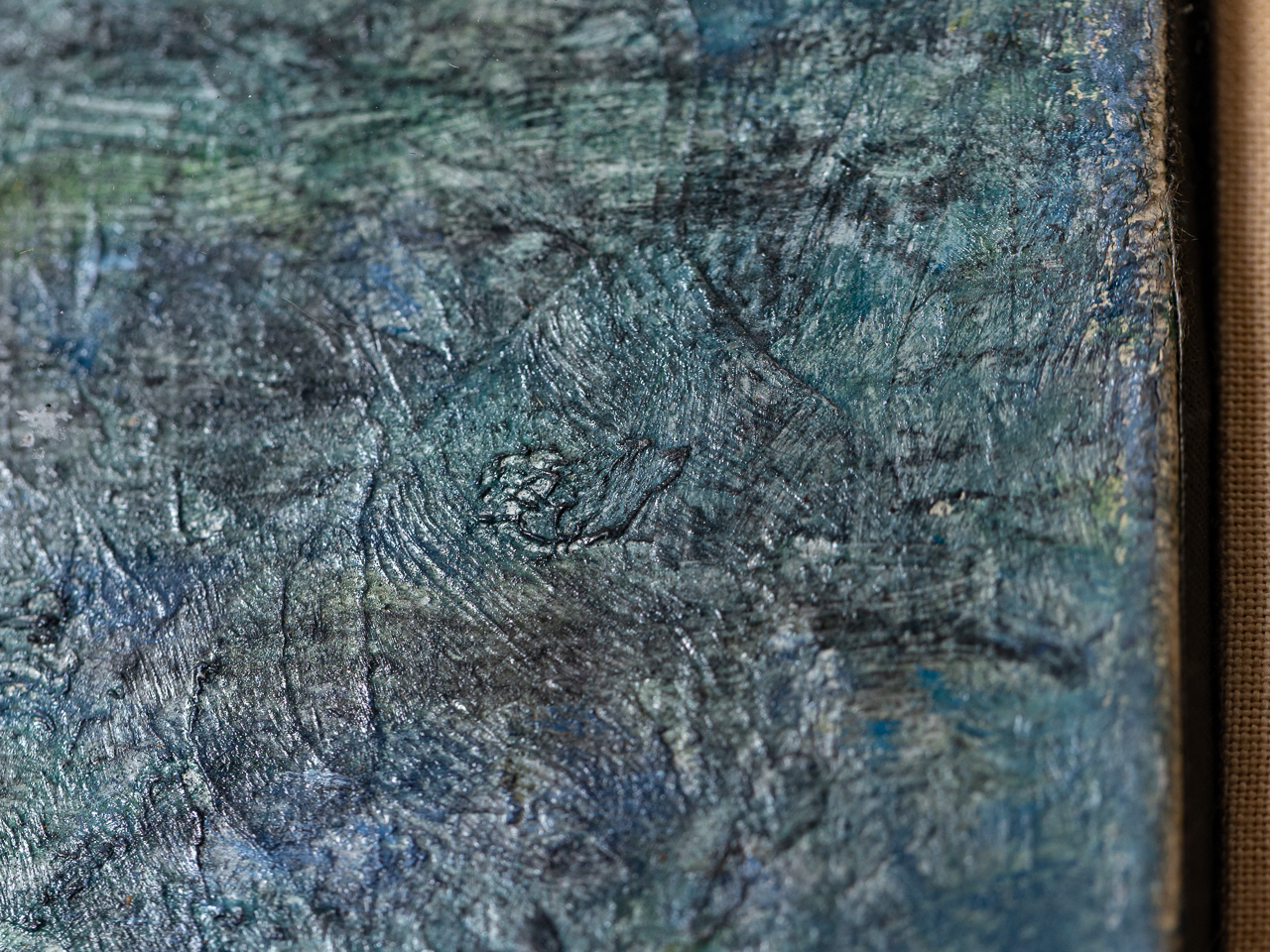
作品名:野の詩
サイズ:14.2×18.2cm (キャンバスに油彩 洋協鑑定書付)
価格:500,000円
価格は税抜き表示です