
清水 柾博/Kiyomizu Masahiro
清水柾博(1954~)は、2000年に八代目清水六兵衛を襲名した陶芸家です。
柾博は、江戸後期にあたる1771年に京都の五条坂に開窯した京焼の名家、清水家に生まれました。幼少期から祖父の六代目六兵衛、父の七代目六兵衛の技を近くで見てきた柾博にとって、ものづくりの道へ進むことは極めて自然な選択でしたが、工作や図面を好んでいた彼が最初に選んだのは陶芸ではなく、建築の世界でした。しかしながら、早稲田大学理工学部建築学科で学びを深めていくにつれ、他者との共同作業を通して大きなものを造りあげる建築では、制作のすべてを把握したいという自身の欲求を満たすことができないと気づきます。そのため、同大学を卒業後は、京都の職業訓練校や工業試験場に通い、陶芸家への転身を図るに至りました。ただし、建築学科での経験や空間への関心は、後の陶芸制作にも大きく影響を与え続けることとなります。初めて本格的に土に触れた際、柾博は「非常にインパクトのあるもので、土とはこういうものかということをはじめて経験した」と感じますが、これが、生涯離れることはないと確信できる素材との決定的な出会いとなりました。
1983年の朝日陶芸展’83でのグランプリ受賞は、陶芸家としての実質的なデビューとなりました。その後も国内外の様々な公募展、展覧会にて作品を発表し、陶芸の表現がさらなる拡大を見せた1980年代から90年代にかけて華々しい躍動を見せます。初めはろくろで成形するという一般的な方法を採用していましたが、土を板状にのばしてつくるタタラ成形へ移行し、図面に合わせて土の板を切ったものを貼り合わせて箱型をつくるという、建築のペーパー・モデルに着想を得た手法を編み出します。歴史の長い清水六兵衛ですが、各代の作風がまったく異なることも手伝い、「先代と同じはだめ」という暗黙の了解があったとは本人の語るところです。さらに、器体にスリットを入れることで強度を調整したり、焼成によって生じる歪みやたわみを個性として取り入れたりする造形上の工夫も施され、独自の作風が確立されていきました。柾博の作品は、建築模型を連想させる無機的なフォルムや、金属と見まがう鋭さや硬質感を特徴としていますが、そこに土と火によって偶発的に生まれる焼き物のぬくもりが両立しているのは、上記のような手法が背景にあるためです。
また、釉薬による色付けも作品の個性に深く関わっています。たとえば、彼の作品に多く見られる黒いマットな質感の釉薬は、その寡黙でストイックな色味がシャープなフォルムに適しており、周囲のものや空間に対抗するかたちで存在感を示す一方、乳白色の光沢が美しいオパール・ラスターという釉薬を使う際には、周りの色や景色を映しこむ半鏡面の効果があるため、作品は周囲と調和することで存在意義を持ちます。
1990年代に入ると、タイトルに「空間形状」という言葉が入ることからも窺えるように、作品は目に見えて大型化し、空間を活性化しようとする試みが実践されていきます。そうした精力的な創作活動のかたわら、2003年には京都造形芸術大学教授となって後進の育成にも尽力するなど、歴史を引き継ぎつつ常に新しい感覚をもって現代の陶芸界を牽引しています。
Masahiro Shimizu (b. 1954) is a ceramic artist who succeeded to the name of Rokubei Kiyomizu VIII in 2000.
Masahiro was born into the Kiyomizu family, a distinguished name in Kyō-yaki (Kyoto ware) that established its kiln in Gojōzaka, Kyoto, in 1771 during the late Edo period. For him, seeing the techniques of his grandfather, Rokubei VI, and his father, Rokubei VII, from a young age made the path of craftsmanship a highly natural choice.
However, having a preference for construction and drawing, his initial choice was not ceramics, but the world of architecture. While studying architecture at the Faculty of Science and Engineering at Waseda University, he realised that architecture—the construction of large structures through collaboration—could not satisfy his personal desire to control the entire production process.
Consequently, after graduating, he made a career shift to ceramics, attending vocational schools and industrial research centres in Kyoto. Importantly, his architectural experience and interest in space continued to profoundly influence his later ceramic production.
When he first seriously handled clay, Masahiro felt it was “something with immense impact, an experience of what clay truly is,” confirming this was the decisive material he would dedicate his life to.
His Grand Prix win at the Asahi Ceramic Exhibition ’83 marked his effective debut as a ceramic artist. He subsequently displayed a brilliant period of dynamism throughout the 1980s and 1990s—a time when ceramic expression was rapidly expanding—by presenting works at various public exhibitions and shows both in Japan and abroad.
While he initially used the common method of throwing on a potter’s wheel, he later shifted to the tatara method (slab building), developing a technique inspired by architectural paper models: cutting slabs of clay according to blueprints and attaching the pieces to form box shapes. Given the long history of the Kiyomizu Rokubei lineage, he has stated there was an unspoken understanding that “you must not be the same as the predecessor,” which was aided by the distinct styles of each generation.
His work established a unique style through structural ingenuity, such as incorporating slits into the vessel body to adjust strength, and embracing the warping and distortion caused by firing as design elements. His pieces are characterised by inorganic forms reminiscent of architectural models and a sharpness and solidity that can be mistaken for metal, yet they simultaneously possess the inherent warmth of ceramics created accidentally through earth and fire.
The application of glaze also plays a key role in the individuality of his works. For example, the black matte glaze frequently seen in his pieces suits their sharp forms and shows a taciturn, stoic presence that often contrasts with the surrounding space. Conversely, when using the beautiful, milky-white opal lustre glaze, the semi-mirrored effect reflects surrounding colours and scenes, allowing the work to gain meaning by harmonising with its environment.
As the 1990s began, reflected in titles that included the term “Spatial Form” (kūkan keijō), his works visibly increased in size, signifying his efforts to actively invigorate the surrounding space. While actively engaged in creative work, he also took up a professorship at Kyoto University of Art and Design in 2003, dedicating himself to nurturing the next generation—demonstrating how he carries on a long history while continually pioneering the contemporary ceramics world with a fresh sensibility.
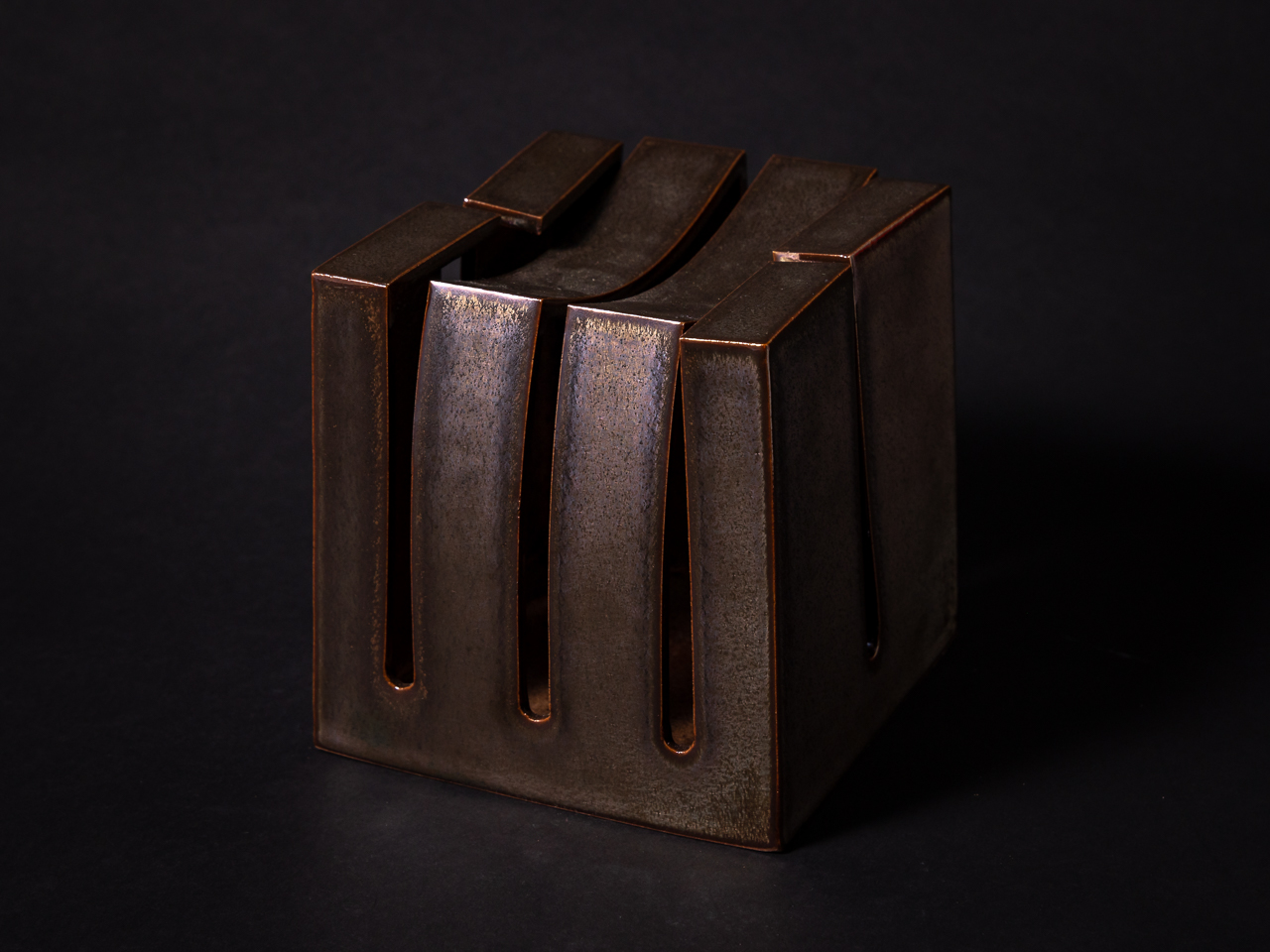
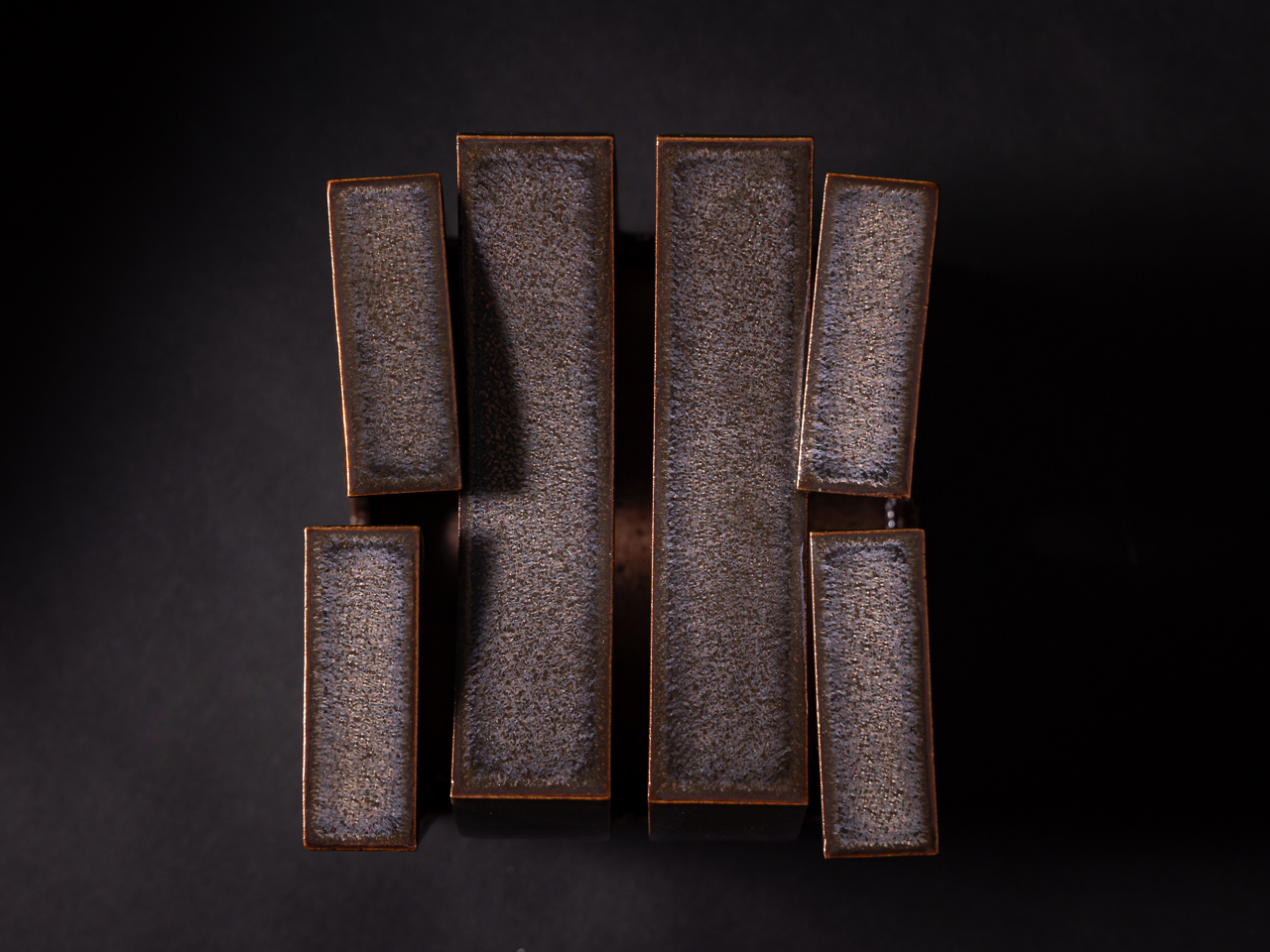
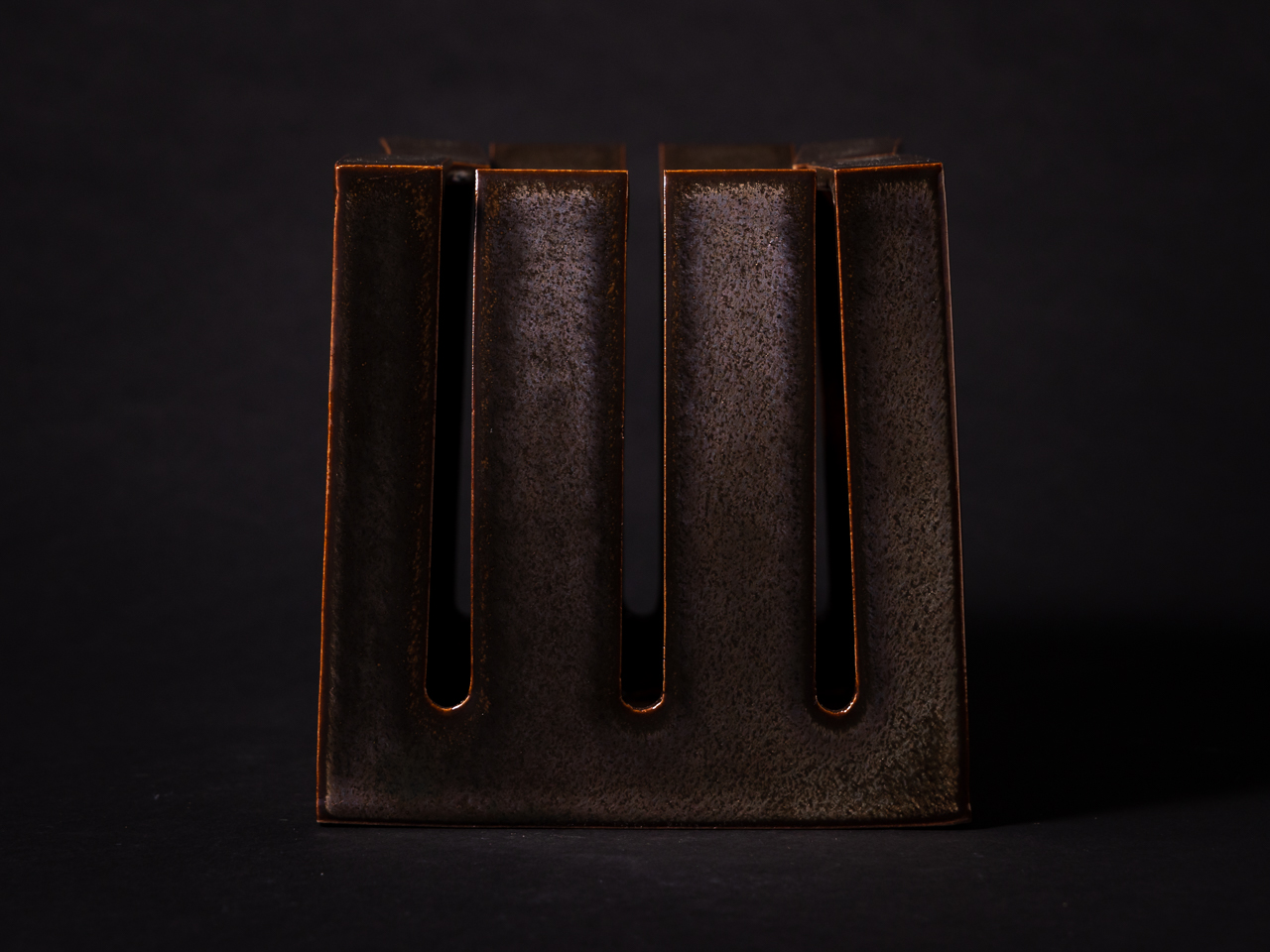
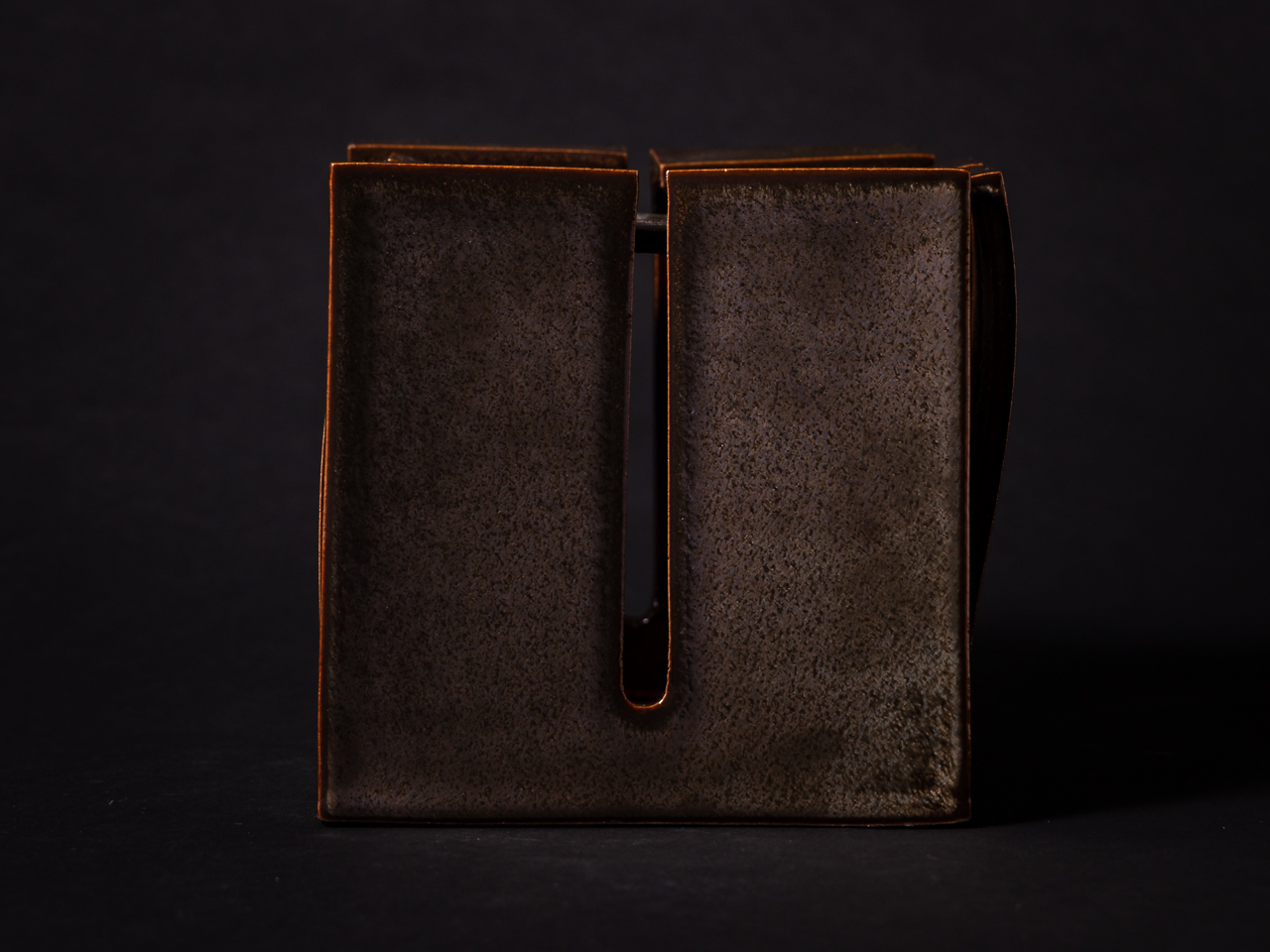
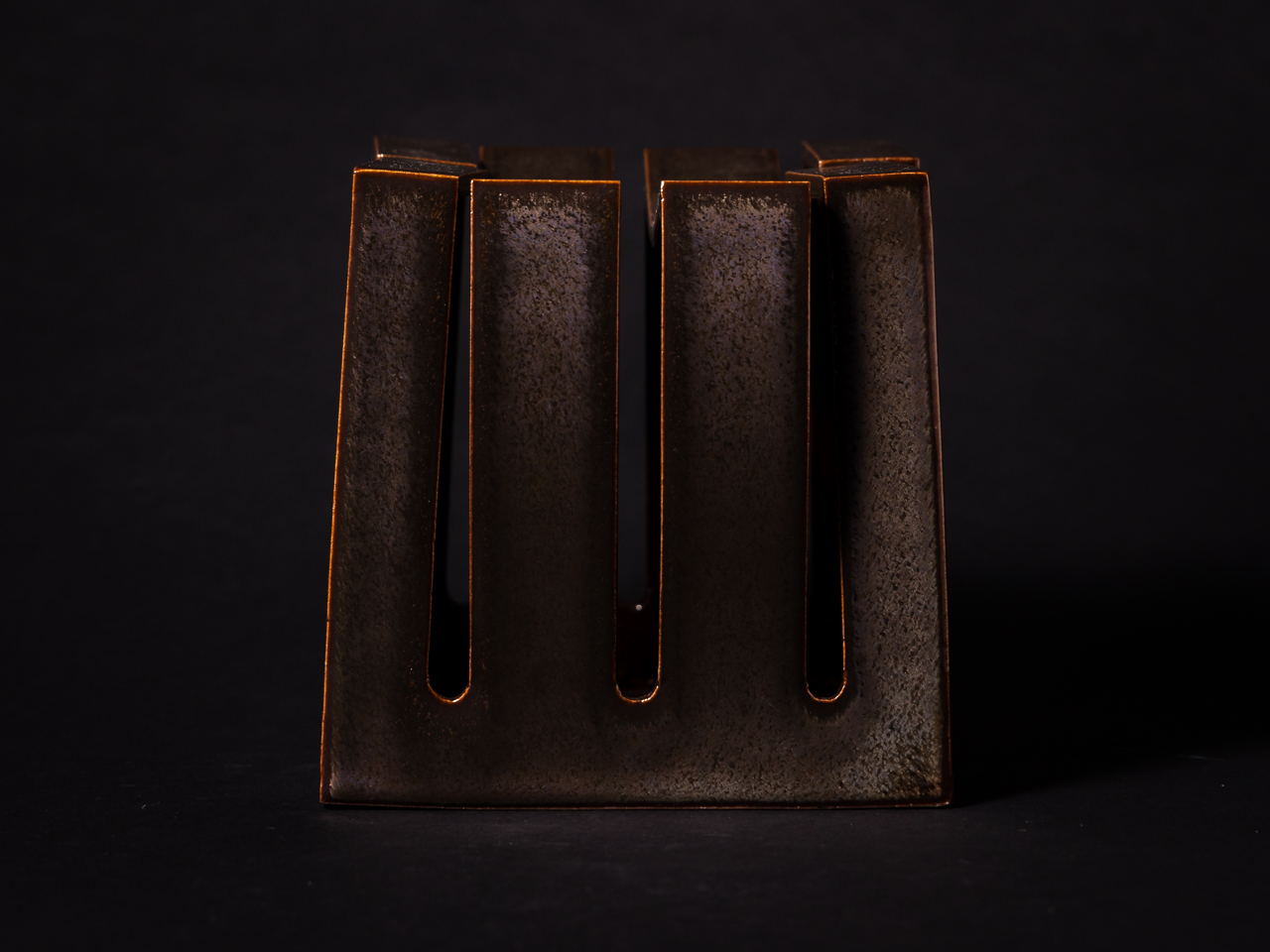
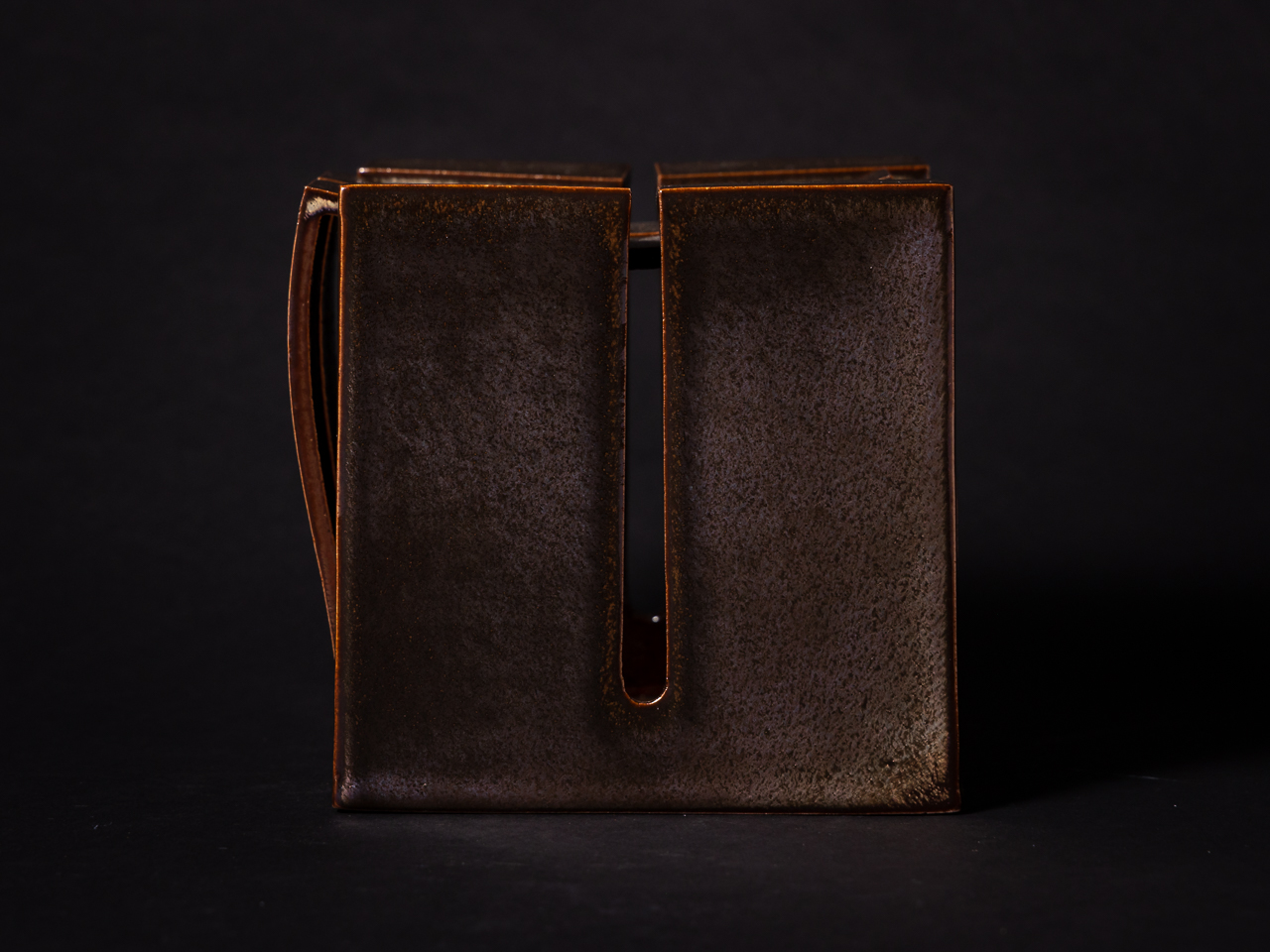
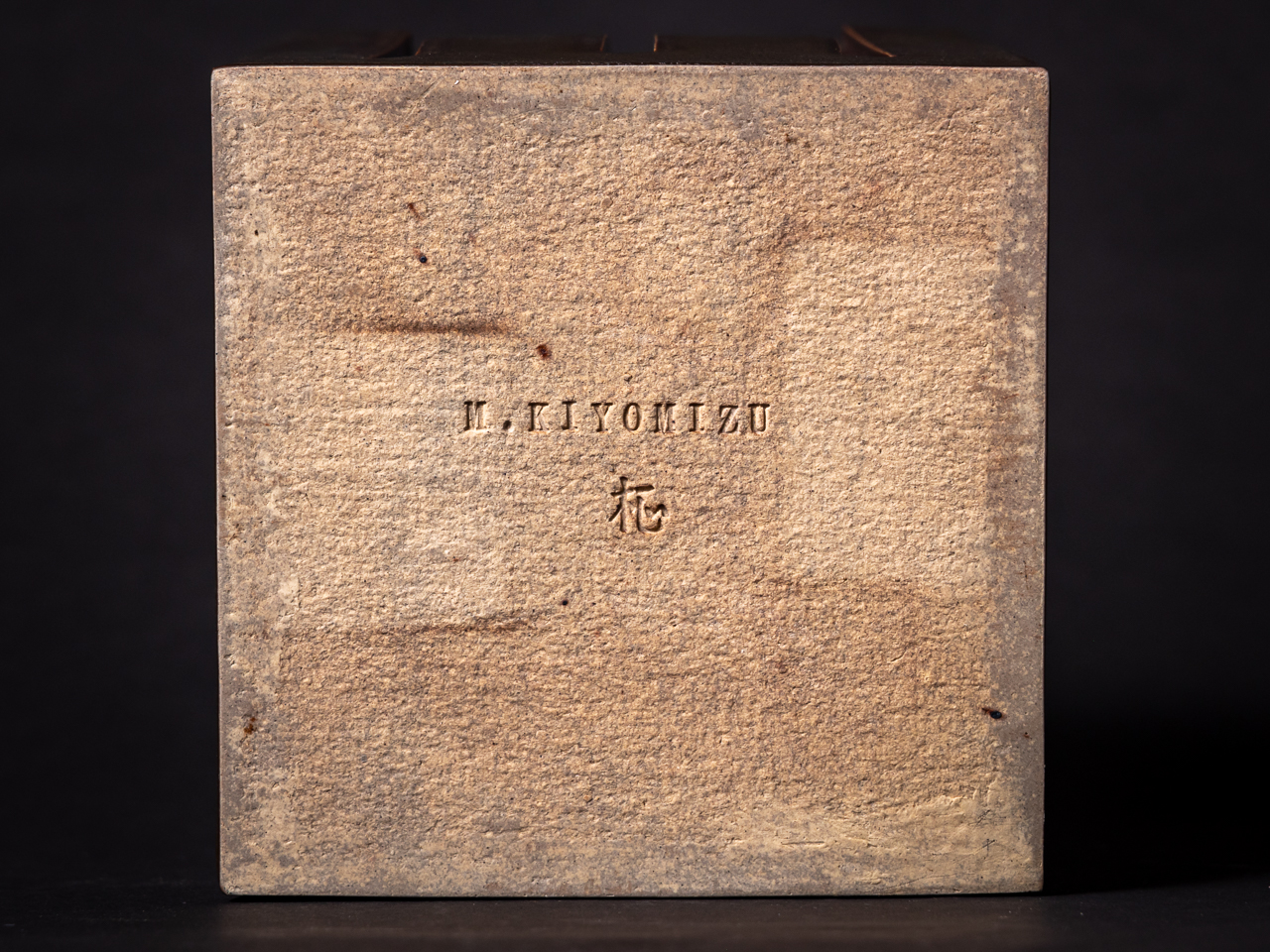
作品名:UNIT D
サイズ:H13.5×W13cm(セラミック 共箱)
価格:100,000円
価格は税抜き表示です